MIG gun parts are a set of components that work together to deliver high-quality welds. These are mechanical, electrical, and consumable components. Understanding the Metal Inert Gas gun parts is essential to ensure safety and desired welding results.
In today’s guide, we will discuss the MIG gun parts in depth. What is the core importance and functionality of each gun part? When should you replace these parts? What maintenance is required to extend the life of the parts? Let’s start the discussion in detail.
What Is a MIG Gun?
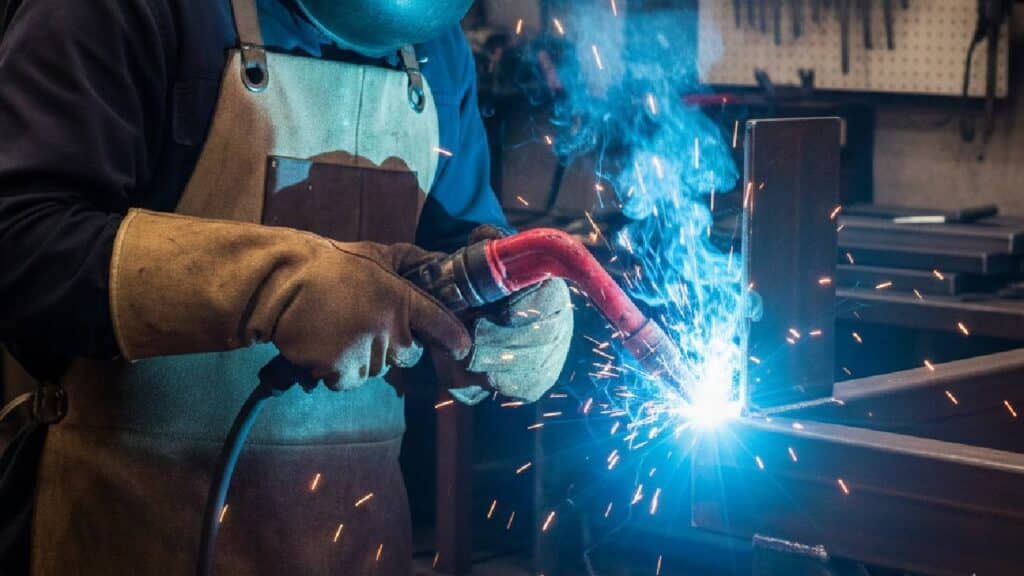
A MIG welding(Metal Inert Gas) gun is a handheld device that feeds wire, delivers power, and supplies shielding gas to melt and join metal parts.
- Wire Feeding: Wire Electrode
- Current Transfer: Electric Current
- Shielding Gas Flow: Argon + CarbonDioxide (CO2) + Oxygen (O2)
MIG Gun Parts Quick Parts List
Front-End Consumables
Nozzle: A cylindrical metal or copper-made part located at the front of the MIG gun. It covers the contact tip and is available in multiple sizes, as required.
Contact Tip: A small copper part placed inside the gun nozzle (front). The contact tip is also available in multiple sizes and diameters to fulfill the welding requirements.
Diffuser/Tip Holder: It is a copper or brass-made component that holds the contact tip in place. A diffuser or tip holder provides the mounting support for front-end consumables.
Insulator: A heat-resistant material (plastic/ceramic) placed between the conductive parts of the MIG gun at the front-end. Insulator is available in the required shape and thickness.
Retaining Head: A part that holds the nozzle and tip into required position. It is mounted on the gun’s neck and is made of metal or brass.
Wire-Feed Components
Liner: A flexible tube made of copper, teflon, or steel running through the length of the MIG gun cable. You can buy the liners available in multiple lengths and diameters.
Inlet Guide: A small metal or plastic component that connects the wire feeder to the liner. The inlet guide is placed at the back of the gun.
Neck Liner/Neck Tube: A small part of the liner that fits inside the MIG gun’s curved neck. The neck liner or neck tube is made of steel with a copper coating.
Power & Connection Components
Power Pin/Connector: A power connecting source at the back of the MIG welding gun, which is further connected to the welding machine. It is made of brass or copper.
Conductor Tube: It is a copper-made metallic tube that carries current from the backend to the frontend components. You can get this tube in various diameters and amperes.
Cable Assembly: A bundle of cables containing a liner, power conductor, gas hose, and control wires. The cable assembly provides power from the welding machine to the MIG gun.
Gas Delivery Components
Gas Diffuser Passages: Gas passages in the diffuser ensure a smooth transition of shielding gas to the weld area. Gas diffuser passages are made from copper/brass.
O-Rings/Seals: A rubber or silicone-made circular component that provides safety against gas leakage. O-rings are available in multiple sizes and hardness levels.
Gas Hose: A rubber or polyurethane-made flexible tube that connects the MIG gun to the shielding gas supply. Match the size requirements before getting a gas hose.
Handle & Control Components
Trigger Switch: a small button made of plastic or a composite material. The trigger switch provides control engagement or disengagement of the MIG gun.
Handle Shell: It is the grip point of the welding gun, providing a smooth hand grip and housing the trigger switch. The handle shell is made of impact-resistant plastic/rubber.
Strain Relief: A flexible part that provides protection to the cable assembly from where it enters the handle. Strain relief helps prevent wear and tear on internal wires.
Spring/Support: The spring part that fits around the cable exit and handle sections. It is made of steel or metal and ensures the required alignment.
Want to know about “What is Pulsed MIG Welding?”
What Each MIG Gun Part Does (Simple Function Explanations)
Each MIG gun part has specific functionality. Due to the joint functionality of these parts, the gun can produce high-quality welds. Let’s check how each part functions inits parameters.
Contact Tip
- Function: The core function ofthe contact tip is to transfer the required electrical current to the welding wire. This tip ensures a stable arc and quality welds.
- Failure Signs: Worn/Oval Bore, Burnback, Wire Sticking, Unstable Arc, and Excessive Spatter.
- Typical Causes: Wrong Diameter Tip, Worn Tip, Poor Seating, and Overheating.
Nozzle (Gas Cup)
- Function: The nozzle or gas cup ensures a smooth transition of shielding gas over the weld area, preventing atmospheric contamination. It provides a consistent gas coverage.
- Failure Signs: Excessive Spatter, Deformed Nozzle, Inconsistent Shielding, Distorted Arc Patterns.
- Typical Causes: Incorrect Nozzle Size, Poor Cleaning, and High Heat Exposure.
Gas Diffuser/Tip Holder
- Function: The primary function of the gas diffuser or tip holder is to distribute the shielding gas around the welding wire. It controls overheating and holds the contact tip securely in the frontend.
- Failure Signs: Gas Leakage, Frontend Overheating, and Irregular Arc.
- Typical Causes: Loose Contact Tip, Blocked Gas Passages, and Worn Seals/O-Rings.
Liner (Conduit)
- Function: The liner provides a smooth path for welding wire from the feeder to the contact tip. It ensures low-friction and prevents wire wandering.
- Failure Signs: Birdnesting, Wire Jams, Inconsistent Feed Speed, and Burnback.
- Typical Causes: Incorrect liner size, Contamination, Worn Sections, and Cable Kinks.
Swan Neck / Gooseneck
- Function: The swan neck and gooseneck provide smooth access to wire, liner, and shielding gas from components. The shape angle also helps the welder to reach tough spots easily.
- Failure Signs: Heat damage, Bent Neck, Damaged Insulation, and Gas Leakage.
- Typical Causes: Exceeding Duty Cycle, Poor Airflow, and Poor Material Quality.
Trigger Switch
- Function: The trigger switch controls the engagement and disengagement of the whole welding process. It initiates wire feed, shielding gas, and required welding current.
- Failure Signs: Arc Starting Issues, Random Stops, and Sparks at Trigger.
- Typical Causes: Worn Switch/Spring, Damaged Lead, Moisture, and Dirt.
Power Pin / Connector
- Function: The power pin or connector provides the electrical connection between the welding machine and the gun. It ensures a smooth power delivery required for efficient welding.
- Failure Signs: Hot Connector, Voltage Fluctuation, Unstable Arc, and Gas Leaks.
- Typical Causes: Loose Installation, Wrong Connector Type, and Damaged O-Rings.
Consumables vs Hard Parts (What Wears Out First?)
A Mig gun contains both the consumables and hard parts. Let’s check which one wears out first when comparing consumables vs. hard parts.
True Consumables (Expect to Replace Often)
- Contact Tip: High Replacement Frequency
- Nozzles: High Replacement Frequency
- Tip Holder: Medium to High Replacement Frequency
- Liner: Medium Replacement Frequency
- O-Rings/Seals: Medium Replacement Frequency
Semi-Consumables (Occasionally)
- Trigger Switch: Low-Medium Replacement Frequency
- Nozzle Retaining Head: Low-Medium Replacement Frequency
- Swan Neck/Gooseneck: Low Replacement Frequency
- Strain Relief/Spring: Low Replacement Frequency
Why Consumables Wear Faster
- High Heat: More exposure to heat can cause consumables to wear faster.
- Constant Friction: When the wire passes through the tips and lines, it causes friction and wear.
- Spatter/Debris: It accumulates on nozzles, diffusers, and tips, reducing lifespan.
- Electrical Load: This load impacts the parts because they continuously carry the required current.
- Mismatched Parts: Compromising on part quality and using mismatched parts can cause consumables to wear faster than usual.
How Do You Identify the Right MIG Gun Parts?
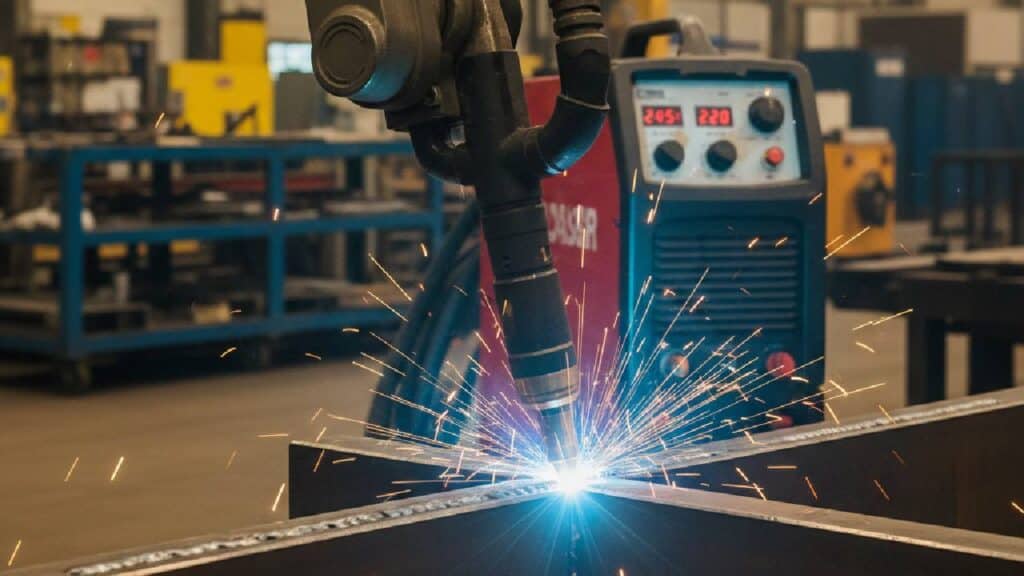
You can identify the right MIG gun parts by matching the compatibility requirements between the specific model you own and the parts you are buying. It includes information about the welding machine, wire type, amperage, manufacturer specifications, and part compatibility. Let’s discuss in detail,
Start With Your Gun Model or Consumable “System”
Confirm your MIG gun model, its manufacturer, serial number, style (Tweco, Miller, Binzel), and parts compatibility. Don’t just rely on matching parts; they can cause loose connections and inaccurate performance.
Match by Wire Diameter
Ensure the contact tips, liners, and nozzles match by the wire diameter. The common wire diameters include 0.023 in (0.6 mm), 0.030 in (0.8 mm), 0.035 in (0.9 mm), 0.045 in (1.1 mm), and 0.052 in (1.3 mm).
Match by Wire Type / Material
You should have sufficient information about the compatibility of the wire type and material. Make informed decisions about choosing among steel, stainless steel, flux-cored, and aluminum to ensure durability, reliability, and smooth performance.
Match by Cooling, Amperage, and Duty Cycle
Cooling, amperage, and duty cycle of parts should meet the MIG welding gun’s compatibility requirements. Decide between air/water cooling, power specifications (150A/200A /300A), and duty cycle limits.
Confirm Connection Style
Confirm the connection style of the MIG welding gun, such as Euro or Direct connection. A compatible connection type ensures accuracy of power pins, seals, and cable interfaces. While the wrong connection can lead to poor welding performance and damage.
When Should You Replace MIG Gun Parts?
Contact Tip Replacement Signs
- Excessive Spatter
- Burning Back
- Visible Wear
- Burn Marks on Tip
- Unstable Arc
Nozzle Replacement Signs
- Internal Spatter
- Cracked or Melted Nozzle Shape
- Poor Gas Coverage
- Porosity in Weld Beads
Liner Replacement Signs
- Wire Feeding Issues
- Grinding Sound
- Visible Debris
- Crushing Inside the Liner
Gas Leak/Seal Issues
- Hissing Sounds
- Weak Gas Flow
- Weld Porosity
- Damaged O-Rings/Seals
How Do You Troubleshoot Common MIG Gun Problems?
You can troubleshoot common MIG gun problems by observing symptoms, including poor arc, porosity, and feeding errors. Double-check the wear, wire feed, gas flow, and electrical connections. Finally, solve the problems by cleaning, tightening, or replacing damaged parts.
Porosity
- Symptoms: Small Holes/Bubbles in the Weld Bead and Weak Weld Surface.
- Check: Gas Flow Rate, Nozzle Condition, and Leakage in Gas Hose/O-Rings.
- Fix: Clean or Replace the Nozzle/Diffuser, Tighten Fittings, and Replace Damaged Seals.
Birdnesting/Poor Feeding
- Symptoms: Liner Contamination, Jerky Wire Feed, and Sudden Welding Stoppage.
- Check: Liner for Dirt, Contact Tip Condition, and Wire Path Alignment.
- Fix: Replace/Clean Liner, Adjust Drive Roll Tension, and Straighten Cable Routing.
Burnback
- Symptoms: Overheating Gun Tip, Sudden Zero Arc, and Wire Melting at Contact Tip.
- Check: Contact Tip Condition, Wire Feed Speed, and Trigger Timing.
- Fix: Replace the Contact Tip, Increase Wire Feed Speed, and Adjust Stick Out.
Inconsistent Arc
- Symptoms: Arc Wandering, Uneven Bead Shape, and Voltage Fluctuation.
- Check: Power Pin Connection, Contact Tip Condition, and Electrical Grounding.
- Fix: Replace Contact Tip, Tighten Pin Connection, and Verify Grounding.
Overheating
- Symptoms: Hot Gun Handle, Nozzle/Diffuser Discoloration, and Failure of Front-End Parts.
- Check: Amperage, Cooling Type/Status, and Spatter Buildup.
- Fix: Adjust Amperage, and Clean Front-End Components.
Maintenance Basics to Extend Consumable Life
Daily Habits
- Wipe spatter from the nozzle and tip.
- Check contact tip tightness.
- Verify the smoothness of the wire feeding
Weekly Checks
- Clean the liner when needed.
- Check Inlet Guide.
- Inspect O-rings and gas seals.
- Check the power pin and connections.
Cable Care (Biggest “Hidden” Liner Killer)
- Avoid tight bends.
- Keep the cable straight.
- Do not pull the gun from the cable.
- Store the gun without tight coiling.
Anti-Spatter — Use Correctly
- Apply a light, even coating on the nozzle only.
- Avoid spraying on the contact tip bore.
- Clean excess buildup.
Final Remarks
MIG gun parts are critical, as they are responsible for efficient wire feeding, power delivery, and shielding gas supply. Ensuring the matching compatibility of these parts results in high-quality welds. You should always prefer standard gun parts and accessories, including the nozzle, contact tip, liner, neck, handle, and cable assembly. Regularly inspect the parts to avoid welding problems and make timely replacements to avoid extra expenses.
Ready to enhance your MIG welding to the next level? YesWelder offers professional-grade welding machines and related accessories. Consider ourMIG Welding Aluminum, MIG welders, and associated consumables.
FAQ: MIG Gun Parts & Consumables
The fastest-wearing MIG gun parts are contact tips, nozzles, liners, and O-rings.
These components are exposed to high heat, electrical load, wire friction, and spatter buildup. Contact tips usually wear first due to constant current transfer and wire abrasion, while liners degrade over time from contamination and cable bending.
Common signs include unstable arc, burnback, wire sticking, birdnesting, and inconsistent wire feed.
A worn contact tip may show an oval or oversized bore, while a failing liner often causes grinding sounds, jerky feeding, or frequent wire jams. Replacing these parts early prevents damage to other gun components.
Yes. Wire diameter directly affects contact tip fit, liner wear, and feeding stability.
—.030 wire feeds more smoothly at lower amperage and reduces stress on liners.
—.035 wire handles higher amperage but generates more heat, which can shorten contact tip and nozzle life if not matched correctly.
Always match wire size with the correct contact tip and liner diameter.
Replacement frequency depends on amperage, duty cycle, wire type, and maintenance habits.
–Contact tips and nozzles may need replacement daily to weekly in heavy use.
–Liners typically last weeks to months with proper cable care.
Regular inspection is more reliable than fixed time intervals.
These issues are usually caused by worn contact tips, contaminated liners, incorrect wire size, improper drive roll tension, or excessive cable bends. Maintaining clean consumables, correct wire-to-tip matching, and straight cable routing is the most effective way to prevent feeding-related failures.