Accessories, not the welder itself, cause most MIG welding problems.
If your wire keeps birdnesting, the arc feels unstable, or spatter is out of control, the issue is usually a mismatched contact tip, liner, gas setup, or ground—not the machine. We see this all the time, especially with new setups and home shops.
In this guide, we break down 30+ must-have MIG welding accessories, starting with what you should buy first and what can wait. You’ll learn which consumables affect weld quality the most, which upgrades prevent common headaches, and how to build a setup that feeds smoothly and welds consistently from day one.
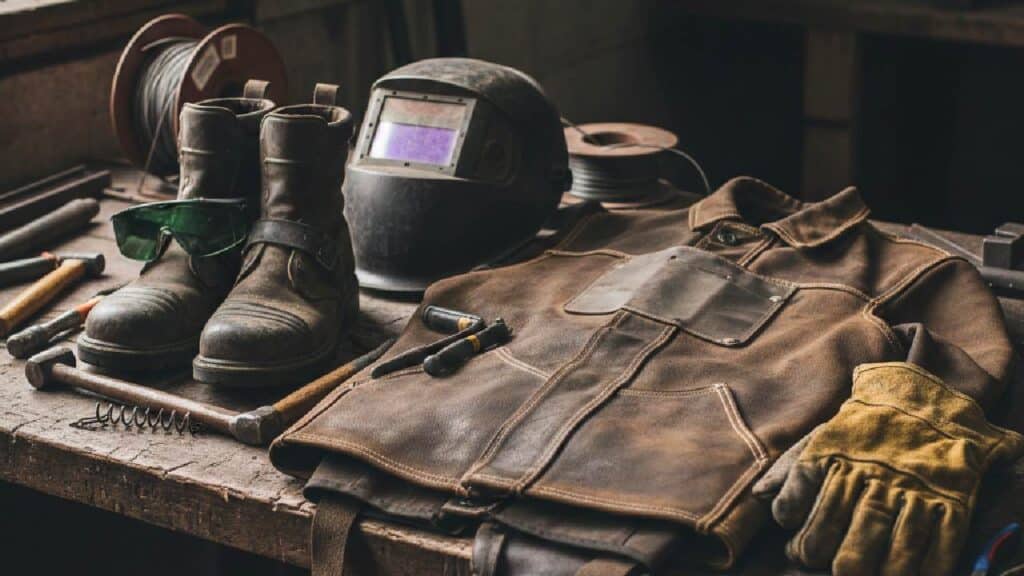
Quick Start Checklist (Buy First vs. Buy Later)
If you’re building or fixing a MIG setup, prioritize accessories that control wire feeding, arc stability, and safety first. These are the items that prevent frustration on your very first weld. Convenience upgrades can come later, once your process feels stable and predictable.
| Buy First (Must-Have) | Buy Later (Nice-to-Have) |
| Contact tips (correct wire size) | Wire straightener |
| Nozzles & diffusers | Extra liner cleaning kits |
| Solid MIG wire | Spare cable protectors |
| Drive rolls (matched to wire) | Dedicated spool covers |
| Gun liner | Welding cart upgrades |
| Regulator/flowmeter | Extra work lead extensions |
| Ground clamp (upgraded) | Magnetic fixture systems |
| Auto-darkening helmet | Welding screens/curtains |
What Are the Essential MIG Welding Accessories? (30+ Items by Purpose)
A) MIG Gun Consumables (Most Frequently Replaced)
MIG gun consumables wear out faster than any other part of your setup. If you don’t keep spares on hand, a five-minute fix can turn into a job-stopping delay (and yes, it always happens mid-project).
1. Contact Tips (.023 / .030 / .035)
Contact tips deliver current to the wire, which means size accuracy matters more than most welders expect. Even a small mismatch—like running .030 wire in a .035 tip—can cause arc instability, inconsistent penetration, or sudden burnback.
2. Nozzles (standard, tapered, extended)
Nozzles shape how shielding gas flows around the weld. A poor fit or heavy spatter buildup disrupts gas coverage and leads to porosity.
Tapered nozzles work well for tight joints, while extended nozzles help when reach and visibility matter. If you weld daily, rotating nozzles instead of running one to death keeps gas flow consistent and cleanup easier.
3. Diffusers/Tipholders
Diffusers evenly distribute gas and support the contact tip. Worn diffusers can result in uneven shielding and increased porosity.
4. Insulators
Insulators safeguard the gun head from heat damage. If an insulator is compromised, it can lead to overheating and shorten the lifespan of consumables.
5. Retaining Heads
Some guns require retaining heads to securely hold front-end components in place. It’s wise to keep extras on hand to prevent unexpected downtime.
6. O-rings and Front-End Seals
These seals are essential for preventing gas leaks at the gun head; even a small leak can significantly affect weld quality.
7. Nozzle Dip/Anti-Spatter Gel
Nozzle dip helps minimize spatter buildup inside the nozzle, ensuring cleaner nozzles that improve gas flow and extend consumable life.
8. Anti-Spatter Spray
Anti-spatter spray protects both the workpiece and nozzle while also reducing cleanup time, especially during repetitive tasks.
9. Tip Cleaners/Reamers
Tip cleaners remove spatter and debris, and regular cleaning is essential to avoid burnbacks and feeding problems.
10. Consumable kits
Pre-packaged kits keep compatible parts organized, making them convenient for shops that use the same gun daily.
B) Wire & Wire-Feeding Accessories (Prevent Birdnesting and Feeding Issues)
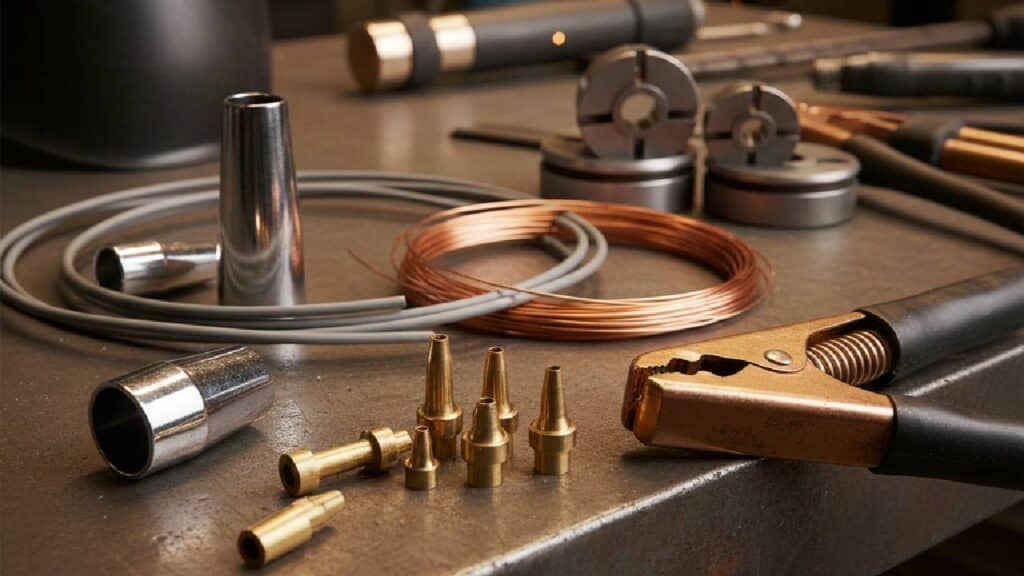
Wire feeding problems cause more MIG welding frustration than anything else—and they’re almost always setup-related.
If your wire slips, shaves, or suddenly birdnests, the issue is usually the wire type, liner, or drive rolls working against each other.
11. Solid MIG Wire
Solid MIG wire is the most common choice for mild steel, and quality matters more than many people realize. Cheap or inconsistent wire increases feeding resistance, which shows up as arc flutter and uneven bead shape.
If you want smoother feeding and less spatter, start with reputable wire brands and keep spools clean and dry.
12. Stainless Steel Wire
Stainless steel wire requires specific liners and drive rolls. Mixing different setups can lead to contamination and poor feeding performance.
13. Aluminum Wire
Aluminum wire is soft, which makes it unforgiving. Without U-groove drive rolls and a liner designed for aluminum, birdnesting is almost guaranteed.
This is one of the most common upgrade mistakes we see: switching to aluminum wire but keeping a steel setup. If aluminum is on your roadmap, plan the liner and rolls at the same time—not later.
14. Flux-Cored Wire
Flux-cored wire can be used with or without gas, depending on its type. It is particularly useful in outdoor or windy conditions.
15. Drive Rolls
Drive rolls, grip, and push the wire, so the groove profile must match the wire material.
- V-groove rolls work best for solid steel wire
- U-groove rolls are required for aluminum
- Knurled rolls are designed for flux-cored wire
Using the wrong roll damages the wire surface and creates inconsistent feeding long before you notice visible problems.
16. Gun Liners
Gun liners guide the wire from the feeder to the contact tip. When liners are dirty, worn, or mismatched, feeding issues follow fast.
Steel, stainless, and aluminum each benefit from dedicated liners. Swapping liners when you change wire types saves time and prevents contamination and drag.
17. Inlet Guides
Inlet guides help smoothly introduce the wire into the drive system, minimizing shaving and reducing feeding resistance.
18. Spool Adapters/Hubs
Adapters accommodate various spool sizes, preventing wobbling and ensuring even feeding.
19. Wire Spool Covers/Storage
Wire tends to absorb moisture and dirt, so covers help keep it clean and lower the risk of porosity issues.
20. Wire Straightener
Straighteners enhance consistency during production work; while optional, they are beneficial for longer weld runs.
C) Shielding Gas Setup Accessories (Reduce Porosity)
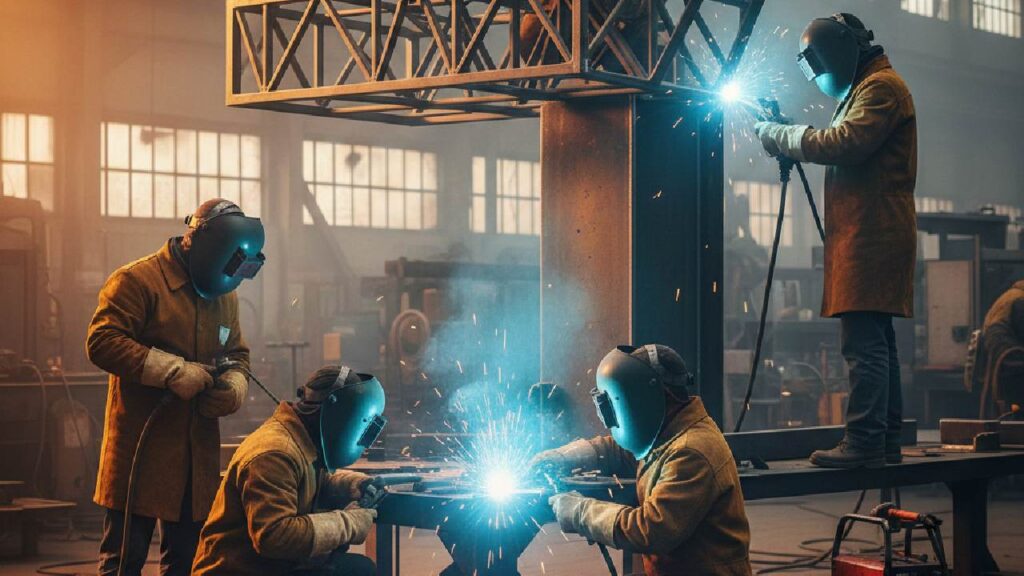
Shielding gas problems rarely look dramatic at first—but they quietly ruin weld quality.
Porosity, inconsistent bead color, and weak fusion often trace back to leaks, unstable flow, or worn fittings.
21. Regulator
A regulator controls cylinder pressure before gas reaches the flowmeter. Inconsistent pressure leads to unstable flow, which directly affects shielding quality.
If your regulator needle jumps or drifts, it’s time for a replacement—not a workaround.
22. Flowmeter
Flowmeters set and display shielding gas flow. Too little flow invites porosity; too much creates turbulence that pulls air into the weld zone.
For most MIG work, stable flow matters more than chasing exact numbers. Consistency beats guesswork every time.
23. Gas Hose
Gas hoses carry shielding gas from the regulator to the machine. Cracked or kinked hoses waste gas and introduce leaks you won’t notice until weld defects appear.
If a hose feels stiff, brittle, or smells of gas, replace it. Hoses are cheap. Rework isn’t.
24. Quick-Connect Fittings
Quick-connects facilitate faster setup changes and minimize wear on hose threads.
25. Leak-Check Solution
Leak-check spray exposes small gas leaks at fittings, valves, and connections. Even slow leaks reduce shielding quality over time.
We recommend spraying every new setup once. It’s a 30-second step that prevents hours of troubleshooting later.
26. Cylinder Wrench/Key
A specific wrench is crucial for proper cylinder control; it’s straightforward yet essential.
27. Check Valves/Flashback Arrestors
These enhancements boost safety, particularly in shared or professional environments.
D) Workholding, Grounding & Setup Tools
Clean MIG welds start with stable parts and a solid electrical return path. If your arc feels erratic or penetration looks inconsistent, the problem may be movement or poor grounding—not wire or settings.
28. Upgraded Ground Clamp
The ground clamp completes the welding circuit. Weak springs, dirty jaws, or thin cables cause voltage drops, making the arc feel unstable.
An upgraded clamp with clean contact points often fixes “mystery arc problems” faster than touching the machine settings.
29. Magnetic Squares
Magnetic squares hold parts at consistent angles during fit-up and tacking. They speed up alignment and reduce rework, especially on frames and brackets.
Just remember to remove them before final welding—heat and magnetism don’t mix well.
30. Locking Pliers/Welding Clamps
These clamps prevent movement during welding, ensuring a consistent fit that improves weld penetration.
31. C-clamps / F-Clamps
These clamps are designed for heavier workpieces and are both reliable and versatile.
32. Work Lead Extensions
Lead extensions give you reach without dragging the machine closer to the job.
Keep connections tight and clean. Loose couplings add resistance and undo the benefit of the extension.
33. Soapstone/Paint Markers
Markers assist with layout and cutting lines; clear markings help save time and reduce rework.
34. Measuring Tools
Precise measurements help avoid misalignment, and basic tools can be very effective.
35. Welding Cart/Cylinder Rack
Carts enhance mobility and safety while keeping cables organized.
E) Cleaning & Maintenance Tools (Extend Consumable Life)
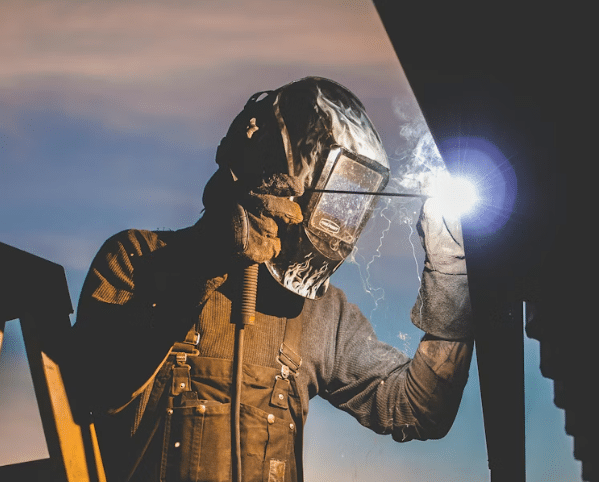
Most MIG feeding issues build up slowly, then fail all at once. Regular cleaning prevents small problems from turning into mid-job breakdowns.
36. MIG Pliers
MIG pliers cut wire, remove nozzles, clean tips, and pull spatter in one tool. If you weld often, keep them within arm’s reach. They save more time than almost any single accessory.
37. Wire Brush Set
These brushes clean welds and joints. A clean metal surface enhances fusion.
38. Nozzle Cleaning Reamer
Reamers eliminate hardened spatter, quickly restoring gas flow.
39. Liner Cleaning Kit
Liner cleaning kits blow dust, metal shavings, and wire debris out of the liner.
Clean liners feed wire more smoothly and extend liner life. If feeding gets rough over time, cleaning usually fixes it before replacement is needed.
40. Spare Liners
Spare liners let you swap instead of troubleshooting. When a liner is badly worn or contaminated, replacement is faster than cleaning during a job.
For shops, keeping spares on hand prevents small delays from snowballing into missed deadlines.
41. Spare Diffusers & Tip Holders
Extra parts help maintain workflow; they are a cost-effective safeguard.
42. Cable Protector/Strain Relief
Cable protectors minimize wear and extend the gun’s lifespan.
F) Safety & Shop Protection (Non-Negotiables)
MIG welding hazards aren’t dramatic until they are permanent. Heat, UV light, fumes, and noise add up over time, so protection isn’t optional—even for quick jobs.
43. Auto-Darkening Welding Helmet
Auto-darkening helmets enhance visibility and minimize eye strain.
44. Welding Gloves
MIG-specific gloves offer a balance of dexterity and heat resistance.
45. Welding Jacket/Sleeves/Apron
Protective clothing guards against burns and UV exposure.
46. Safety Glasses
Eye protection is essential, even when wearing the helmet.
47. Respirator/Fume Control
Welding fumes build up quickly, particularly indoors. A respirator or local fume extraction reduces exposure and keeps breathing comfortable during extended welding.
48. Hearing Protection
Grinding and cutting can lead to hearing damage over time.
49. Welding Curtains/Screens
Screens safeguard bystanders and are crucial in shared workspaces.
50. Fire Extinguisher & Fire Blanket
Fire safety equipment should always be within reach.
Accessory Bundles by Use Case (3 Ready-to-Buy Lists)
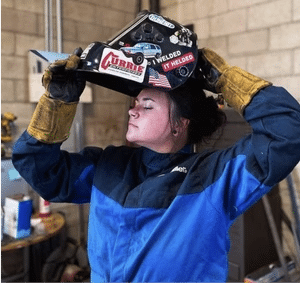
Beginner MIG Setup (Minimal but Complete)
- Contact Tips (matched size)
- Standard Nozzle
- Solid MIG Wire
- Drive Rolls (V-groove)
- Regulator/Flowmeter
- Ground Clamp
- Auto-Darkening Helmet
- Welding Wloves
Home Garage / DIY (Less Mess, More Convenience)
- Anti-Spatter Spray
- Magnetic Squares
- Locking Pliers
- Welding Cart
- Wire Spool Cover
- MIG Pliers
- Nozzle Dip
Aluminum MIG Welding Setup (Common Upgrade Path)
- Aluminum Wire
- U-groove Drive Rolls
- Liner Designed for Aluminum
- Extended Nozzle
- Teflon Inlet Guide
- Spool Adapter
Which MIG Accessories Fix Common Problems (Spatter, Porosity, Birdnesting)?
Most MIG problems stem from accessories, not the welder itself.
| Symptom | Likely Cause | Accessory Fix |
| Excess spatter | Dirty nozzle or wrong settings | Nozzle dip, correct tips |
| Porosity | Gas leaks or poor flow | Leak spray, flowmeter |
| Birdnesting | Wrong liner or drive rolls | Proper liner, matched rolls |
| Burnback | Incorrect tip size | Correct contact tip |
| Inconsistent arc | Poor grounding | Upgraded ground clamp |
Conclusion
MIG welding becomes far easier when your accessories work together instead of against you. Most issues—birdnesting, spatter, porosity, and unstable arcs—come from mismatched consumables, poor feeding setups, or weak grounding, not the welder itself.
Start with the essentials that control wire feeding, gas delivery, and safety. Once those are stable, add convenience upgrades that match your workflow.
If you’re troubleshooting a problem or building a new setup, use this list as a checklist. When the right accessories are in place, MIG welding is faster, cleaner, and far more predictable.
FAQs
For MIG welding, you need more than just the welder itself. Essential accessories include MIG gun consumables (contact tips, nozzles, diffusers), the correct welding wire, matched drive rolls and gun liners, a regulator and flowmeter for shielding gas, a solid ground clamp, and basic safety gear like a helmet and gloves. These accessories directly affect wire feeding, arc stability, and weld quality.
To start MIG welding, you need a MIG welder, solid MIG wire, shielding gas with a regulator and flowmeter, correctly sized contact tips and nozzles, drive rolls matched to the wire, a reliable ground clamp, and essential safety equipment. Starting with the right accessories prevents common beginner issues like birdnesting, porosity, and unstable arcs.
Choose .030 MIG wire for thin to medium steel and lower amperage welding, especially for beginners. It feeds more smoothly and offers better control on lighter material. Use .035 wire for thicker steel and higher amperage applications where deeper penetration is needed. The key is matching the wire size with the correct contact tip, liner, and drive rolls.
100% argon is not recommended for MIG welding steel. It produces a narrow, unstable arc and poor penetration. For mild steel MIG welding, a mixed gas such as 75% argon / 25% CO₂ is the most common choice. Pure argon is typically used for aluminum MIG welding or TIG welding.
The best MIG welder setup starts with matched components: the correct wire type and size, drive rolls designed for that wire, a clean gun liner, properly sized contact tips, stable gas flow, and a solid ground connection. When these accessories work together, most MIG welding problems disappear before you ever touch machine settings.