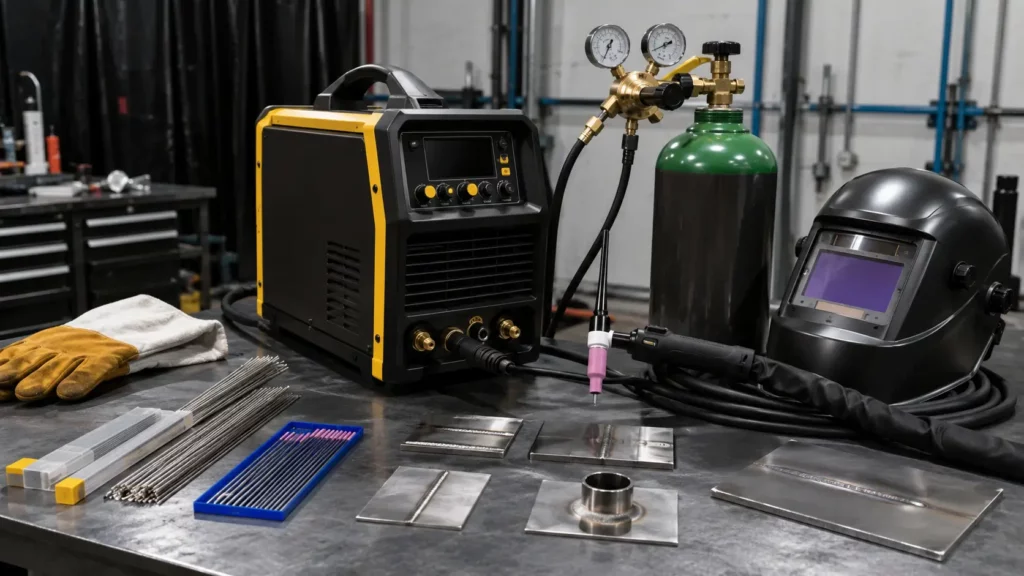
If you’re researching welding processes for stainless steel, aluminum, or thin materials, you’ve probably come across TIG welding. You may be checking whether TIG is right for your fabrication work, comparing it with MIG or Stick welding, or looking for equipment that fits your shop.
TIG welding, also called GTAW, is known for precision, clean weld appearance, and tight heat control. It is not the fastest welding process, but it is often the better choice when weld quality matters more than speed.
This guide explains what TIG welding is, how it works, how it compares with MIG and Stick welding, where it is commonly used, what equipment it needs, and what to check before choosing a TIG welding machine.
What Is TIG Welding?
TIG welding is an arc welding process that uses a non-consumable tungsten electrode, inert shielding gas, and optional filler rod to create clean, controlled welds.
A Clear Definition of the TIG Welding Process
TIG welding uses a non-consumable tungsten electrode to create an electric arc that melts the base metal, forming a weld pool. Unlike MIG or Stick welding where the electrode itself melts and becomes filler metal, the tungsten electrode in TIG remains solid and simply provides the arc. When filler metal is needed, the welder manually feeds a separate TIG welding rod into the weld pool by hand.
The process protects the molten weld pool from atmospheric contamination using inert shielding gas, typically argon or argon-helium mixtures, that flows through the welding torch and blankets the weld area.
TIG and GTAW Mean the Same Process
TIG stands for Tungsten Inert Gas welding, describing the tungsten electrode and inert gas shielding that define the process. The formal industry designation is GTAW, Gas Tungsten Arc Welding, which appears in welding codes, procedure specifications, and technical documentation. Both terms refer to the identical process.
Where TIG Fits Best
TIG welding matters when the weld itself is part of the final product. A clean stainless food-processing weld, a visible architectural joint, or a thin aluminum part needs more control than a speed-focused process can usually provide.
The trade-off is speed. TIG gives you better control over heat and filler metal, but MIG is usually faster for routine production welding.
How Does TIG Welding Work?
TIG welding works by creating an arc between a tungsten electrode and the workpiece while inert gas protects the weld pool. Filler rod is added by hand only when the joint needs extra metal.
TIG works differently from MIG because the tungsten electrode does not melt into the weld. That difference is the starting point for any MIG vs TIG welding comparison.
Tungsten Electrode Creates the Arc
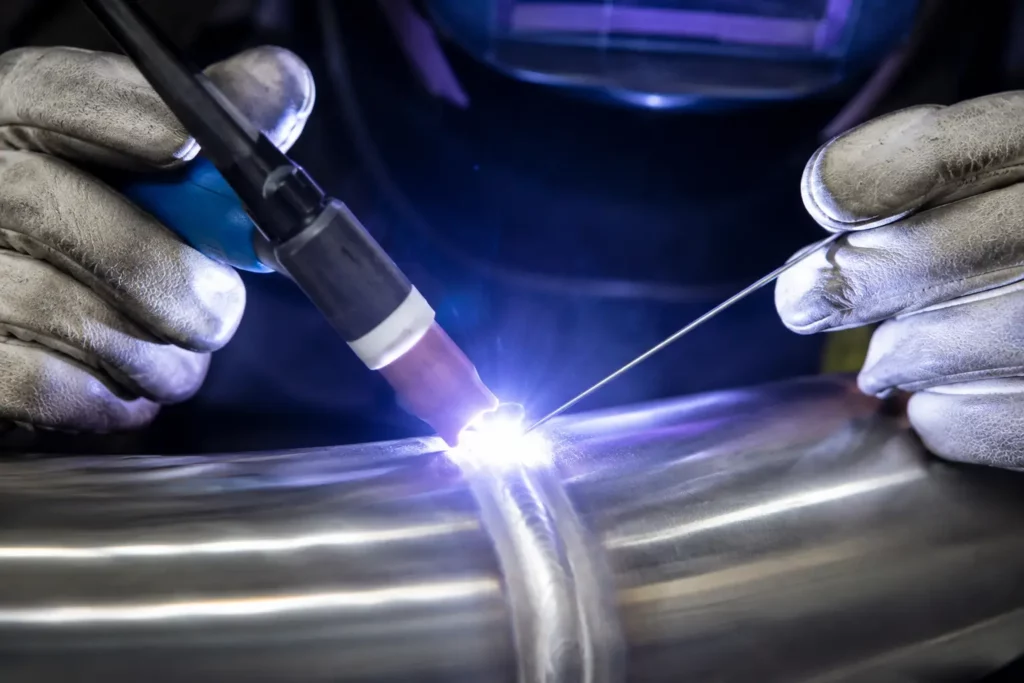
TIG welding creates an electric arc between a pointed tungsten electrode and the base metal workpiece. The tungsten electrode conducts electricity but does not melt into the weld during normal TIG welding. Choosing the right TIG welding tungsten electrodes matters because electrode type, diameter, and tip preparation affect arc stability.
The tungsten’s high melting point allows it to maintain a stable, focused arc without becoming part of the weld itself. This separation between arc generation and filler metal addition gives welders independent control over heat input and material deposition.
Shielding Gas Protects the Weld Pool
Argon gas flowing through the TIG torch creates a protective atmosphere around the arc and weld pool, displacing oxygen and nitrogen that would otherwise contaminate the molten metal. This inert gas shielding prevents oxidation that causes discoloration, porosity that creates internal voids, and nitrogen absorption that can make welds brittle.
For most applications, pure argon provides adequate protection while maintaining stable arc characteristics. Aluminum welding may use argon-helium mixtures that provide higher heat input for thicker material.
Filler Rod Is Added by Hand
When filler metal is needed, welders manually feed TIG welding rods into the weld pool with one hand while controlling the torch with the other. This manual feeding, unlike the automatic wire feed of MIG welding, allows welders to adjust filler metal addition precisely based on joint fit-up and heat conditions.
Some TIG applications use no filler metal at all, simply melting and fusing the base metal edges together. The flexibility to add filler only when and where needed contributes to TIG’s reputation for clean, controlled welding.
AC/DC Control Changes the Heat
TIG welding machines provide either DC (Direct Current) output, AC (Alternating Current) output, or both. DC TIG works well for steel, stainless steel, and most metals, while AC TIG is essential for aluminum and magnesium where the alternating current helps break up surface oxides during welding.
A foot pedal or finger control allows welders to adjust amperage in real-time during welding, reducing heat when approaching corners or thin sections, increasing heat to maintain penetration on thicker areas.
How Is TIG Welding Different From MIG and Stick Welding?
TIG occupies a distinct position among common welding processes, prioritizing control and quality over speed and simplicity.
Electrode and Filler Setup
MIG welding continuously feeds consumable wire through the torch, combining electrode and filler metal in a single component. Stick welding uses a flux-coated consumable rod. TIG separates these functions—the tungsten electrode only creates the arc, while separate filler rods are manually added when needed. This gives TIG welders independent control but requires coordinating both hands simultaneously.
Speed, Control, and Finish
| Feature | TIG Welding | MIG Welding | Stick Welding |
| Welding Speed | Slower | Faster | Moderate |
| Heat Control | Excellent | Good | Fair |
| Weld Appearance | Excellent | Good | Fair to Good |
| Thin Material | Excellent | Good | Poor |
| Learning Curve | Steep | Moderate | Moderate |
Best Fit by Process
TIG is usually the better fit for thin materials, stainless steel, aluminum, visible welds, and precision work. MIG is usually better when speed and repeatable production matter more. Stick welding still works well for outdoor repair, thicker steel, and less-than-perfect surfaces.
What Are the Main Advantages and Disadvantages of TIG Welding?
TIG welding gives excellent control and clean results, but it is not the fastest or easiest welding process.
Where TIG Adds Value
- Superior Weld Quality: TIG produces clean, precise welds with little spatter. That means less cleanup, which matters for sanitary equipment, visible stainless work, and parts where appearance affects acceptance.
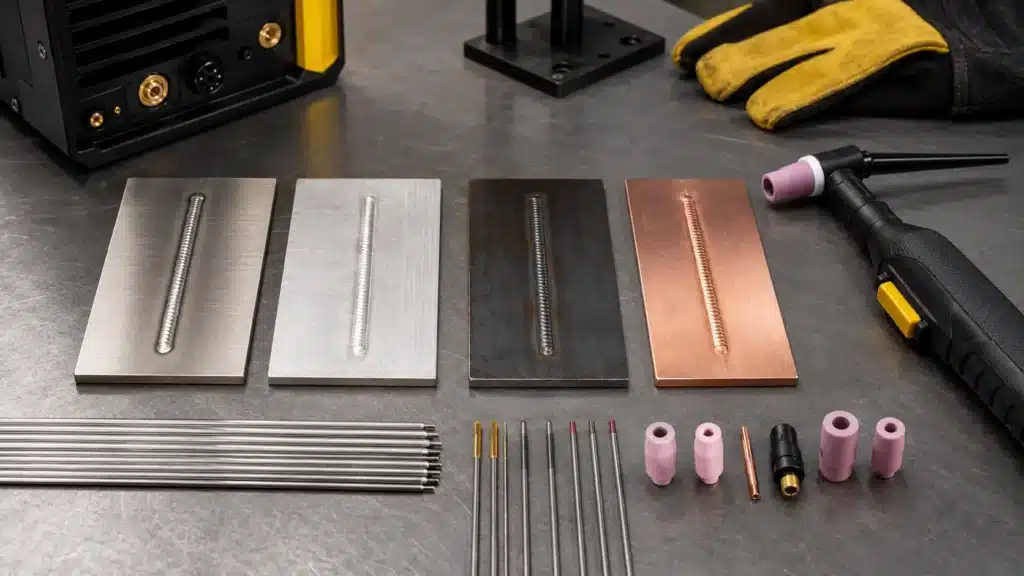
- Material Versatility: TIG can weld stainless steel, aluminum, mild steel, copper alloys, titanium, and nickel-based alloys. The setup still needs to match the material, thickness, current type, shielding gas, and filler rod.
- Precise Heat Control: Foot pedal or finger control lets the welder adjust amperage during the weld. This helps reduce warping, distortion, and burn-through on thin materials.
Where TIG Has Trade-Offs
- Slower Welding Speed: TIG is slower than MIG for routine production work because filler rod is added by hand.
- Higher Skill Demand: TIG requires torch control, filler rod timing, amperage control, and travel speed to work together.
- Higher Equipment Cost: AC/DC TIG machines, foot pedals, water-cooled torch setups, and TIG consumables can cost more than basic MIG or Stick setups.
When TIG Is Worth Choosing
TIG is worth choosing when weld quality, appearance, heat control, or material compatibility matters more than speed. For fast weld deposition on ordinary steel, MIG is often the more efficient process.
What Materials Can You Weld with TIG?
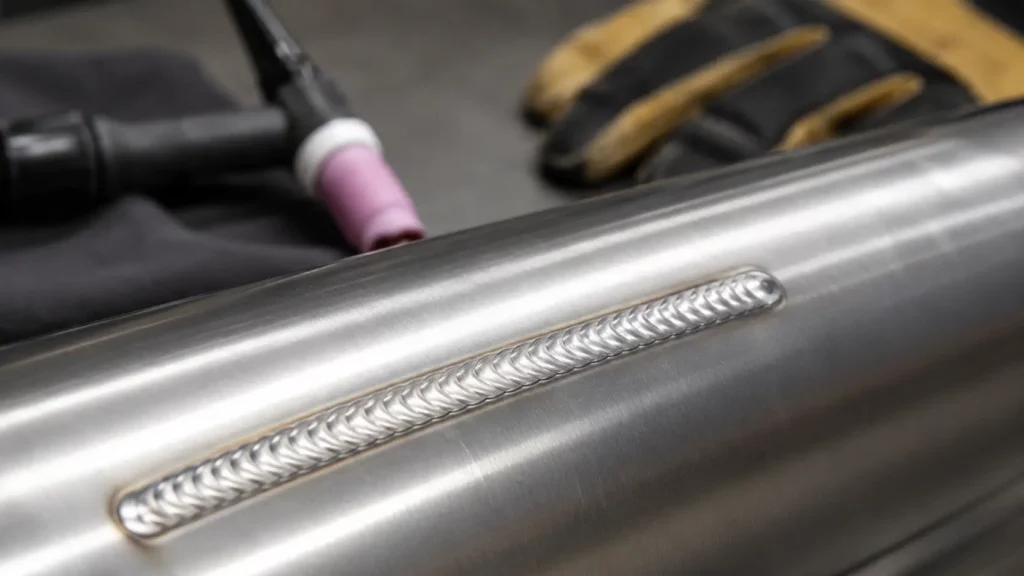
TIG welding can weld many common and specialty metals, but each material needs the right current type, shielding gas, filler rod, and heat control. This is why material choice should come before machine choice.
Common Metals TIG Handles Well
- Stainless Steel: TIG excels at stainless steel welding, producing clean, corrosion-resistant welds. Food processing equipment, pharmaceutical systems, and architectural applications routinely specify TIG for stainless.
- Aluminum: AC TIG capability is essential for aluminum welding. The alternating current helps break up aluminum’s surface oxide while maintaining stable arc characteristics.
- Mild Steel: While MIG often proves faster for production steel welding, TIG delivers superior appearance and precision when finish quality matters.
- Copper and Copper Alloys: TIG’s precise heat control handles copper’s high thermal conductivity better than most processes.
Specialty Materials That Benefit from Precise Control
- Titanium: Aerospace and medical device manufacturers use TIG almost exclusively for titanium welding, where contamination from other processes would compromise material properties.
- Exotic Alloys: Inconel, Hastelloy, and other high-performance alloys used in chemical processing and aerospace applications require TIG’s clean, controlled welding environment.
Material choice also affects machine choice. Steel and stainless work can often use DC TIG, while aluminum and magnesium usually require AC/DC TIG. That is why the next step is matching the TIG welding machine to the actual material range, not just comparing price or maximum amperage.
What Industries Commonly Use TIG Welding?
TIG welding appears across industries where weld quality, cleanliness, precision, or material control matters more than speed. You will see it most often in parts that need a clean finish, tight heat control, or dependable weld integrity.
Aerospace and High-Value Manufacturing
Aerospace manufacturers use TIG for aluminum airframe components, titanium engine parts, and stainless steel assemblies where weld quality and material integrity are safety-related.
TIG is a good fit here because it gives the welder close control over heat input and filler metal. That matters when the part is thin, expensive, or difficult to repair after welding.
Medical and Sanitary Fabrication
Medical device work uses TIG for surgical instruments, implantable devices, and medical equipment made from stainless steel, titanium, and other biocompatible materials.
Food and pharmaceutical equipment also relies on TIG for process piping, tanks, and sanitary equipment. These welds need to be smooth and clean so they do not trap residue, moisture, or bacteria.
Automotive Performance and Thin Tubing
Automotive performance work uses TIG for custom exhaust systems, race car fabrication, stainless tubing, and visible welds.
The process is slower than MIG, but it gives better control on thin tubing and cleaner-looking welds on parts that customers can see. For exhaust and performance fabrication, appearance often matters almost as much as strength.
Power Generation and Chemical Processing
Power generation facilities use TIG for pressure vessels, piping systems, and stainless or nickel-alloy components where weld quality affects long-term reliability.
Chemical processing also uses TIG for stainless steel and exotic alloy welds exposed to corrosive environments. In these applications, poor weld quality can affect corrosion resistance, inspection results, and service life.
How Industry Use Connects to TIG Machine Selection
These industry examples also explain why TIG machine selection should start with real applications. Thin stainless tubing usually needs stable low-amp starts, fine heat control, and pulse settings. Aluminum parts usually need AC output, AC balance control, enough amperage, and a torch setup that stays comfortable during longer welds.
When comparing options from a welding equipment supplier, check whether the product page and spec sheet clearly connect each machine to the materials, amperage range, torch setup, and workflow it is built for.
What Equipment Do You Need for TIG Welding?
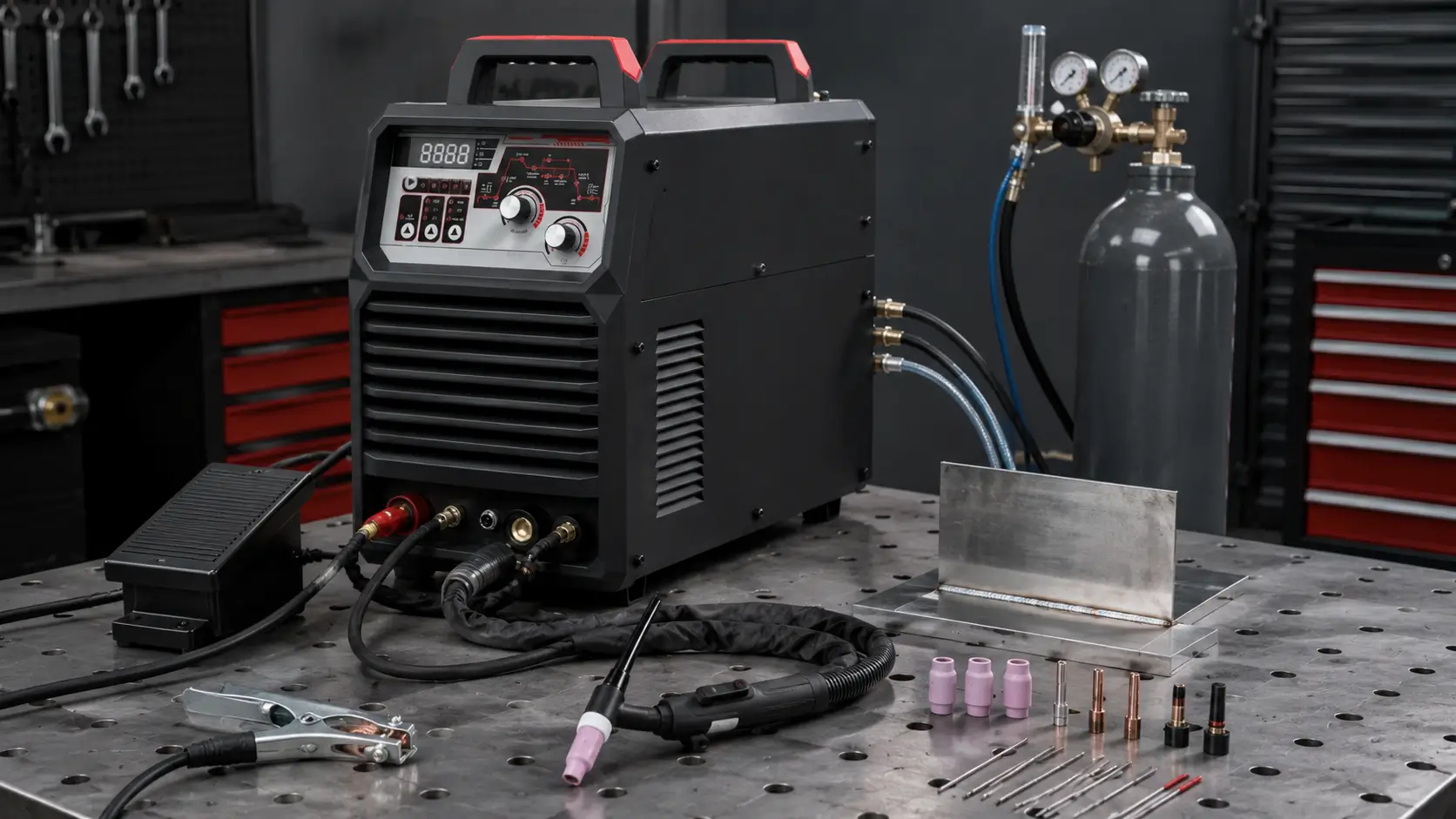
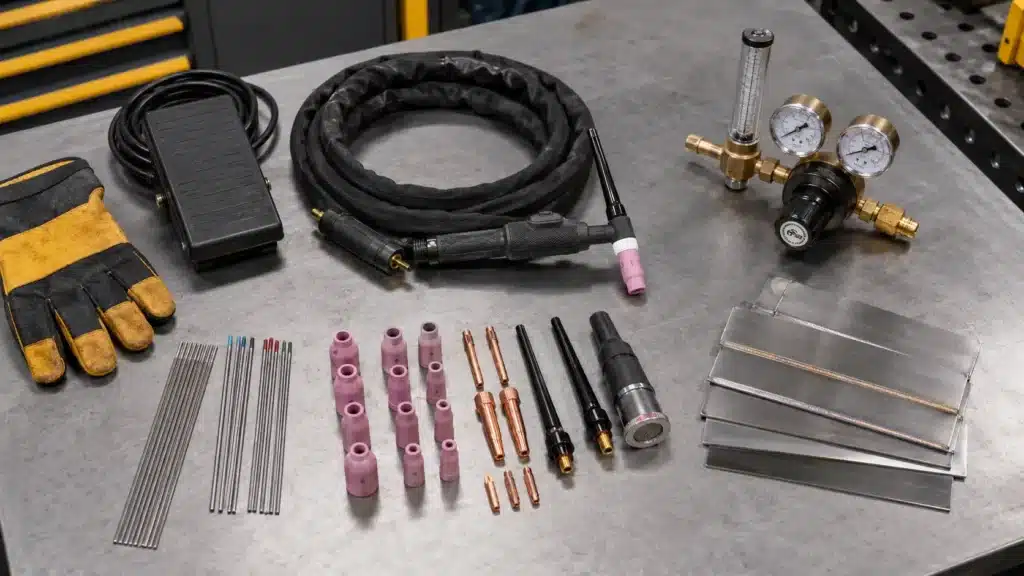
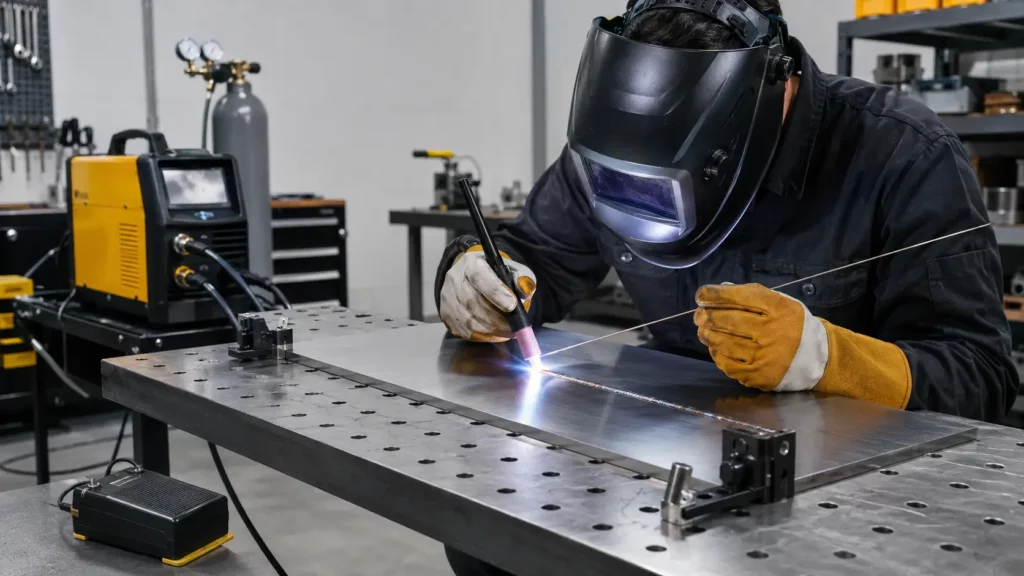
TIG welding equipment works as a complete system, not just a welding machine. The power source, torch, tungsten electrode, shielding gas, filler rod, and control accessories all need to match the material, amperage range, and welding time.
TIG Welding Machine
The TIG welding machine provides controlled electrical output, current adjustment, and features such as high-frequency start, pulse control, and AC/DC output. DC TIG works well for steel and stainless steel. AC/DC capability costs more, but it is needed when aluminum or magnesium welding is part of the work.
For shop use, also check the output range, duty cycle, input power, and whether the machine supports foot pedal or finger control.
TIG Torch and Shielding Gas
The TIG torch holds the tungsten electrode and delivers shielding gas to the weld area. Air-cooled torches suit lighter or intermittent work, while water-cooled torches make more sense for higher amperage or longer welds.
Most TIG welding uses argon shielding gas. The setup also needs a gas cylinder, regulator, hose, and the right gas flow. Poor gas coverage can cause discoloration, porosity, and weak weld quality.
Different TIG welding tungsten electrodes suit different materials, current types, and arc preferences. Many shops now use lanthanated or ceriated tungsten for broad AC/DC use, while thoriated tungsten should be handled with proper safety controls because it contains radioactive thorium.
Filler Materials and Control Accessories
TIG welding rods provide filler metal when the joint needs extra material. The rod should match the base metal and weld requirement, such as stainless filler for stainless work or aluminum filler for aluminum work.
Foot pedals or finger controls let the welder adjust amperage during the weld. Cups, collets, back caps, gas lenses, and replacement tungsten also matter because TIG performance depends on small setup details.
How Do You Choose the Right TIG Welding Machine for Your Application?
Choose a TIG welding machine by starting with the material. Steel and stainless usually point to DC TIG. Aluminum and magnesium usually point to AC/DC TIG. After that, compare amperage range, duty cycle, start type, pulse settings, torch cooling, and available input power.
Choose DC or AC/DC by Material
DC TIG machines suit steel, stainless steel, copper, and other non-aluminum work. They usually cost less than AC/DC models and work well when the material range is clear.
AC/DC TIG machines add aluminum and magnesium capability. They cost more, but they make sense for shops that handle mixed materials or need one TIG machine to cover a wider range of work.
Key TIG Welder Specifications to Compare
- Output Range: Match the amperage range to your material thickness.
- AC/DC Capability: Choose AC/DC if aluminum or magnesium is part of the work.
- High-Frequency Start: Use it when clean arc starts and lower tungsten contamination matter.
- Pulse Capability: Use pulse for thin materials, heat control, and cleaner bead appearance.
- Duty Cycle: Match the duty cycle to how long the machine needs to weld at higher output.
- Input Power: Check whether the shop has the right 120V, 240V, or industrial power supply.
Match Cooling and Workflow to Real Use
Water-cooled torch capability matters for longer welds or sustained high-amperage work. Air-cooled torches are usually enough for lighter or intermittent TIG welding.
Also check torch comfort, consumables availability, and how the machine fits the shop workflow. A machine may have strong output on paper, but it still needs a torch and accessory setup that people can use comfortably for the actual job.
Check Support Before Adding It to a Lineup
Before adding a TIG welder to your lineup, check whether it is easy to match, explain, and support. n options, warranty terms, and replacement consumables easy to understand.
The machine should have a clear material range, such as steel and stainless for DC TIG or aluminum support for AC/DC TIG. The product page should also make the amperage range, input power, torch type, foot pedal support, and compatible consumables easy to understand.
This matters because TIG welding depends on more than the power source. Torches, tungsten electrodes, cups, collets, filler rods, pedals, and gas accessories all affect the setup. A TIG welder is easier to recommend when these parts are easy to source and the setup guidance is clear.
Conclusion
TIG welding is best for clean, precise welds where heat control and appearance matter. It is slower than MIG and takes more skill, but it works well for stainless steel, aluminum, thin materials, sanitary work, visible joints, and high-value fabrication.
The machine choice should start with the material. Use DC TIG for steel and stainless work, and choose AC/DC TIG when aluminum or magnesium is part of the job. Then compare output range, duty cycle, torch cooling, start type, pulse control, and consumable availability.
For a product lineup or shop setup, the safest choice is the machine that matches the real material range and workflow, not simply the one with the longest feature list.
Frequently Asked Questions
Yes, many TIG machines include Stick welding capability. The same power source can run both processes, though you’ll switch between TIG torch and Stick electrode holder. Combination machines provide excellent versatility.
Water-cooled torches suit applications consistently running over 200 amps or requiring extended high-amperage welding. For intermittent use or lower amperage work, air-cooled torches suffice.
Lift-arc start works adequately for many applications and keeps machine costs lower. High-frequency start provides cleaner arc initiation without tungsten contact, reducing contamination risk.
TIG typically consumes 15-20 cubic feet per hour (CFH) of argon during welding. Actual consumption varies with torch design, cup size, and gas flow settings.
Compare AC/DC capability, amperage range, duty cycle, torch type, pedal support, consumable availability, warranty terms, and technical support. The cheapest TIG machine may cost more later if it lacks the controls or accessories needed for the actual work.