Starting welding is exciting—until every machine claims it’s “perfect for beginners.”
If you want the easiest learning curve, most beginners should start with a compact MIG or MIG/flux-core welder that runs on a standard 110–120V outlet. These machines give you stable arcs, simple controls, and enough power for real projects without overwhelming you.
In this guide, we’ll break down what to buy, why it works for beginners, and which features actually help you learn faster—so your first welds build confidence instead of frustration.
What welding processes should a beginner learn?
Beginners should start with MIG or flux-core welding because both processes are forgiving and fast to learn.
Here’s how the main options stack up for first-time welders:
- MIG Welding: Cleaner welds with less spatter when using shielding gas. Best for indoor garage work and learning consistent technique.
- Flux-Core Welding: No gas required and more tolerant of wind. Useful for outdoor repairs, but welds are messier.
- Stick Welding: Valuable long-term skill, but harder to control at the beginning.
- TIG Welding: Extremely precise and clean, but requires coordination that frustrates most beginners early on.
MIG vs Flux-Core: Which Welding Process Is Best for Beginners?
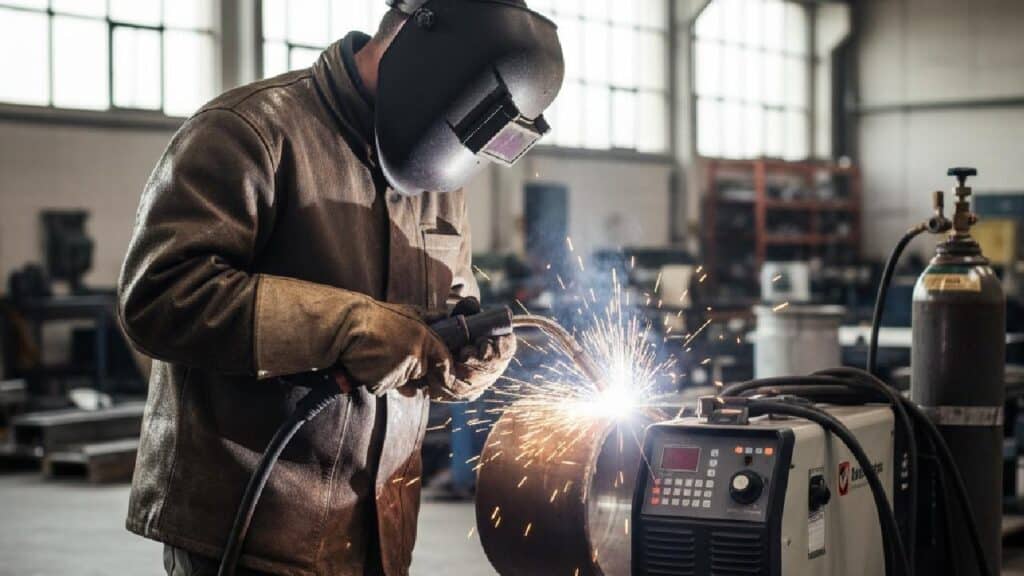
Most beginners learn faster with MIG welding, especially for indoor garage or workshop use. MIG produces cleaner welds with less spatter, which makes early practice less frustrating and easier to control.
That said, flux-core welding has a clear advantage outdoors. It doesn’t rely on shielding gas, so it performs better for fence repairs, yard projects, or any situation with wind.
Because of this, the best choice for many beginners is a dual-process MIG/flux-core welder. You can start with MIG to build confidence, then switch to flux-core when conditions demand it—without buying a second machine.
When choosing a beginner MIG or flux-core welder, focus on ease of learning rather than raw power. A beginner-friendly machine should offer:
- Stable Arc Starts: Reduces wire sticking and excessive spatter at the start of a weld.
- Clear Controls: Simple voltage and wire speed adjustments you can fine-tune gradually.
- Thermal Overload Protection: Prevents overheating during longer practice sessions.
- Common Wire Size Support: Compatibility with 0.023″ and 0.030″ wire for better control on thin steel.
- Solid Ground Clamp Connection: Ensures consistent arc behavior and reliable weld quality.
These features do more to improve early weld quality than higher amperage ratings ever will.
Want to learn more?
If you’d like a quick, practical guide on using flux-core wire with a MIG welder, this step-by-step article is worth a read: How to MIG Weld with Flux Core Wire: Protection Tips for a Clean, Strong Weld
What Power and Amperage Do Beginner Welders Really Need?
Most beginners do best with a welder that runs on 110–120V and offers roughly 90–140 amps.
That range is enough for:
- Thin Sheet Metal: Ideal for auto panels and light fabrication.
- Brackets And Repairs: Common home and garage fixes.
- Small Frames And DIY Builds: Carts, shelves, and basic structures.
More amps can help on thicker metal, but it also makes thin material easier to burn through. For beginners, “easy control” beats “max output.”
Want to learn more about 110V welders?
If you’re specifically comparing machines for home outlets, you can also read our in-depth guide: Best 110V Welding Machine: How to Choose the Best for Home Use.
Why Duty Cycle Matters More Than Beginners Expect
Duty cycle tells you how long you can weld before the machine needs to cool down. For beginners, this matters more than most people realize.
Here’s how duty cycle works in real terms:
- 20% duty cycle at 90A: Weld for 2 minutes, then wait about 8 minutes
- 30% duty cycle at 100A: Longer practice time with fewer forced breaks
When you’re learning, you’ll spend a lot of time running short beads, stopping, adjusting settings, and starting again. If the welder overheats quickly, those forced cooldowns break your rhythm and slow down progress.
A slightly better duty cycle doesn’t make you a better welder—but it makes practice less annoying, which means you’ll practice more. And that’s what actually improves your welds.
Which Beginner Welder Fits Your First Projects Best?
The best beginner welder depends on what you’ll actually build in the first few months, not on what you might do someday.
Most new welders start with simple, practical projects. Think shelves, brackets, small frames, carts, or basic repairs. Matching the machine to those jobs makes learning far easier.
Here’s a realistic way to choose:
- Indoor Garage Projects:
A MIG welder is usually the easiest option. Clean welds, less spatter, and predictable results help you focus on technique instead of cleanup. - Outdoor Repairs and Yard Work:
Flux-core welding works better when wind makes gas shielding unreliable. Fence repairs and outdoor brackets fall into this category. - Thin Steel and Light Fabrication:
A compact MIG or dual-process MIG/flux-core welder offers the best control without overwhelming heat.
For most beginners, compact dual-process machines hit the sweet spot. They’re designed for common home materials, manageable learning curves, and realistic first projects—not heavy industrial fabrication.
Starting with the right-sized machine helps you learn faster and avoids the frustration of fighting equipment that’s simply overkill.
Wire Sizes and Consumables Beginners Should Know
Mig wire size has a huge impact on how controllable your weld feels—especially when you’re just starting out.
Most beginners get better results by staying on the smaller end of common wire sizes:
- 0.023″ Wire: Best for thin sheet metal and light gauge steel. Easier to control and less likely to burn through.
- 0.030″ Wire: A solid all-around choice for home fabrication, brackets, and small frames.
- 0.035″ Wire: Works for thicker material, but it runs hotter and can feel aggressive on thin steel.
If your weld feels jumpy or uncontrollable, wire size—not your technique—is often the reason.
Consumables matter just as much as wire, even though beginners rarely think about them at first. Worn or dirty consumables cause more problems than bad settings.
Pay attention to these parts:
- Contact Tips: Transfer current to the wire. Worn tips lead to inconsistent feeding and arc instability.
- Nozzles: Direct shielding gas and protect the contact tip. Spatter buildup restricts gas flow.
- Liners: Guide the wire through the torch. Dirty or kinked liners create feeding issues that feel like machine problems.
If a weld suddenly starts acting strange after working fine earlier, check consumables before touching voltage or wire speed. It saves time and frustration.
How to choose the best starter welder for your budget?
Choose a starter welder based on how often you’ll weld and what you plan to build, not just price.
For most beginners, budget tiers look like this:
- Under $300: Basic flux-core or entry-level MIG welders. Fine for quick repairs, but limited control and duty cycle, slow learning.
- $300–$600: The best range for beginners. Dual-process MIG/flux-core welders offer better arc stability, smoother wire feeding, and fewer interruptions.
- $600+: Higher-duty-cycle machines with finer control. Worth it if you plan to weld often or work with thicker material soon.
Focus on build quality, available consumables, and warranty support. A slightly better machine saves frustration—and wire—while you learn.
Common Beginner Welding Mistakes (And How to Avoid Them)
Most “bad welds” come from setup and technique—not because you’re hopeless.
Common problems:
- Arc too long: More spatter, less control
- Arc too short: Burn-back and wire sticking
- Moving too fast: Weak fusion
- Moving too slow: Overheating and warping
- Wrong gas or poor gas coverage: Dirty, porous welds
Fix approach: change one thing at a time (wire speed or voltage), then test again on scrap.
Essential Safety Gear for Beginner Welders
Always wear proper safety gear—even for “one quick tack.”
Beginner welding essentials include:
- Auto-Darkening Helmet: Protects your eyes and helps maintain consistent starts.
- Welding Gloves: Shield hands from heat, sparks, and spatter.
- Long Sleeves and Pants: Prevents burns from flying slag.
- Closed-Toe Leather Boots: Protects feet from hot metal drops.
- Safety Glasses: Extra eye protection under the helmet.
Good safety gear keeps you comfortable—and calmer welders learn faster.
Final Thoughts: What to Buy and Why
If you’re new to welding, keep it simple. A compact MIG or MIG/flux-core welder that runs on 110–120V power is the easiest place to start.
Focus on stable arc starts, clear controls, and support for common wire sizes. A reasonable duty cycle also helps—you’ll spend more time practicing and less time waiting for the machine to cool down.
If you’re ready to choose your first welder, Yeswelder offers beginner-friendly MIG and dual-process machines designed for home workshops and real learning—not industrial overkill.
Start small, build confidence, and upgrade only when your projects demand it. The right beginner welder won’t do the work for you—but it will make learning smoother and far less frustrating.
Frequently Asked Questions (FAQ)
For most beginners, a compact MIG or MIG/flux-core welder running on 110–120V power is the best choice. It offers stable arcs, simple controls, and enough power for common home projects without overwhelming new users.
MIG is much easier to learn than TIG. MIG welding requires less coordination and produces usable welds faster. TIG is more precise but demands advanced control, which often frustrates beginners early on.
Yes, many people successfully teach themselves to weld. With a beginner-friendly machine, proper safety gear, and regular practice on scrap metal, self-learning is very achievable for basic MIG or flux-core welding.
Welding isn’t hard to start, but it does take practice to master. Most beginners can learn basic MIG welding quickly, while consistency and cleaner welds come with time and repetition.
You can MIG weld outside, but wind can disrupt the shielding gas and cause poor weld quality. For outdoor work or windy conditions, flux-core welding is usually more reliable unless you can block the wind effectively.
TIG welding is generally the hardest process to learn. It requires precise hand coordination, foot pedal control, and careful heat management, making it better suited for welders with prior experience.