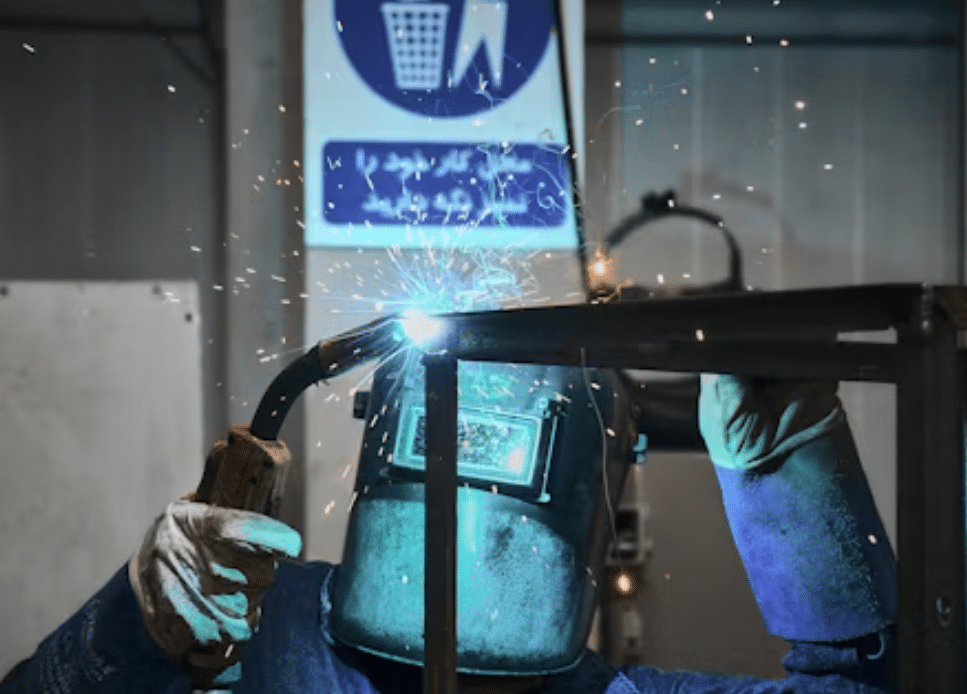
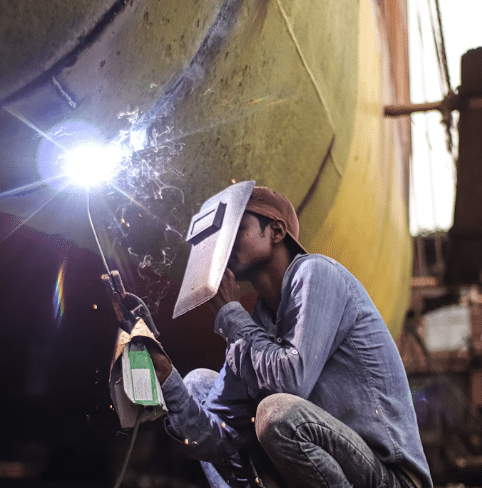
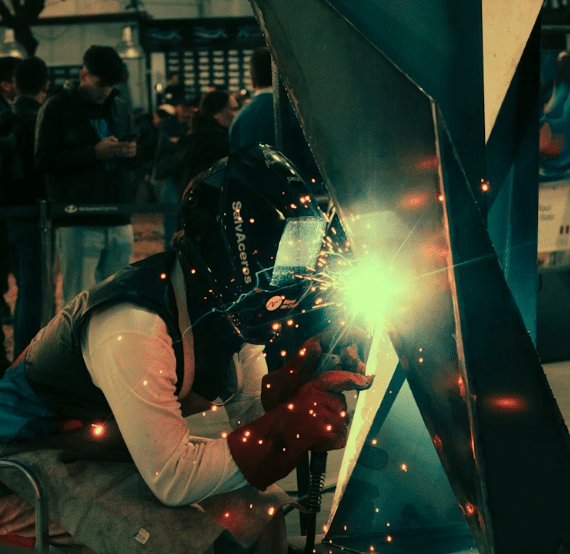
Arc welding is one of the most practical repair methods used in agriculture. Farmers rely on it to fix cracked frames, broken attachments, worn blades, and structural steel parts that take daily abuse in the field.
An arc welder creates an electric arc between the electrode and the metal surface. That heat melts both materials and forms a strong joint once it cools. It sounds simple, but doing it correctly—especially outdoors on heavy farm equipment—requires the right process and setup.
If you’ve ever had a loader arm crack during harvest, you know downtime isn’t an option. In this guide, we’ll show you how arc welding works on a farm, which welding type fits different materials, and the exact steps to produce durable, long-lasting repairs.
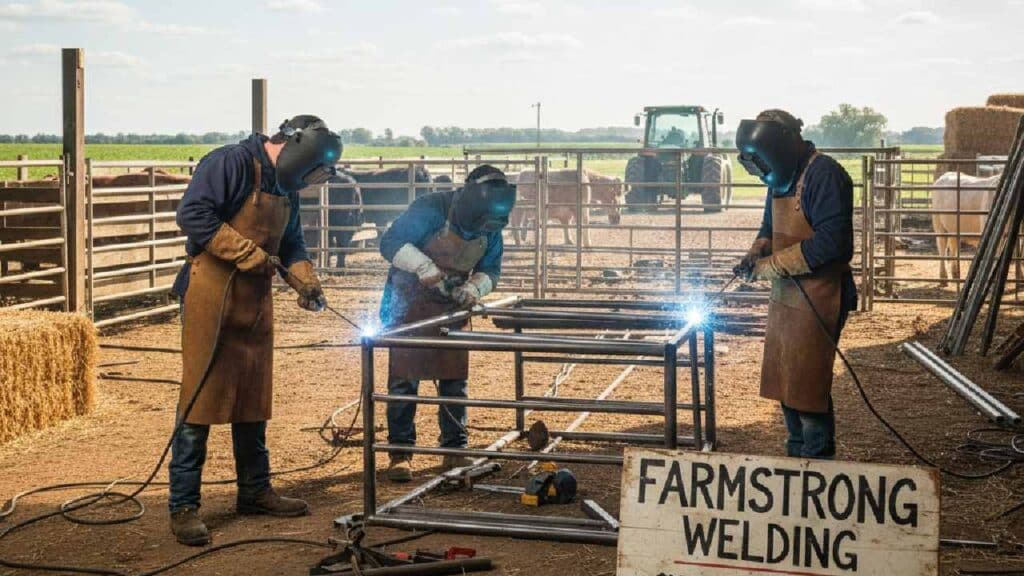
Why is Arc Welding Preferred in Agriculture?
Arc welding is preferred in agriculture because it works in tough conditions and handles thick structural steel without complicated setups.
Farm equipment doesn’t operate on clean factory floors. It runs in mud, dust, rain, and extreme heat. When a hitch cracks or a loader arm splits during planting season, you don’t have time to wait for replacement parts. You fix it on-site.
Arc welding allows you to repair heavy steel quickly, restore strength, and get the machine back into operation the same day. On a working farm, that speed protects both time and revenue.
For a deeper explanation of how agricultural welding supports long-term equipment maintenance and cost control, see our What Is Agricultural Welding? Complete Guide to Farm Equipment Repair, Processes & Cost.
What Types of Arc Welding Are Used in Agriculture?
Stick, MIG, and TIG are the three arc welding methods you’ll see most on farms. The right choice mainly comes down to where you’re welding (field vs shop) and what the metal looks like (clean vs rusty).
If you’re fixing equipment outside with dirty steel, stick welding usually wins. If you’re in a workshop doing faster, cleaner fabrication, MIG is often the easiest. TIG is the precision tool for thin stainless or aluminum parts.
Stick Welding (SMAW)
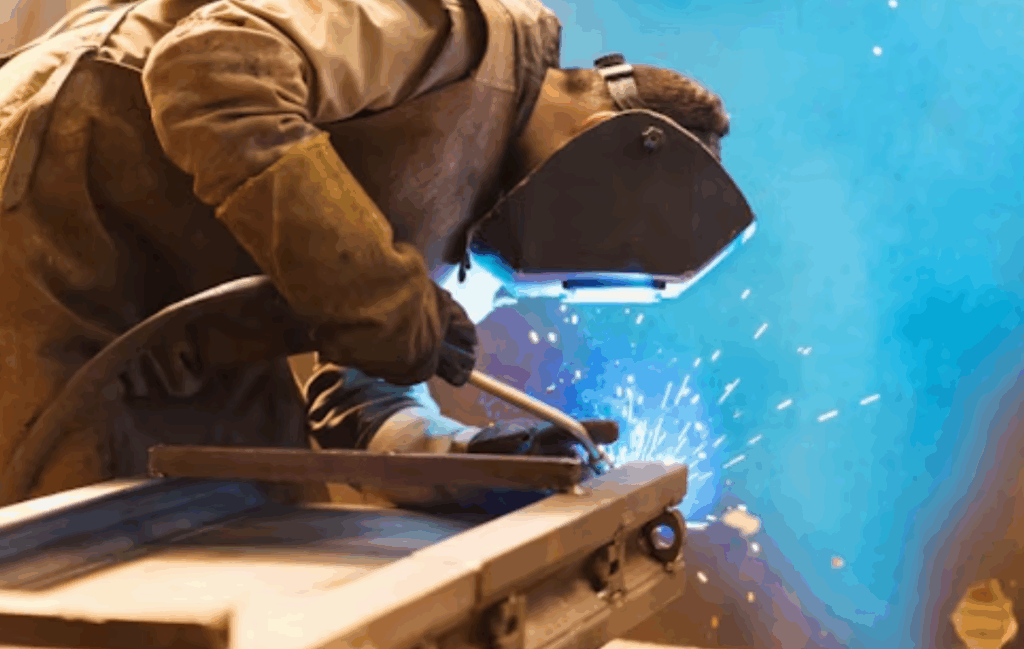
A stick welder is the go-to choice for farm repairs because it tolerates ugly conditions—rust, paint, dust, and wind. You don’t need shielding gas, so a breezy day won’t destroy your weld.
Core Features:
- Flux-Coated Consumable Electrodes: The flux creates its own shielding as it burns.
- No Shielding Gas Needed: That’s why it survives outdoor work.
- Portable Setup: Easy to run off a generator or engine-driven welder.
- Handles Dirty Steel: Better than MIG/TIG when the metal isn’t perfectly clean.
Applications in Agriculture:
- Repairing Tractor And Implement Frames
- Fixing Plows, Cultivators, And Harrows
- Welding Gates And Fences
- Reinforcing Trailers And Grain Carts
- Patching Structural Cracks On Heavy Equipment
Advantages:
- Field-Friendly: Works well in wind and dusty areas.
- Strong Penetration: Good for thick structural steel.
- Lower Cost: Simple machine and affordable consumables.
Disadvantages:
- Slag Cleanup Required: You must chip and brush between passes.
- Harder on Thin Metal: Easy to burn through the light sheet.
- Technique Matters: Poor angle or travel speed can cause undercut or porosity.
MIG Welding (GMAW)
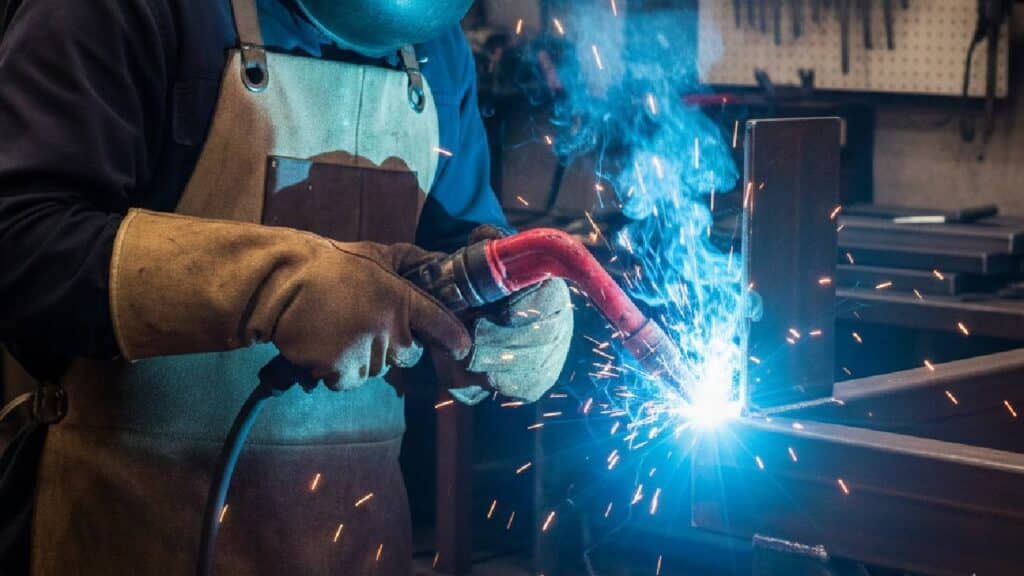
MIG Welder is a great fit when you want speed and a clean-looking bead—especially in a barn shop or enclosed work area. The catch is that MIG needs shielding gas, and wind can blow that protection away.
Core Features:
- Continuous Wire Feed: Faster than swapping stick electrodes.
- Shielding Gas Protection: Produces a cleaner bead with less slag.
- Easy Learning Curve: Most people pick it up quicker than stick or TIG.
Applications in Agriculture:
- Fabricating Brackets, Mounts, And Racks
- Repairing Thin Panels And Guards
- Livestock Equipment And Pens
- Workshop Repairs On Clean Steel
- Irrigation Frames And Light Steel Assemblies
Advantages:
- Fast Welding Speed: Good for repetitive repairs and fabrication.
- Cleaner Finish: Less cleanup than stick.
- Better On Thin To Medium Steel: More control than stick on lighter parts.
Disadvantages:
- Wind Is The Enemy: Outdoors, shielding gas can fail and create porous welds.
- Needs Cleaner Metal: Paint, oil, and rust cause ugly welds fast.
- Less Ideal For Thick Structural Cracks: You may need multiple passes and prep.
TIG Welding (GTAW)
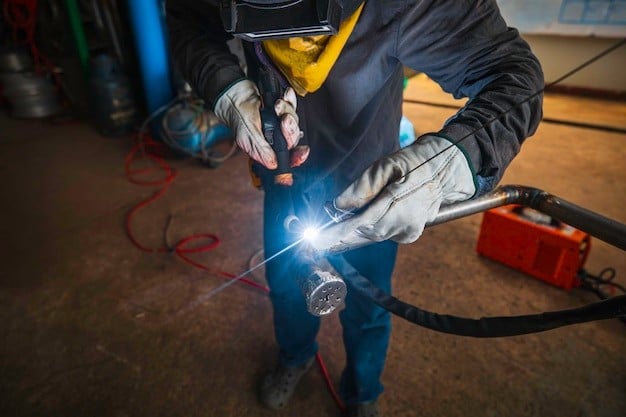
The TIG welder is what you use when the material is thin, and the weld needs to be precise—think stainless or aluminum parts, especially in food-related farm equipment or irrigation components.
Core Features:
- Non-Consumable Tungsten Electrode: You control heat independently of the filler.
- Separate Filler Rod: Cleaner, more controlled bead.
- Excellent Arc Control: Great for thin metal and tight joints.
Applications in Agriculture:
- Stainless Steel Farm And Dairy Equipment
- Aluminum Irrigation Components
- Food-Grade Processing Frames And Tanks
- Precision Repairs On Thin Metal Parts
Advantages:
- High Precision And Clean Beads: Minimal spatter, great control.
- Best For Thin Stainless/Aluminum: Where stick or MIG can distort parts.
Disadvantages:
- Slow Speed: Not ideal when you just need to get back to work.
- More Skill Required: Hand coordination matters a lot.
- Indoor Preference: Wind and contamination still cause trouble.
NOTE: Stick welding is still the most common on farms because it’s the most forgiving outdoors on thick steel.
How Do You Use an Arc Welder in Agriculture Step by Step?
You can get strong, long-lasting farm welds if you follow a simple order: prep → fit-up → settings → weld → clean → inspect. Skip the prep, and the weld may look fine today, but fail under load next week.
Step 1: Prepare the Work Area
Set up so you can weld safely and steadily. Then prep the metal until you can actually trust the joint.
- Grind Off Rust, Paint, And Oil: Clean metal gives you stronger fusion.
- Clamp or Support the Part: Movement during welding causes cracks later.
- Check Your Ground Clamp: Poor contact = unstable arc and weak bead.
- Ventilate if Indoors: Welding fumes build up fast in small shops.
Step 2: Select the Right Electrode
Pick the electrode based on two things: metal condition and strength requirement.
- Use a “digging” rod for dirty steel (good for field repairs).
- Use a stronger low-hydrogen rod when the joint carries a heavy load.
If you’re unsure, start with the electrode your farm repairs have worked with historically, then match diameter to metal thickness.
Step 3: Set Welding Current
Set the amperage so the arc stays stable and the puddle wets into the base metal.
- If amperage is too low, the rod will stick, and the bead may sit on top without proper fusion.
- Too High: You get excessive spatter, undercut, or burn-through on thinner parts.
Dial it in on a scrap piece first. That 60-second test saves you a rework later.
Step 4: Strike the Arc
Strike the arc with a quick scratch, then immediately hold a short, steady arc length. A long arc causes spatter and weak penetration.
If the rod keeps sticking, don’t fight it for five minutes—adjust amperage and clean the ground contact.
Step 5: Perform Weld
Maintain a steady travel speed and consistent angle so the bead doesn’t pile up or wash out.
- Watch The Puddle, Not The Rod Tip: The puddle tells you if you’re fusing correctly.
- Don’t Over-Weave: Wide weaves can trap slag and create defects.
- Fill The Joint Fully: A half-filled groove is a crack waiting to grow.
Step 6: Remove Slag and Inspect
Chip and brush slag completely, then inspect before you paint or put it back under load.
Check for:
- Cracks: Especially at starts/stops.
- Porosity: Pinholes mean shielding/contamination problems.
- Undercut: A groove along the edge weakens the joint.
- Lack of Fusion: Bead looks fine, but didn’t bond to the base metal.
If the part is load-bearing (hitch, frame, loader arm), redo weak sections now. Field failures cost more.
What Equipment Do You Need for Arc Welding in Agriculture?
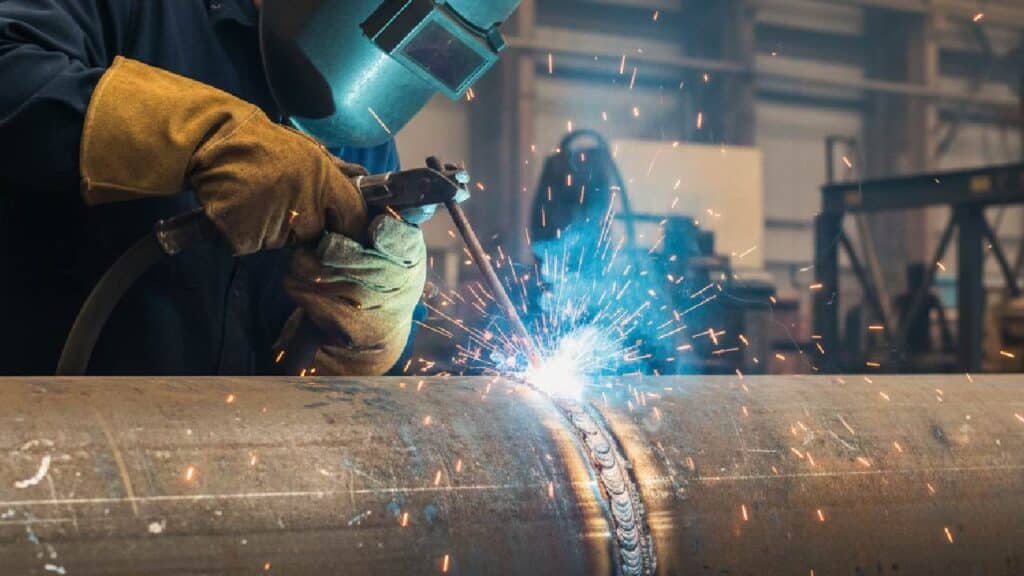
You don’t need a huge setup to weld on a farm, but you do need the basics to keep repairs safe and consistent: a reliable machine, correct consumables, proper PPE, and a few prep tools that do most of the heavy lifting.
Arc Welding Machine
Your welding machine needs a stable output and enough power for thick steel repairs. If you weld far from utility power, a generator-ready or engine-driven unit makes life easier.
Electrodes
Electrodes provide filler metal and (for stick) shielding through flux. Store them dry. Damp electrodes cause unstable arcs and weaker welds.
Protective Gear
Use a welding helmet (not “glasses”), heat-resistant gloves, a jacket or sleeves, and sturdy boots. Farm welding often happens in awkward positions, so burns happen fast if you skip PPE.
Preparation Tools
Prep tools are what make a farm weld last. A grinder, a wire brush, and clamps often matter more than fancy settings.
Where Is Arc Welding Used in Agriculture?
Arc welding supports almost every structural repair and fabrication task on a working farm. If it’s made of steel and carries a load, chances are it has been welded at some point.
Equipment Repair
Arc welding restores cracked or broken components so machines can return to work quickly.
- Tractor Chassis and Frames: Structural cracks from heavy loads or uneven terrain.
- Broken Attachments: Loader brackets, hitch plates, or mount points that fail under stress.
- Worn Cutting Edges And Blades: Reinforcing worn areas instead of replacing the whole part.
- Machine Frames: Preventing small cracks from spreading across main supports.
A 2-inch crack in a loader arm doesn’t look serious—until it spreads under load. Welding it early prevents full structural failure.
Reinforcement Work
Reinforcement is about preventing repeat damage.
- Strengthening Weak Joints: Adding gussets or support plates to high-stress zones.
- Repairing Load-Bearing Parts: Rebuilding structural integrity after fatigue.
- Adding Support Brackets: Increasing stability on trailers or equipment frames.
Instead of welding the same crack every season, many farmers add reinforcement plates to eliminate stress concentration.
Fabrication
Arc welding also allows custom fabrication when factory parts don’t match your real workload.
- Custom Tool Mounts
- Equipment Modifications
- Transport Frames
- Heavy-Duty Racks
Farm work isn’t always “standard.” Welding lets you adapt equipment instead of adapting your workflow.
Infrastructure Maintenance
Beyond machinery, farms rely on welded steel structures.
- Gate And Fence Repairs
- Shed And Barn Frame Reinforcement
- Water System Supports
- Livestock Pen Construction
If you walk around a working farm for 10 minutes, you’ll likely see at least five weld repairs holding things together.
What Challenges Does Arc Welding Face in Agricultural Environments?
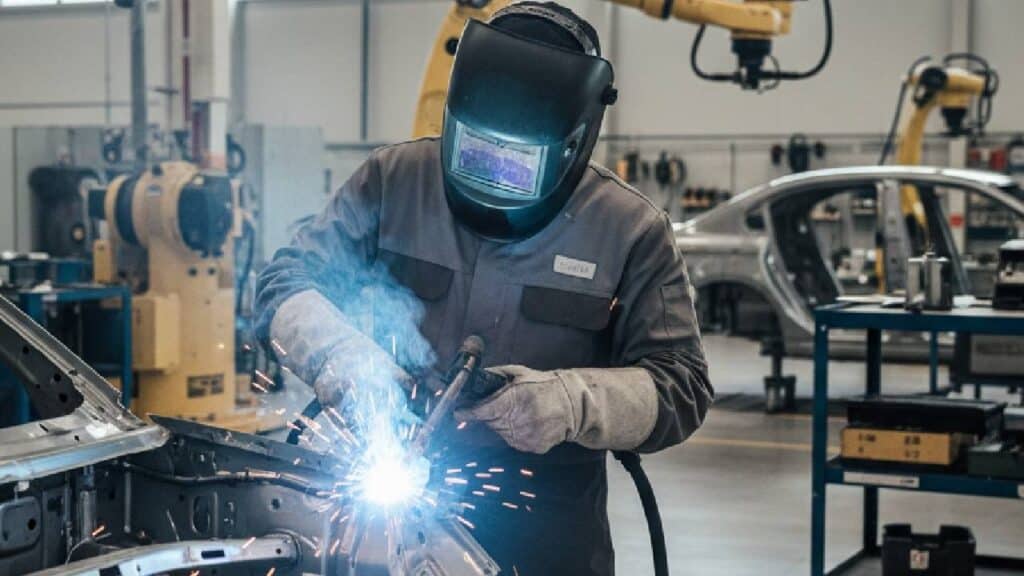
Arc welding on a farm isn’t performed under perfect shop conditions. Outdoor environments introduce variables that directly affect weld quality.
Here are the most common challenges—and how to manage them:
- Weather Conditions: Wind disrupts shielding gas in MIG welding and cools weld pools too quickly. If you’re working outside, stick welding usually performs better.
- Dust and Contaminated Metal: Farm equipment collects grease, fertilizer residue, rust, and mud. Grinding and cleaning the joint area before welding prevents weak fusion and porosity.
- Power Supply Issues: Voltage fluctuations from generators can create unstable arcs. Use equipment rated for generator use and test on scrap metal before starting critical repairs.
- Equipment Wear: Dust and vibration shorten machine lifespan. Store welders in dry areas and clean air vents regularly.
- Skill Level: Inconsistent travel speed, incorrect amperage, or poor joint preparation leads to repeat cracks. Practice on scrap and inspect every structural weld carefully.
One common mistake is welding directly over a crack without grinding a groove. The crack often reappears within weeks because the root was never fused.
Conclusion
Arc welding plays a central role in keeping farm equipment operational when time and budget don’t allow for full replacements. Stick welding remains the most dependable method for outdoor structural repairs, while MIG and TIG serve better in controlled environments or when precision is required. Choosing the right process based on material condition, thickness, and working environment ensures your repair is not just quick, but durable.
Strong welds come down to preparation and consistency. Clean joints, correct electrode selection, and proper amperage settings determine whether a repair lasts for years or fails under heavy load. Investing in reliable equipment and quality consumables reduces repeat cracks, minimizes downtime, and keeps your operation running smoothly during the busiest seasons.
If you’re considering upgrading your farm welding setup, look for equipment built for field durability and stable power output. A reliable welding supply company like YesWelder can provide machines and consumables designed for consistent performance in real-world agricultural repair conditions.
FAQs About Arc Welding in Agriculture
Many welders refer to E6011 as the “farmer rod.” It performs well on dirty, rusty, or painted steel and works reliably outdoors. It offers deep penetration and tolerates less-than-perfect surface preparation, which makes it practical for field repairs.
Arc welders can operate on AC, DC, or both, depending on the machine. DC output generally provides a smoother arc and better control, especially for structural repairs. AC machines are common in basic setups and can still handle heavy farm work effectively.
The two common machine types are transformer-based welders and inverter-based welders. Transformer units are rugged and durable, while inverter machines are lighter, more energy-efficient, and easier to transport around a farm.
Arc welding can be learned by beginners, but it requires practice. Maintaining arc length, controlling travel speed, and managing heat input take time to master. Many farmers learn through hands-on repair work rather than formal training.
These numbers refer to welding positions. For example, 1G is flat position welding, while 3G and 4G involve vertical and overhead positions. On farms, most structural repairs are performed in flat or horizontal positions, but field conditions sometimes require vertical or overhead welding.