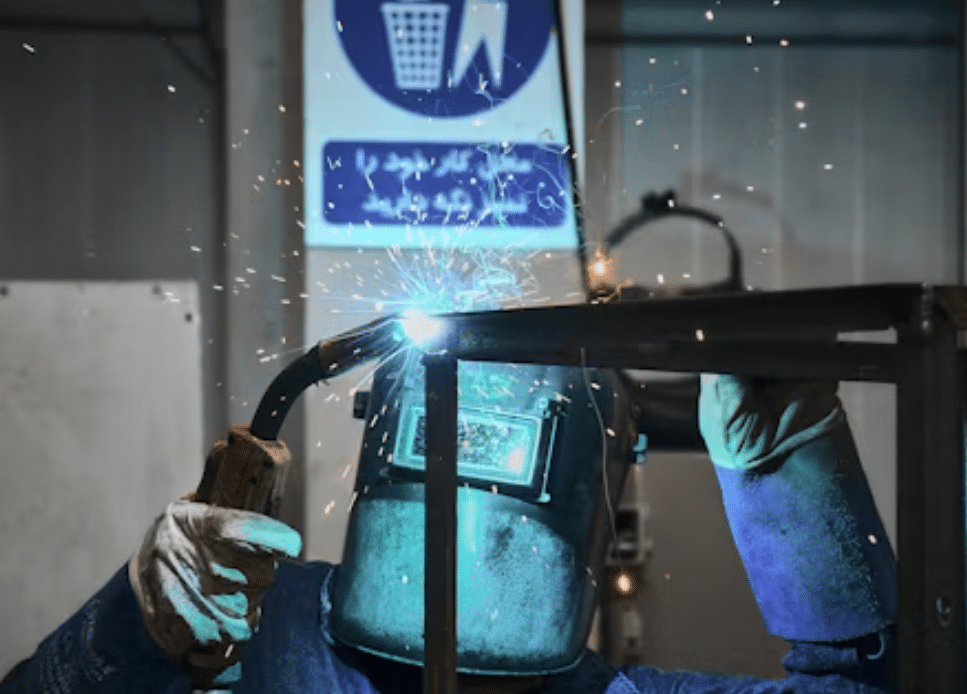
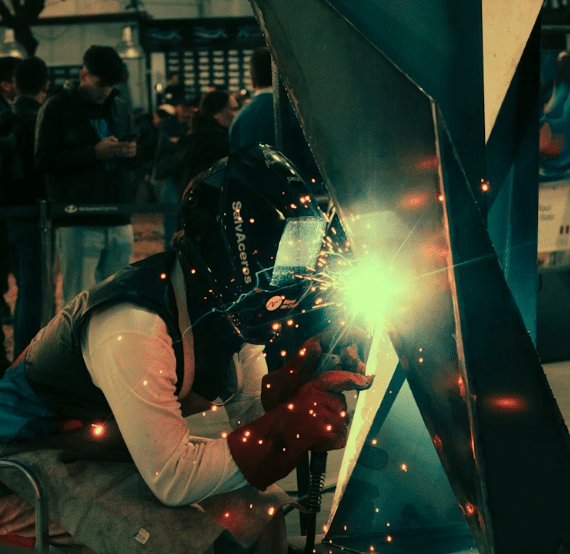
The best MIG welding settings match voltage, wire feed speed, and shielding gas to your metal thickness and wire diameter. For mild steel using 75/25 Argon-CO₂, thin metal (1–2 mm) typically runs at 15–17 volts and 90–150 IPM. Thicker sections (3–6 mm) require 17–21 volts with higher wire speed.
If your machine is set correctly, the arc sounds smooth and steady—like bacon frying. If it’s wrong, you’ll see burn-through, weak penetration, spatter, or porosity.
In this guide, you’ll find a complete MIG welding settings chart plus practical adjustment rules professionals actually use in the field.
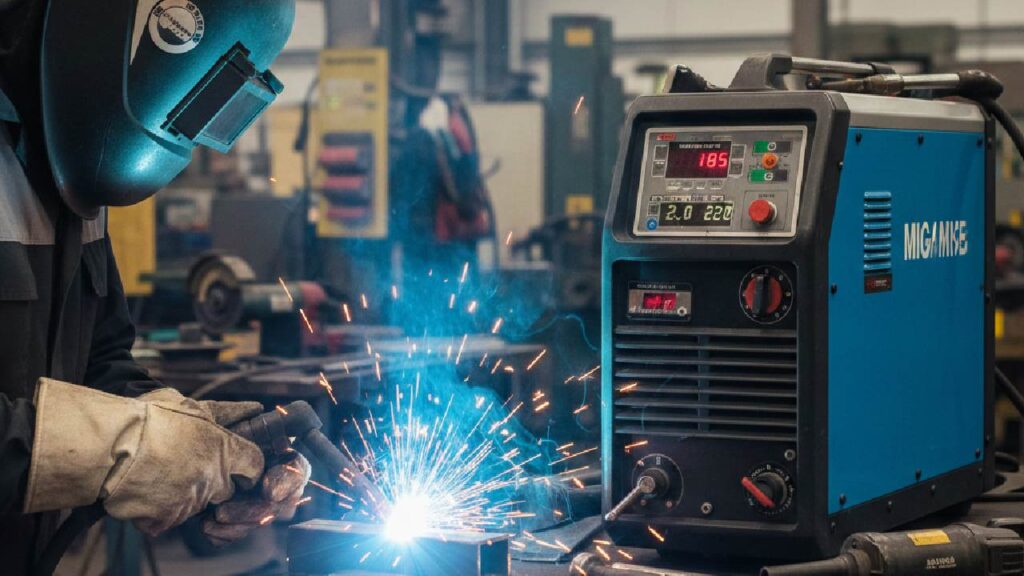
What Voltage Should You Run on a MIG Welder?
MIG voltage depends primarily on material thickness.
- 1–2 mm steel: 15–17 volts
- 3 mm (1/8 in): 17–18 volts
- 5 mm (3/16 in): 18–19 volts
- 6 mm (1/4 in): 19–21 volts
Higher voltage creates a flatter, wider bead, while lower voltage produces a taller bead with less spread. The goal is balance. If the voltage is too high, you’ll see an undercut. If it’s too low, the arc becomes unstable.
Voltage alone doesn’t determine weld quality—wire speed must match it.
How Many Amps Do You Need per Thickness?
A common professional rule is: 1 amp per 0.001 inch of steel thickness.
Examples:
- 1/8 inch steel (0.125 in) ≈ 125 amps
- 3/16 inch steel ≈ 180 amps
- 1/4 inch steel ≈ 250 amps
For 2mm steel (about 0.080 in), you typically need 60–90 amps, which equals 16–17 volts with 0.023-inch wire at 120–150 IPM.
This rule gives you a strong starting point before fine-tuning.
What Are the Recommended MIG Welding Settings for Mild Steel?
Below is a practical starting chart using ER70S-6 wire and 75/25 shielding gas.
| Thickness | Wire | Voltage | Wire Speed | Gas Flow |
| 1 mm (20 ga) | 0.023 in | 15–16 V | 90–120 IPM | 15–20 CFH |
| 2 mm (18 ga) | 0.023 in | 16–17 V | 120–150 IPM | 15–20 CFH |
| 3 mm (1/8 in) | 0.030 in | 17–18 V | 150–180 IPM | 18–22 CFH |
| 5 mm (3/16 in) | 0.030 in | 18–19 V | 180–220 IPM | 20–25 CFH |
| 6 mm (1/4 in) | 0.035 in | 19–21 V | 220–260 IPM | 20–25 CFH |
If penetration looks shallow, increase wire speed slightly. If the bead is overly flat, reduce the voltage in small steps.
How Many Litres per Minute for MIG Welding?

MIG welding typically requires 10–12 litres per minute (LPM) of shielding gas. This equals about 20–25 CFH.
Indoors, this range provides proper coverage without turbulence. Outdoors, wind can disrupt shielding, so increase flow slightly—but avoid excessive gas, which can cause porosity.
More gas does not equal better protection.
How Do MIG Settings Change for Flux-Cored Wire?
Self-shielded flux-cored welding runs hotter than solid wire and does not use external gas.
| Thickness | Wire | Voltage | Wire Speed |
| 2 mm | 0.030 in | 16–17 V | 130–160 IPM |
| 3 mm | 0.030 in | 17–18 V | 160–200 IPM |
| 5 mm | 0.035 in | 18–20 V | 200–240 IPM |
| 6 mm | 0.035 in | 19–21 V | 230–280 IPM |
Flux-core typically uses DCEN polarity. Solid wire uses DCEP. Wrong polarity immediately affects penetration and arc stability.
What MIG Settings Should You Use for Stainless Steel?
Stainless steel requires lower heat input to reduce distortion and discoloration.
| Thickness | Wire | Voltage | Wire Speed | Gas |
| 1–2 mm | 0.023 in | 15–17 V | 90–140 IPM | 98% Argon / 2% CO₂ |
| 3–4 mm | 0.030 in | 17–19 V | 150–200 IPM | Tri-Mix |
Use short-circuit transfer on thin stainless steel. Maintain steady travel speed to prevent overheating.
What Are the Correct MIG Settings for Aluminum?
Aluminum conducts heat rapidly, so it requires higher wire speed and pure argon.
| Thickness | Wire | Voltage | Wire Speed | Gas |
| 2 mm | 0.030 in | 17–19 V | 200–300 IPM | 100% Argon |
| 3–4 mm | 0.035 in | 19–21 V | 250–350 IPM | 100% Argon |
Use a spool gun or push-pull system to prevent feeding problems. Apply a push technique for better shielding and bead profile.
Should You Push or Pull When MIG Welding?
Push or Pull MIG Welding: Which Is Right for Your Weld? For solid wire MIG with shielding gas, use the push technique. Pushing improves gas coverage and produces a flatter bead.
For self-shielded flux-core, pull the gun. Pulling increases penetration and improves slag control.
Wire type determines technique.
How Do You Reduce Spatter in MIG Welding?
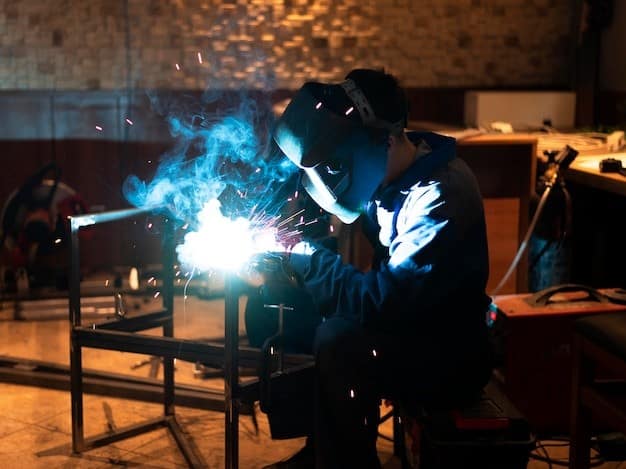
Spatter usually means imbalance.
Check these areas:
Proper Voltage Balance: Match voltage with wire speed.
Correct Stick-Out: Keep 3/8–1/2 inch electrode extension.
Stable Gas Flow: Maintain 20–25 CFH indoors.
Correct Polarity: Verify DCEP for solid wire.
Most spatter issues come from the voltage being slightly too low for the selected wire speed.
How Do You Know If a MIG Weld Is Too Hot?
A MIG welder is too hot if you see:
Undercut Along Edges
Burn-Through on Thin Metal
Excessively Flat Beads
Heavy Spatter
If this happens, reduce the voltage slightly or increase the travel speed.
How Can You Fine-Tune Your MIG Welder?
Start with the chart. Then adjust gradually.
- Weld on scrap metal.
- Inspect bead shape and backside penetration.
- Adjust the voltage in 0.5-volt increments.
- Adjust the wire speed in small steps.
- Listen for smooth arc sound.
Even experienced welders make micro-adjustments depending on joint fit-up and position. Precision comes from small changes, not large jumps.
Final Thoughts
Strong MIG welds come from balanced voltage, correct amperage, and stable gas coverage. Use the settings chart as your foundation, apply the 1-amp-per-thousandth rule, and fine-tune based on bead appearance.
Whether you’re welding mild steel, stainless, or aluminum, controlled adjustments produce consistent results.
If you’re upgrading your equipment or looking for dependable MIG machines and consumables, explore professional-grade solutions from YesWelder to support high-quality weld performance on every project.
FAQs
The best MIG welding settings depend on metal thickness, wire size, and shielding gas. For mild steel with 75/25 gas, thin metal (1–2 mm) typically runs at 15–17 volts and 90–150 IPM. Thicker steel (3–6 mm) requires 17–21 volts and a higher wire speed. Always fine-tune based on joint type and position.
To MIG weld 2mm steel, you typically need 60–90 amps. This usually equals 16–17 volts with 0.023-inch wire and 120–150 IPM wire speed. These settings provide good penetration without burn-through. Always test on scrap metal and adjust slightly for joint fit-up and welding position.
For most mild steel projects, MIG voltage ranges between 15 and 21 volts, depending on thickness. Thin sheet metal uses 15–17 volts, while 1/4-inch steel requires 19–21 volts. Correct voltage creates a stable arc and smooth bead profile. Balance the voltage with the wire feed speed for best results.
MIG welding typically requires 10–12 litres per minute (LPM) of shielding gas, which equals about 20–25 CFH. This flow rate protects the weld pool from contamination without causing turbulence. Outdoor welding may need slightly higher flow, but excessive gas can increase porosity.
For MIG welding with solid wire and shielding gas, you should use the push technique. Pushing improves gas coverage and produces a flatter bead. For self-shielded flux-cored wire, pull the gun to increase penetration and slag control. The correct technique depends on the wire type.