The short answer is simple: push MIG welding gives you cleaner, better-looking welds, while pull MIG welding delivers deeper penetration and stronger joints.
In practice, the right choice comes down to material thickness, joint type, and what matters more on your job—appearance or strength. If you’ve ever dealt with excessive spatter, weak fusion, or uneven beads, there’s a good chance gun direction played a role.
In this guide, we’ll explain how push and pull MIG welding work, where each technique performs best, and how to choose the right method for consistent, reliable welds.
What Is Push MIG Welding?
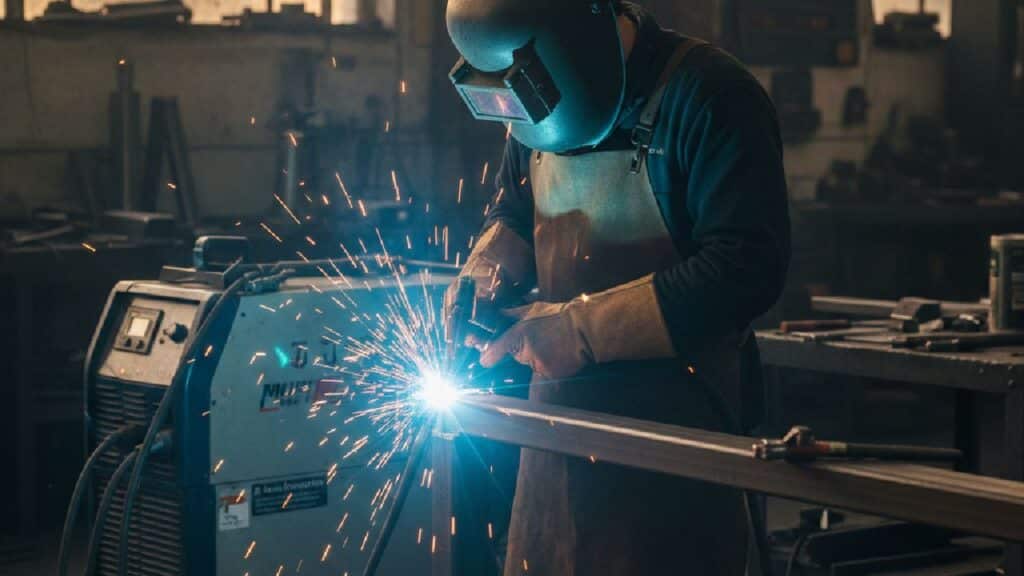
Push MIG welding (also called the forehand method) means angling the gun in the direction of travel and pushing the weld puddle forward.
You choose push MIG welding when clean appearance, better visibility, and stable shielding gas coverage matter more than deep penetration. This is why it’s commonly used on thin materials and cosmetic welds.
Core Features of Push MIG Welding
- Forward Gun Angle (10–15°): Keeps the arc leading the puddle, which makes it easier to control bead shape and travel speed.
- Shallower Penetration: Reduces the risk of burn-through on thin metal.
- Improved Gas Coverage: Shielding gas protects the puddle before contamination can reach it.
- Cleaner Bead Profile: Produces flatter, more uniform welds with minimal spatter.
- Better Visibility: Helps you track the joint and make small corrections as you weld.
If you’re welding aluminum or stainless steel indoors, pushing usually delivers the cleanest results with the least frustration.
What Is Pull MIG Welding?
Pull MIG welding (also known as the backhand method) means angling the gun against the direction of travel and dragging the molten weld pool along the joint.
This technique is used when penetration and joint strength are the priority, especially on thick steel or structural components.
Core Features of Pull MIG Welding
- Backward Gun Angle (10–15°): Concentrates heat directly into the joint.
- Deeper Penetration: Helps fully fuse thicker materials where shallow welds can fail.
- Higher Heat Input: Improves strength but increases the risk of distortion.
- Reduced Visibility: The puddle trails behind the arc, making control more challenging.
- Stronger Structural Welds: Well-suited for load-bearing applications.
Pull welding works well, but it’s less forgiving. Small technique errors tend to show up quickly, which is why beginners often struggle with it.
Why Push and Pull Techniques Matter?
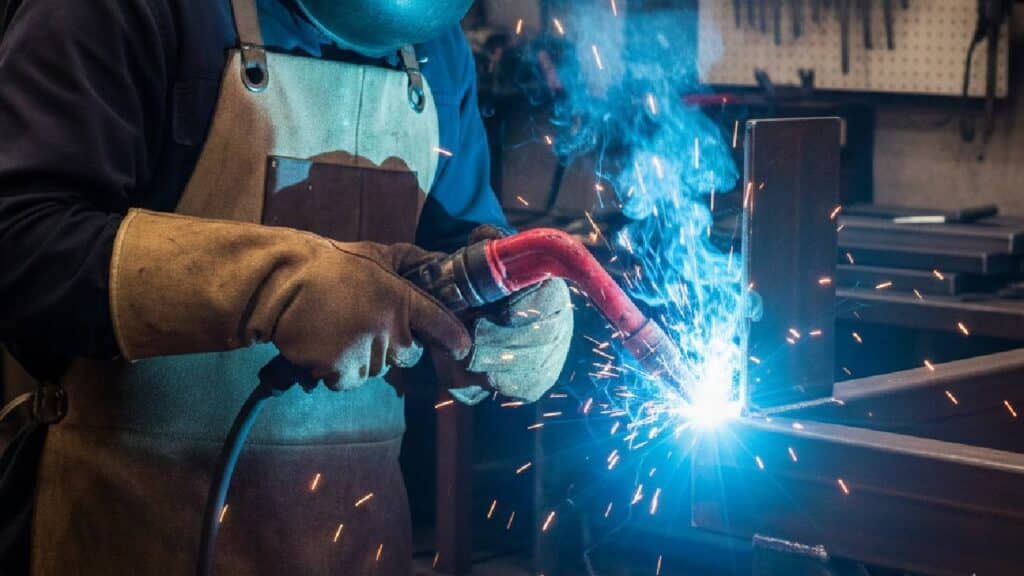
Push and pull techniques matter because gun direction directly controls penetration, bead shape, heat input, and overall weld reliability.
Pushing spreads heat over a wider area and favors surface quality. Pulling concentrates heat into the joint to achieve a stronger fusion. Using the wrong method can lead to lack of fusion, excessive spatter, warping, or cracking—issues that usually mean grinding, re-welding, and lost time.
Choosing the correct technique upfront saves effort and produces more consistent results.
Gun Angle and Direction: Push vs Pull
You can identify push or pull MIG welding by one thing: gun angle.
- Push MIG Welding: Angle the gun 10–15 degrees forward, in the direction of travel. The arc leads the puddle, producing smoother beads and better visibility.
- Pull MIG Welding: Angle the gun 10–15 degrees backward, opposite the direction of travel. The arc digs into the joint, creating deeper penetration.
Small adjustments matter. Material thickness, joint design, and wire size can all affect the ideal angle, so fine-tuning is part of the process.
7 Core Differences Between Push and Pull MIG Welding
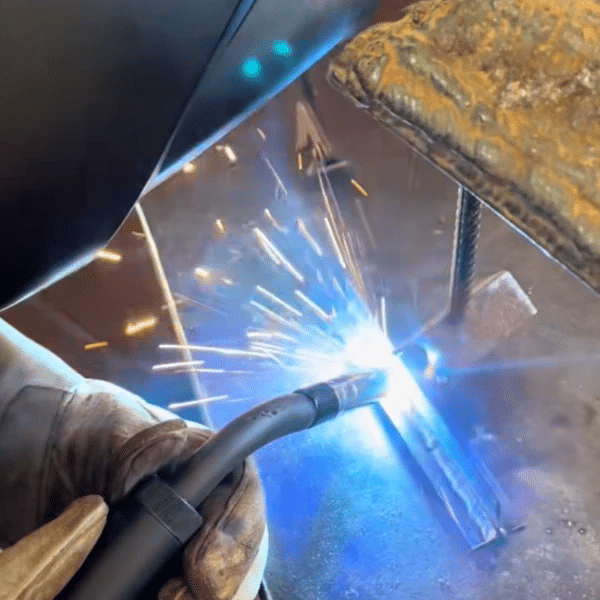
1. Bead Appearance
- Push: Flatter, wider, cleaner beads with a professional finish.
- Pull: Narrower, taller beads that favor strength over looks.
2. Heat Control and Distortion
- Push: Spreads heat more evenly, reducing warping on thin materials.
- Pull: Concentrates heat, improving fusion but increasing distortion risk.
3. Shielding Gas Coverage
- Push: Better gas coverage as the gas flows ahead of the puddle.
- Pull: Less effective coverage at the leading edge, increasing porosity risk.
4. Material Compatibility
- Push: Best for thin steel, aluminum, and stainless steel.
- Pull: Best for thick carbon steel and structural components.
5. Spatter and Cleanup
- Push: Minimal spatter and less post-weld cleanup.
- Pull: More spatter due to higher heat concentration.
6. Speed and Productivity
- Push: Allows faster travel speeds on thin materials.
- Pull: Requires slower, controlled movement for proper penetration.
7. Safety and Visibility
- Push: Better visibility and easier control, especially for beginners.
- Pull: Reduced visibility and higher risk of defects if the technique slips.
When to Choose Push vs Pull MIG Welding?
Choose Push MIG Welding If You Are:
- Welding thin materials
- Working indoors with shielding gas
- Prioritizing clean appearance
- Looking for faster welding with less cleanup
- Still developing your MIG welding skills
Choose Pull MIG Welding If You Are:
- Welding thick or structural steel
- Working on load-bearing joints
- Prioritizing penetration and strength
- Comfortable managing heat and distortion
- Focused on durability over appearance
Final Thoughts
Push MIG welding excels when control, appearance, and thin materials matter. Pull MIG welding shines when strength and penetration are the priority. Neither method is universally better—the right choice depends on what you’re welding and what that weld needs to do.
Consistent results come from matching the technique with the right equipment. A stable, well-tuned MIG welder makes it easier to manage heat, penetration, and bead quality. If you’re refining your setup, choosing reliable MIG welding equipment and accessories will make both push and pull techniques easier to execute.
FAQs
Beginners should start with push MIG welding. Pushing offers better visibility, more stable gas coverage, and less spatter, making it easier to control the weld puddle and avoid common mistakes.
No. Pulling increases penetration, but strength depends on proper fusion, settings, and joint design, not direction alone. A poorly executed pull weld can still be weaker than a clean push weld.
In most cases, you should stick to one technique per weld. Switching mid-weld can cause inconsistent penetration, uneven bead shape, and visible defects unless you have a specific reason and strong control.
Push MIG welding is generally easier for vertical-up and overhead positions because it offers better puddle control and visibility. Pulling in these positions increases the risk of sagging and excessive spatter.
Yes. Solid wire with shielding gas performs best with the push technique, while some flux-cored wires are designed to be pulled. Always check the wire manufacturer’s recommendations before welding.