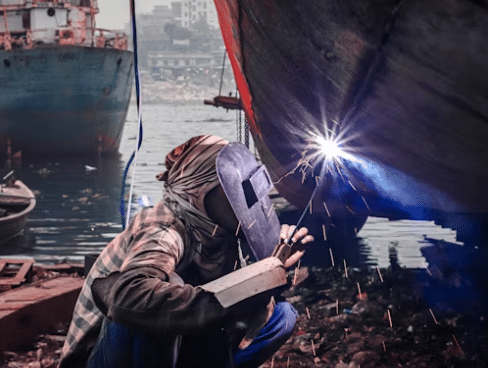
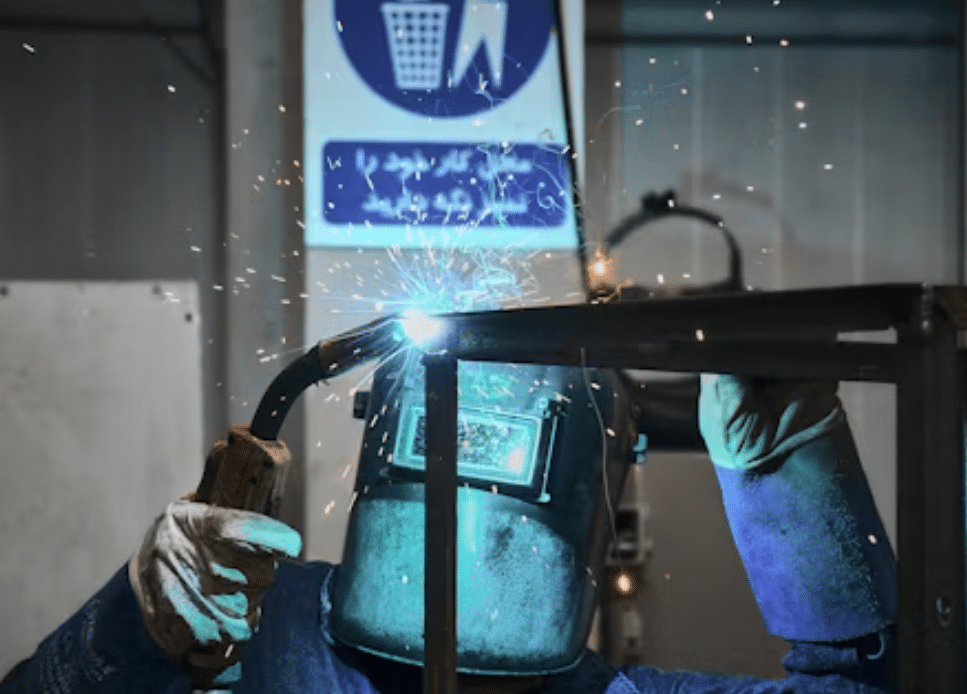
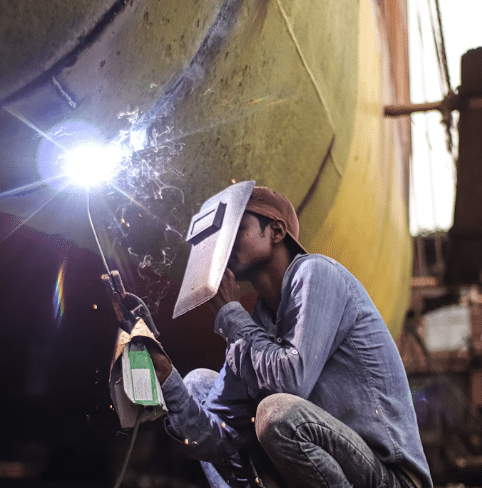
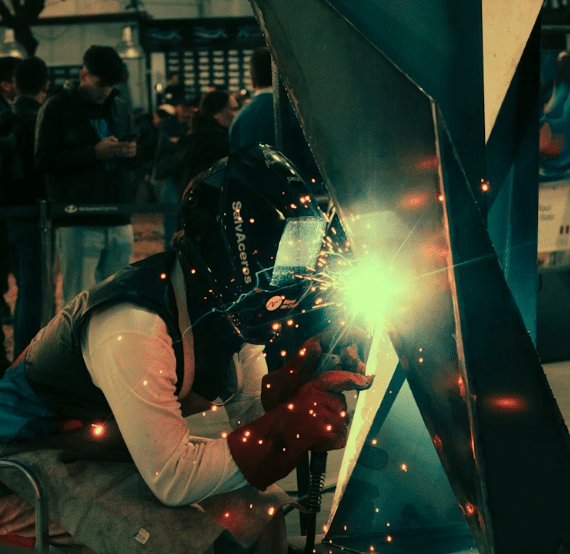
Yes — SMAW is one of the most dependable welding processes for outdoor and field work.
Stick welding performs well in wind, dust, rain, and remote job-site conditions because the flux-coated electrode generates its own shielding gas. You don’t need external gas cylinders, and moderate wind won’t easily disrupt the arc. That’s why construction crews, pipeline welders, and farm repair technicians rely on it every day.
In this guide, you’ll learn why SMAW works so well outdoors, its advantages and limitations, what equipment you need, which electrodes perform best, and how to weld safely in real field conditions.
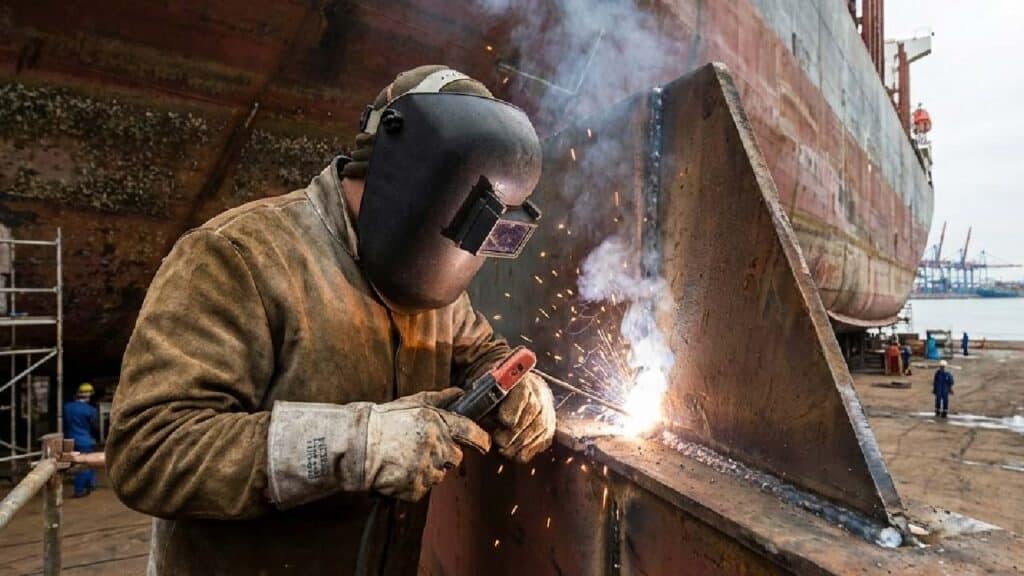
Why Is SMAW Ideal for Outdoor Welding Conditions?
SMAW performs better outdoors than most arc welding processes because it creates its own shielding protection and requires minimal equipment.
Here’s what makes it practical in the field:
Wind Resistance
The flux coating produces shielding gas directly at the arc. Even in 10–15 mph winds, the weld pool remains protected. MIG welding, by comparison, often struggles in similar airflow.
Portability
SMAW setups are compact. A portable inverter machine, cables, and a box of rods are usually enough for most jobs. No gas cylinders. No regulators. Fewer parts to transport.
Tolerance for Dirty Surfaces
Stick welding handles light rust, mill scale, and surface contamination better than TIG or MIG. While proper cleaning always improves quality, SMAW remains usable in imperfect conditions.
Thick Material Capability
SMAW performs well on materials above 1/4 inch in thickness. Structural steel, heavy equipment frames, and pipeline sections are common examples.
What Are the Advantages and Disadvantages of Outdoor SMAW?
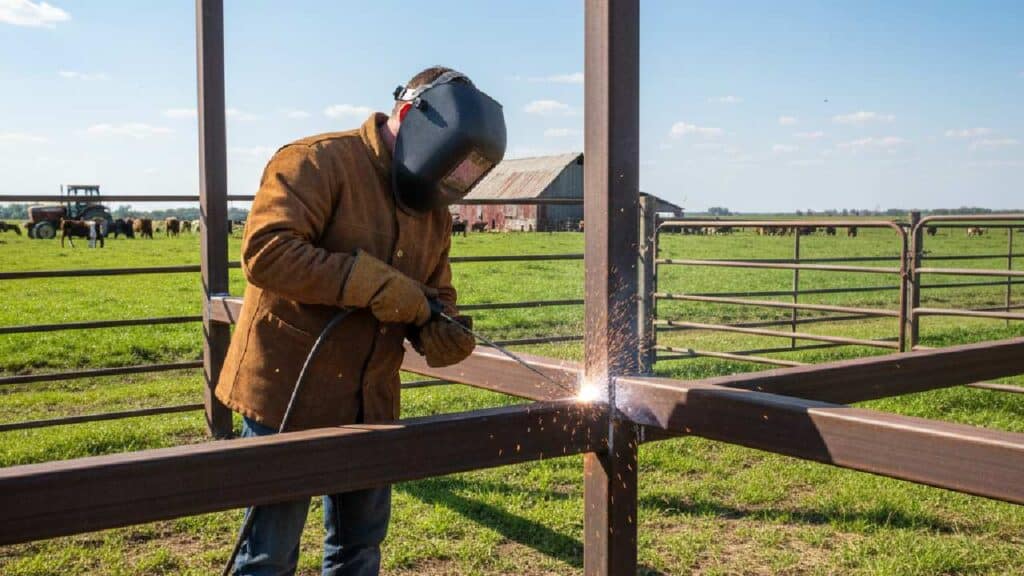
Outdoor SMAW offers durability and reliability, but it is not the fastest process available.
Advantages of SMAW in Outdoor Conditions
- Works Without External Shielding Gas
- Performs Well in Wind and Airflow
- Tolerates Rust and Surface Contamination
- Handles Thick Structural Materials
- Requires Minimal Setup Equipment
Disadvantages of SMAW in Outdoor Conditions
- Slower Travel Speed Than MIG
- Requires Slag Removal
- Needs Frequent Electrode Changes
- Less Suitable for Thin Sheet Metal
If speed and production efficiency are the priority, MIG may outperform SMAW. If reliability in rough environments is the priority, stick welding remains a strong choice.
What Equipment Is Required for Outdoor SMAW?
Outdoor SMAW requires a simple but dependable setup. One of the biggest reasons crews prefer stick welding is how little gear you need to haul to a job site.
Here’s what you’ll need:
Welding Power Source:
Choose either:
- Engine-Driven Welders (200–400 Amps): Ideal for remote sites without power access
- Portable Inverter Machines (120V / 230V): Lightweight and easy to transport
For example, a 1/8-inch E7018 rod usually runs between 110 and 150 amps. If you’re welding 3/8-inch structural steel, you’ll likely push closer to 135–145 amps.
(Tip: Always run a quick test bead before committing to a structural pass. Outdoor voltage fluctuations can affect arc stability.)
Electrodes (Welding Rods)
Electrodes carry the current and provide the filler metal that forms your weld bead.
Common diameters:
- 3/32 inch
- 1/8 inch
- 5/32 inch
Larger rods require higher amperage and suit thicker materials.
Electrode Holder
The holder grips the electrode and transfers current. Choose a holder rated at least 200 amps with strong insulation.
Ground Clamp
The ground clamp completes the circuit. Always attach it to clean metal for consistent current flow.
Protective Equipment
Use a welding helmet, flame-resistant clothing, leather gloves, and steel-toe boots. Outdoor welding still exposes you to UV radiation and sparks.
Which Electrodes Work Best for Outdoor SMAW?
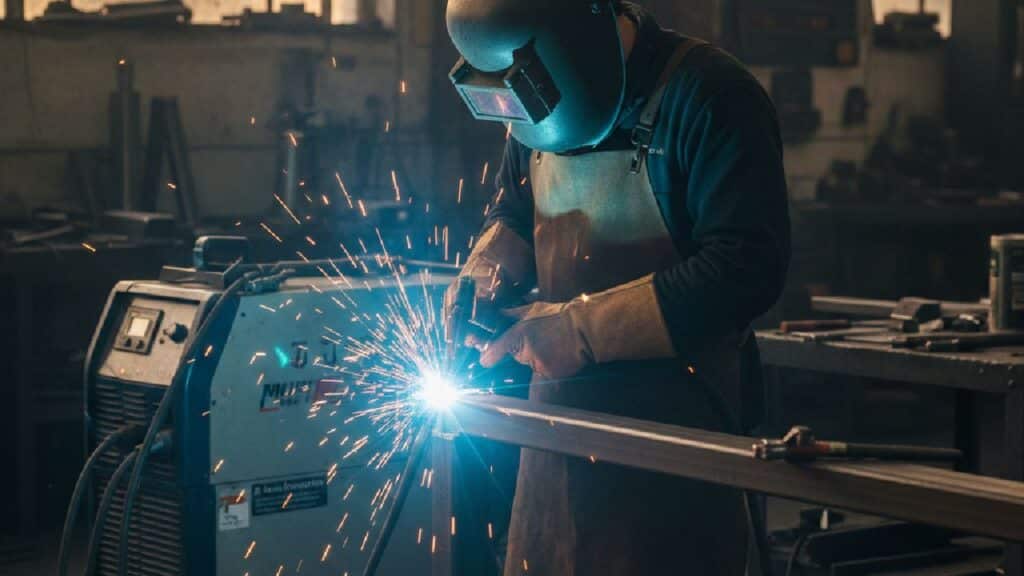
The best electrodes for outdoor SMAW include E6010, E6011, E7018, and E6013 — but they don’t all serve the same purpose.
Here’s how to choose:
E6010 Electrodes
- Deep Penetration
- Strong Root Passes
- Best For Pipe Welding
- DC Power Only
Use E6010 when you need aggressive penetration on structural joints or pipeline roots.
E6011 Electrodes
- AC And DC Compatible
- Handles Dirty Surfaces
- Stable In Wind
If you’re repairing farm equipment covered in rust or oil residue, E6011 is usually more forgiving than 7018.
E7018 Electrodes
- Low Hydrogen
- High Tensile Strength (70,000 PSI)
- Ideal For Structural Steel
Keep rods dry. Moisture ruins low-hydrogen electrodes and can cause cracking.
(Field tip: Store rods in a heated rod oven at 250°F if possible.)
E6013 Electrodes
- Smooth arc
- Moderate penetration
- Best for clean, thin materials
How Does SMAW Compare to MIG for Outdoor Welding?
SMAW performs better than MIG in windy and remote environments because it does not rely on external shielding gas.
Here’s a practical comparison:
| Factor | SMAW | MIG |
| Wind Tolerance | High | Low |
| Equipment Portability | High | Moderate |
| Travel Speed | Moderate | Fast |
| Surface Cleanliness Required | Low–Moderate | High |
| Setup Complexity | Low | Moderate |
MIG welding is faster in controlled indoor environments. SMAW is more forgiving on open job sites.
Now that you understand how SMAW compares to MIG, let’s look at where it’s most commonly used.
Where Is SMAW Commonly Used in Field Welding?
SMAW is widely used in industries where outdoor reliability matters.
Construction Projects
Crews rely on SMAW for structural beams, bridge reinforcement, and steel framework repairs where wind exposure makes gas-shielded welding unreliable.
Pipeline Welding
Field welders use 6010 and 7018 rods for oil lines, gas transmission systems, and water pipelines in remote terrain.
Agricultural Equipment Repair
- Tractor Frame Repairs
- Plow Reinforcement
- Heavy Machinery Fixes
Infrastructure Maintenance
- Guardrail Repairs
- Railway Components
- Public Utility Structures
How Does the SMAW Process Work Outdoors?
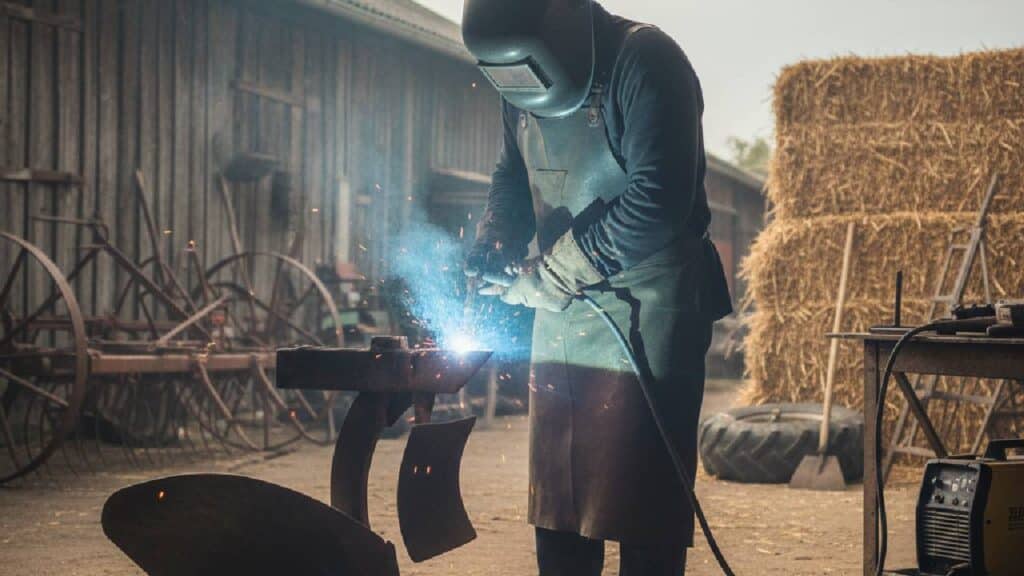
SMAW works by creating an electric arc between the electrode and the base metal, generating heat above 6,000°F to melt and fuse materials.
Step 1 – Power Supply
Current flows from the machine to the electrode and workpiece.
Step 2 – Arc Formation
The arc forms when the electrode contacts the metal surface.
Step 3 – Metal Melting
The arc melts the base metal and filler rod.
Step 4 – Shielding Gas Production
Flux burns and releases shielding gas.
Step 5 – Slag Formation
Molten flux forms slag over the weld pool.
Step 6 – Solidification
The molten metal cools and forms a solid joint.
This continuous cycle of arc, shielding gas, slag formation, and cooling creates a strong fusion joint even in outdoor conditions.
What Are Common Mistakes in Outdoor SMAW?
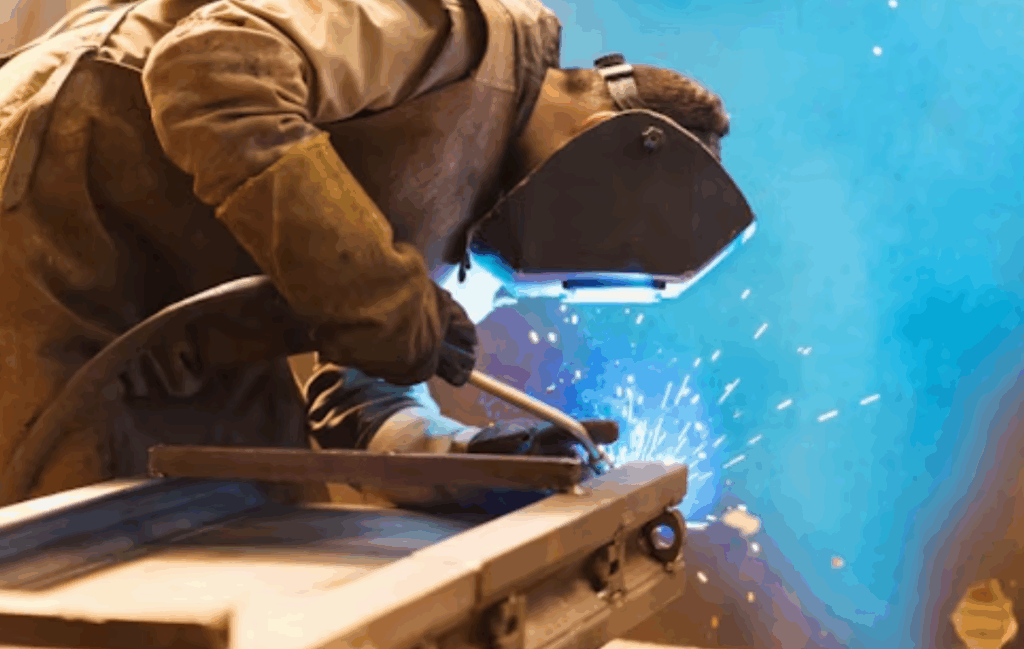
Even experienced welders make avoidable mistakes in the field.
- Welding With Wet Electrodes: Moisture causes hydrogen cracking. Always store 7018 rods in dry conditions.
- Ignoring Ground Placement: Attach the ground clamp to clean metal. Poor grounding leads to unstable arcs and weak penetration.
- Welding in Excessive Wind: While SMAW tolerates wind, anything above 20 mph can disrupt shielding. Use windbreaks when possible.
What Safety Measures Should You Follow for Outdoor SMAW?
Outdoor SMAW requires strict attention to electrical, fire, and environmental safety.
- Electrical Safety: Inspect cables and connections before welding.
- Weather Protection: Use welding tents or windbreaks when necessary.
- Fire Prevention: Clear flammable materials within a 35-foot radius.
- Ventilation Awareness: Avoid confined outdoor spaces without airflow.
- Protective Gear: Always wear a helmet, gloves, and flame-resistant clothing.
Final Remarks
SMAW remains one of the toughest welding processes for outdoor work. It handles wind, rust, heavy steel, and remote conditions better than most alternatives.
If you’re repairing farm equipment, welding structural beams, or working on pipelines, stick welding gives you reliability over speed.
Choose the right electrode. Set proper amperage. Protect your rods from moisture.
And before your next field job, double-check your setup. A few minutes of preparation can save hours of rework.
If you want to compare SMAW with FCAW or TIG for outdoor use, check out our detailed process comparison guide next.
FAQs
Yes. SMAW is one of the best welding processes for outdoor work because it generates its own shielding gas and resists wind interference better than MIG or TIG welding. It performs reliably on construction sites, farm repairs, and pipeline jobs.
SMAW is often the best choice for outdoor welding because it does not rely on external shielding gas. For high-speed production in controlled indoor environments, MIG welding may be more efficient. In windy or remote locations, stick welding remains more reliable.
Yes, but only in low-wind conditions or with wind protection. MIG welding relies on external shielding gas, which can be blown away by airflow as low as 10–15 mph, causing porosity and weak welds. Wind disruption causes porosity, which weakens weld strength and increases rework.
The biggest advantage of SMAW is its independence from external shielding gas. This makes it highly suitable for windy environments, remote job sites, and field repairs where portability and reliability matter most.
No. Welding in active rain increases the risk of electric shock and can contaminate the weld pool. Always protect the work area with a welding tent or dry shelter before operating equipment outdoors.