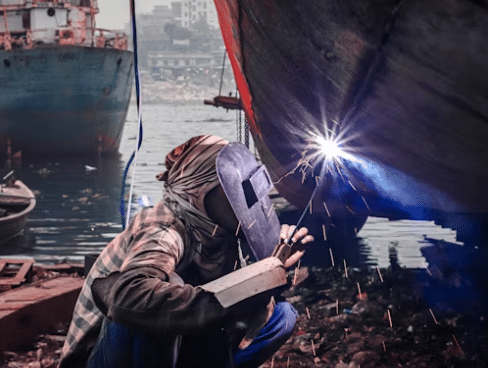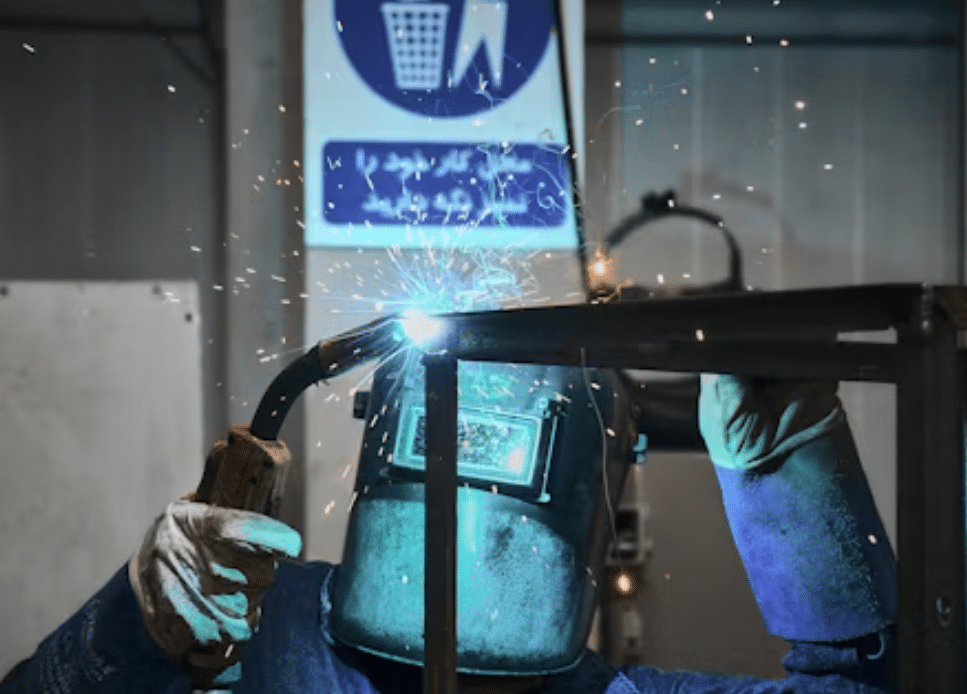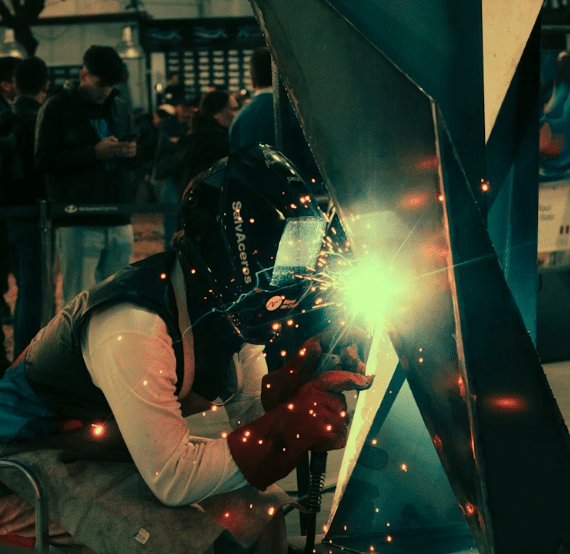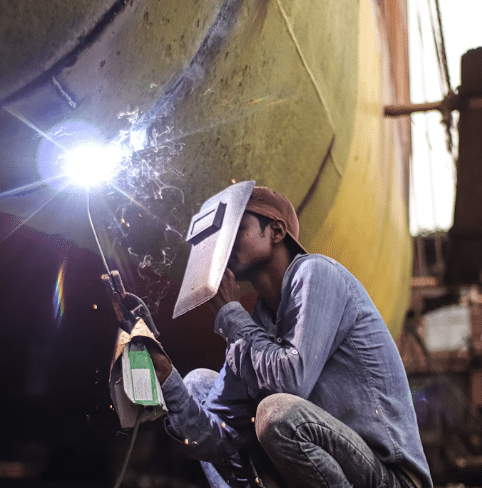
Welding for the marine industry demands more than basic welding skills. You need the right process, the right material, and tight safety control if you want welds that can handle saltwater, heavy loads, and constant vibration.
In this guide, we’ll walk you through the main marine welding techniques, the materials most shipyards and offshore projects use, the safety standards you need to follow, and the trends shaping modern shipbuilding. If you work on vessels, offshore structures, or marine repairs, this will help you make better welding decisions with fewer mistakes.
What Are the Key Welding Techniques for the Marine Industry?
The main welding techniques used in the marine industry are FCAW, MIG, TIG, stick welding, and robotic welding. Each one fits a different mix of material, joint type, worksite conditions, and production speed.
Flux-Cored Arc Welding (FCAW)
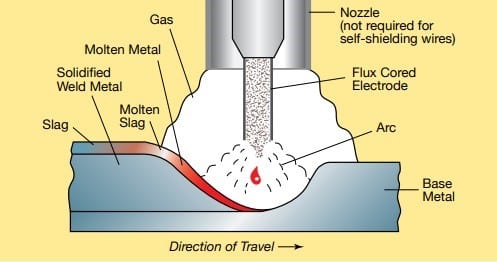
Flux-Cored Arc Welding is one of the top choices for marine structural steel because it works well on thick sections and in outdoor shipyard conditions.
Shipyards use FCAW heavily on hull sections, deck structures, and other large steel assemblies for three main reasons:
- High Deposition Rate: It fills long seams faster than slower precision-focused processes.
- Better Outdoor Performance: It handles windy dockside conditions better than gas-shielded methods.
- Strong Fit for Heavy Steel: It suits thick plate work where strength and throughput both matter.
If your team is welding large steel sections in a production yard, FCAW is often the first process to consider.
Gas Metal Arc Welding (GMAW/MIG)
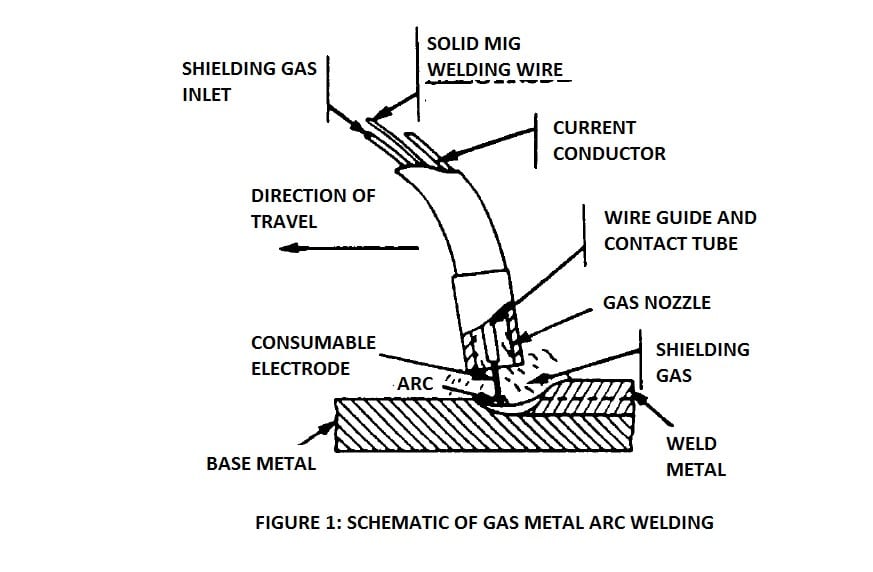
GMAW is a good fit for marine fabrication when you need faster welding, cleaner beads, and less post-weld cleanup in a controlled shop environment.
It is often used during prefabrication and light assembly, especially for thinner sections and aluminum components. Marine fabricators usually choose MIG when they want:
- Cleaner Weld Appearance: You spend less time on cleanup and finishing.
- Faster Shop Throughput: It keeps production moving on repeatable parts.
- Good Control on Lighter Materials: It works well on aluminum panels and lighter structural pieces.
MIG is not always the best choice for exposed, windy outdoor work, but inside the shop, it can save a lot of time.
Tungsten Inert Gas Welding (GTAW/TIG)
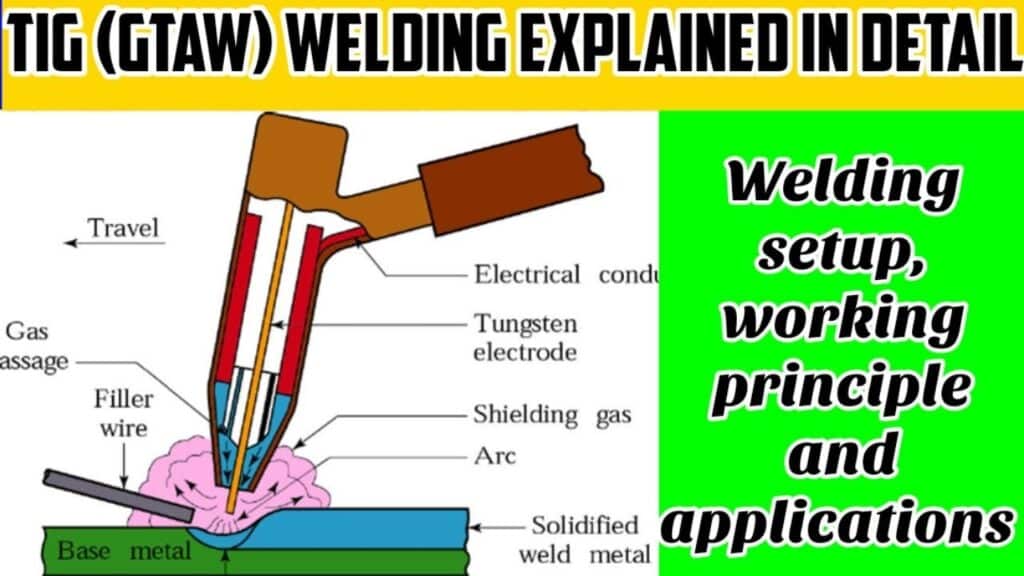
GTAW is used in marine work when weld quality, precision, and corrosion resistance matter more than speed.
You will see TIG on stainless steel piping, nickel alloy parts, and other critical joints where poor fusion or contamination can turn into a serious problem later. TIG stands out because it offers:
- Precise Arc Control: This helps with thin-wall pipe and detailed welds.
- Cleaner Weld Quality: It produces neat, low-defect welds on critical components.
- Better Fit for Corrosion-Resistant Alloys: It is commonly used on stainless steel and nickel-based materials.
TIG takes more time and more operator skill, but for high-spec marine systems, that tradeoff is often worth it.
Shielded Metal Arc Welding (SMAW/Stick)
Shielded Metal Arc Welding remains a practical choice for marine repair because it is portable, flexible, and easier to use in hard-to-reach areas.
This process is common in ship repair, offshore maintenance, and emergency jobs where conditions are not perfect. It still earns its place because it gives you:
- Portable Setup: You can bring it to tight spaces and repair zones more easily.
- Good Tolerance for Surface Condition: It can handle dirt, rust, and field repairs better than cleaner shop-only methods.
- Strong Repair Value: It works well when speed and access matter more than appearance.
If the job is urgent and the setup needs to stay simple, stick welding is still hard to beat.
Robotic Welding
Robotic welding is gaining ground in large shipyards because it improves consistency on repetitive welds and helps production teams control quality at scale.
It is most useful on panel lines, repeated structural joints, and long production runs where variation causes delays and rework. The biggest benefits are:
- More Consistent Weld Quality: Robots repeat the same motion with less variation.
- Higher Output on Repetitive Work: This helps large yards keep production schedules on track.
- Less Operator Exposure: Automation reduces direct exposure to fumes, heat, and arc radiation.
Robotic welding does not replace skilled welders. It works best in yards that need both automation for repeat work and trained people for fit-up, inspection, and complex joints.
What Materials Are Commonly Used in Marine Welding?
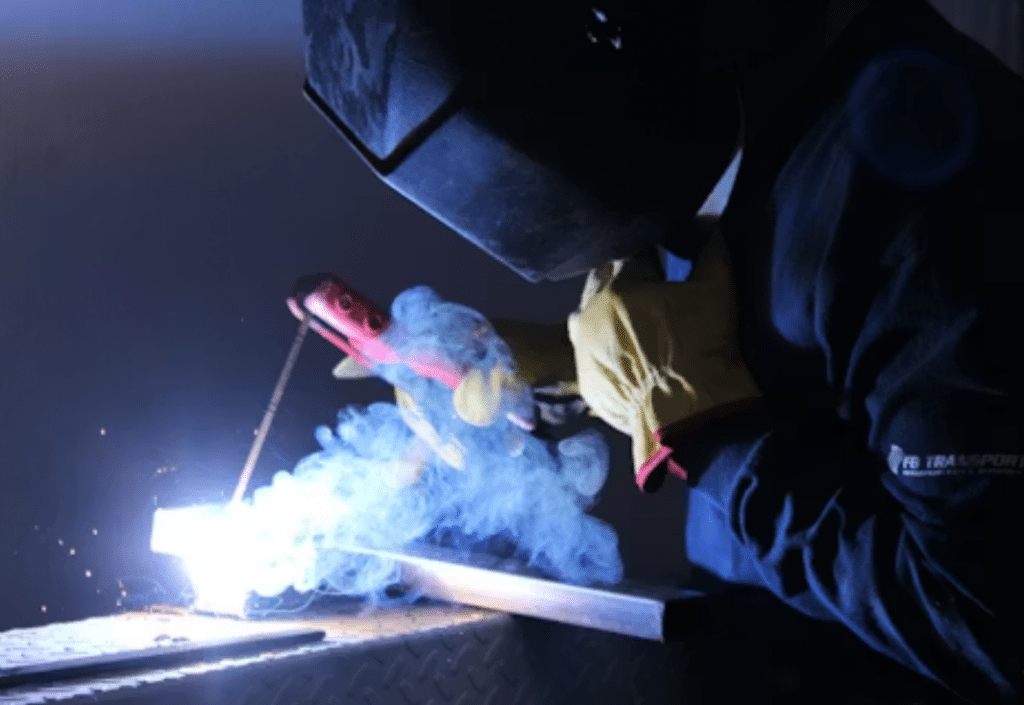
The most common materials in marine welding are structural steel, marine-grade aluminum, stainless steel, and nickel alloys. Fabricators choose between them based on strength, corrosion resistance, weight, cost, and where the part will operate.
Marine-Grade Aluminum (5000/6000 series)
Marine-grade aluminum, especially 5000 and 6000 series alloys, is widely used when low weight and corrosion resistance matter.
You will usually see it in small vessels, superstructures, deck components, and fast craft where extra weight hurts speed and fuel use. Aluminum is popular in marine work because it offers:
- Lower Weight: A lighter structure can improve speed, fuel efficiency, and handling.
- Good Corrosion Resistance: It performs well in saltwater when the alloy and fabrication method are chosen correctly.
- Practical Use on Smaller Craft: It is common on patrol boats, workboats, and upper structures.
The tradeoff is that aluminum welding needs tighter control over heat input and filler selection. If that part goes wrong, distortion and weak joints show up fast.
Stainless Steel and Nickel Alloys
Stainless steel and nickel alloys are used in marine systems that face corrosion, heat, or aggressive service conditions.
These materials are common in piping, tanks, exhaust parts, and other components where standard carbon steel may wear out too quickly. They are often chosen for:
- Higher Corrosion Resistance: This matters in salt-heavy, wet, and chemical-exposed areas.
- Better Performance in Critical Systems: They are often used where leakage or failure would be costly.
- Stronger Heat Resistance: Some nickel alloys handle elevated temperatures better than standard marine metals.
They cost more up front, so they are not usually the first choice for every structure. Still, in high-risk service areas, paying more at the start can reduce repair and replacement costs later.
Structural Steel
Structural steel is still the main material in shipbuilding because it gives you high strength, solid durability, and better cost control on large structures.
It is used for hulls, frames, decks, bulkheads, and offshore support structures where load-bearing capacity matters most. Shipyards continue to rely on structural steel because it gives them:
- High Strength for Large Marine Structures: It supports heavy loads and demanding service conditions.
- Better Cost Efficiency: It is usually more economical than corrosion-resistant specialty alloys.
- Wide Process Compatibility: It can be welded with FCAW, SMAW, MIG, and other common marine processes.
The downside is obvious: steel needs proper coating, inspection, and corrosion management in marine service. Without that, saltwater will win sooner or later.
What Are the Specialized Marine Welding Fields?
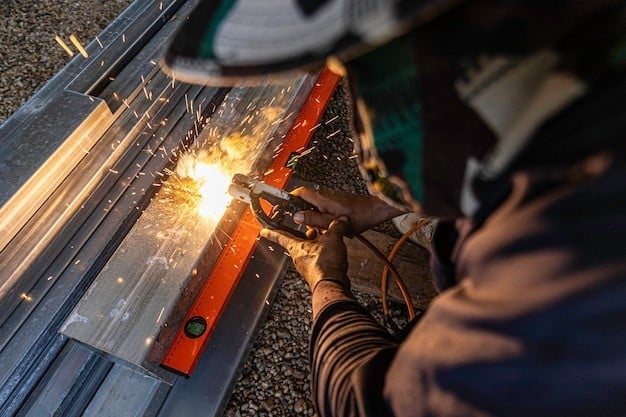
The main specialized fields in marine welding are shipyard welding, underwater welding, and dry or hyperbaric welding. Each one involves a very different mix of access, speed, quality control, and jobsite risk.
Shipyard/Ship Repair
Shipyard welding covers new vessel construction, retrofits, and repair work in dry docks, fabrication yards, and port facilities.
This is the broadest marine welding field, and it usually involves hull sections, deck structures, bulkheads, piping supports, and internal framing. Shipyard teams deal with several day-to-day challenges:
- Large Structural Joints: Many welds are done on thick plate and long seams.
- Difficult Welding Positions: Vertical, overhead, and confined-space work are common.
- Tight Repair Schedules: Downtime costs money, so repair speed matters a lot.
If you work in ship repair, you are often balancing two things at once: getting the vessel back into service fast and making sure the repair will last in a corrosive, high-load environment.
Underwater Welding
Underwater welding is used below the waterline when marine structures need repair and bringing them fully out of service is not practical.
It is one of the toughest welding fields because the welder has to manage arc control, visibility, water pressure, and electrical safety at the same time. Underwater welding usually falls into two main methods:
- Wet Welding: Faster to deploy, but harder to control and more exposed to weld quality limits.
- Dry Welding: Done in a controlled enclosure, with better weld quality but more setup and cost.
- Emergency Repair Use: It is often chosen when speed is more important than ideal working conditions.
This field is not just demanding from a welding point of view. It also depends heavily on diving safety, procedure control, and inspection planning.
Dry/Hyperbaric Welding
Dry or hyperbaric welding is a specialized underwater repair method performed inside a sealed, pressurized chamber.
It gives the welder a much more controlled environment than wet welding, which helps improve weld quality on critical offshore repairs. It is commonly used where the joint cannot afford weak fusion, contamination, or poor mechanical performance. Teams choose hyperbaric welding because it offers:
- Better Weld Quality: Controlled conditions support stronger, cleaner welds.
- More Reliable Results on Critical Repairs: This is important for subsea pipelines and offshore structures.
- Improved Process Control: The environment is easier to manage than open-water wet welding.
The downside is cost, setup time, and technical complexity. You do not use hyperbaric welding for routine convenience. You use it when the repair quality has to justify the extra effort.
What Safety and Certification Standards Are Required in Marine Welding?
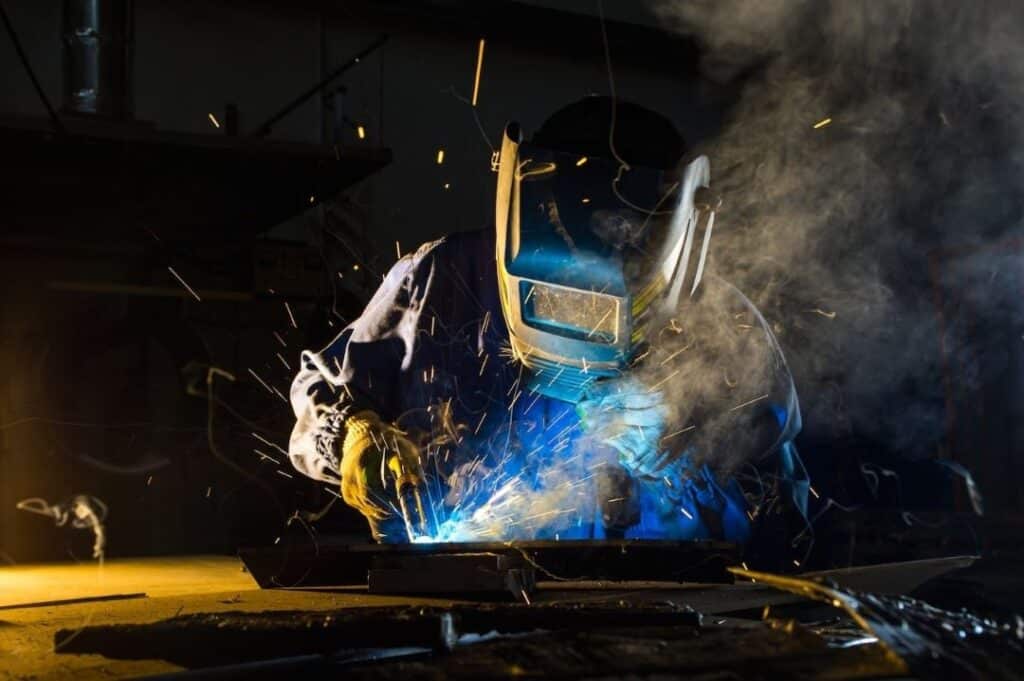
Marine welding requires both qualified welders and strict safety procedures because the work often happens in wet, confined, elevated, or high-risk environments.
Marine Welder Certification
Marine welder certification proves that a welder can complete specific welds to an accepted quality standard under defined conditions.
That matters a lot in marine work. A failed weld on a dock structure, vessel repair, tank, or offshore component can lead to leaks, downtime, or safety incidents that cost far more than the welding job itself. Common certification and approval frameworks in marine work include:
- Shipbuilding Qualification Standards: These are used for hulls, structural assemblies, and class-related fabrication work.
- Underwater Welding Qualifications: These are needed for subsea and wet welding operations.
- Procedure and Inspection Approval: Marine projects often require qualified procedures, test coupons, and inspection records before production work starts.
In real projects, certification is not just a hiring box to tick. It is part of how shipyards, contractors, and inspectors control risk before welding even begins.
For example, underwater welding work is commonly tied to AWS D3.6M, while shipbuilding and class-related fabrication may also need to meet approval requirements from classification bodies like ABS or DNV.
Safety Measures
Marine welding safety depends on preparation, ventilation, electrical control, and disciplined jobsite habits, not just personal protective equipment.
This is not just a best-practice issue. OSHA notes that shipbuilding confined spaces can expose workers to fire, asphyxiation, and toxic hazards, and welding work in confined spaces must be ventilated well enough to prevent toxic buildup and oxygen deficiency.
PPE still matters, of course, and the basic marine welding PPE checklist includes:
- Welding Helmet With the Right Shade: This protects your eyes from arc flash and sparks.
- Flame-Resistant Clothing: This helps reduce burns from heat and spatter.
- Insulated Gloves: These protect your hands from heat and electrical contact.
- Respiratory Protection: This helps reduce fume exposure in restricted work areas.
- Slip-Resistant Safety Boots: These improve footing on wet decks and uneven surfaces.
But the higher-risk safety issues usually go beyond gear. Marine teams also need to control:
- Confined Spaces: Tanks, voids, and enclosed compartments can trap fumes and reduce oxygen.
- Electrical Exposure: Wet conditions increase shock risk fast if grounding or insulation is poor.
- Hot Work Hazards: Sparks and heat can ignite nearby fuel, coatings, or flammable residue.
- Visibility and Access Problems: Bad lighting and awkward positioning make poor welds and injuries more likely.
If a marine welding site gets sloppy on ventilation, grounding, or hot work control, good PPE alone will not save the day.
Marine Welding Risk Table
Marine welding risks usually come from electrical exposure, fumes, fire hazards, poor visibility, and unstable work surfaces.
| Hazard | What Can Happen | How to Reduce Risk |
| Electric Shock | Serious injury or fatal shock | Use insulated equipment, proper grounding, and dry working conditions where possible |
| Toxic Fumes | Breathing problems and long-term exposure risks | Use ventilation, fume extraction, and respiratory protection |
| Fire and Explosion | Burns, fire spread, or structural damage | Clear flammables, check hot work zones, and follow permit procedures |
| Poor Visibility | Defective welds, missed defects, and injury risk | Improve lighting and inspect the joint area before welding |
| Wet or Slippery Conditions | Falls, unstable footing, and higher accident risk | Use anti-slip boots, secure footing, and keep work zones organized |
What Are the Current Trends in Marine Welding?
The biggest current trends in marine welding are better weld monitoring, more automation on repeat work, and wider use of digital planning and training tools.
Real-time Welding Cameras
Real-time welding monitoring helps marine teams catch weld problems earlier instead of finding them after inspection or rework.
This trend matters in shipyards because long seams, repetitive joints, and schedule pressure can hide quality issues until they become expensive. Monitoring tools are being used to:
- Track Weld Consistency: Teams can spot variation before it spreads across a large batch of joints.
- Support Better Quality Control: Supervisors can review welding conditions more closely.
- Reduce Rework: Early detection usually costs less than late-stage repair.
On a big marine fabrication job, even a small drop in rework can save a lot of time.
Automated Welding Systems
Automated welding systems are becoming more common in marine production because they improve repeatability on panel lines, long seams, and other high-volume tasks.
They are especially useful in yards where the same weld type appears over and over again. The main reason this trend keeps growing is simple:
- More Repeatable Output: Machines reduce variation on repetitive joints.
- Better Production Speed: Automation helps yards stay closer to schedule.
- Lower Operator Fatigue on Repetitive Work: This can improve quality over long runs.
Manual welding is still essential for fit-up changes, complex access, and repair work, but automation is taking a bigger share of routine production welding.
3D Engineering & Virtual Reality (VR)
3D engineering and VR training tools help shipyards plan weld access, improve training, and reduce mistakes before fabrication begins.
This is useful in marine work because errors often do not show up until parts are already built, moved, or installed. Digital tools help by making it easier to:
- Check Weld Access Early: Teams can spot hard-to-reach joints before production starts.
- Train Welders in a Safer Setting: New welders can practice techniques before moving into real jobs.
- Support Better Coordination: Engineering and production teams can align earlier.
For large marine projects, better planning up front usually means fewer ugly surprises later.
What Is the Future of Welding in Shipbuilding?
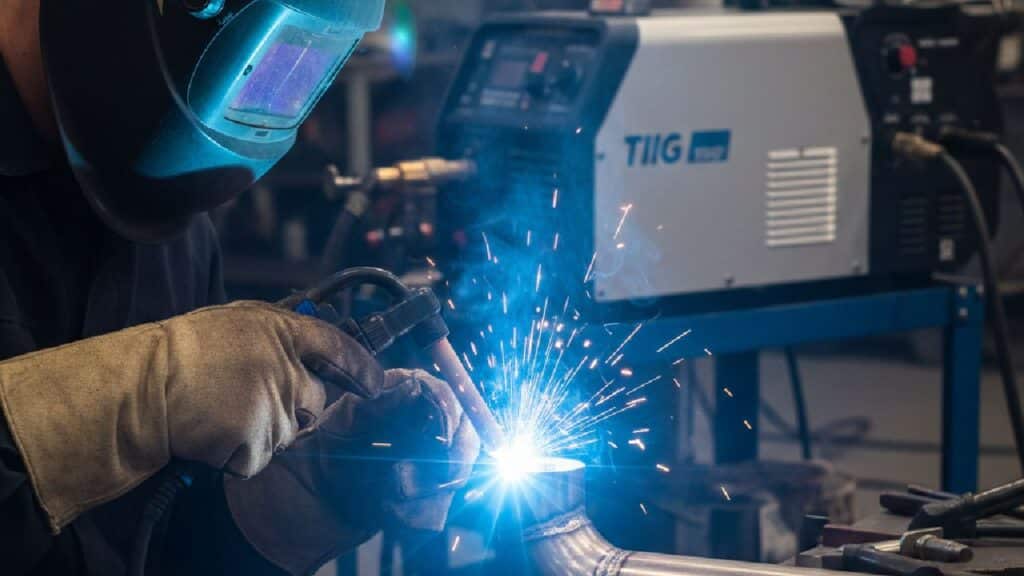
The future of welding in shipbuilding will likely center on more connected automation, smarter quality control, and lower-impact production methods.
More Connected Automation
Shipbuilding will keep moving toward automation that is more connected to production planning, fit-up control, and inspection systems.
The shift is not just about adding more robots. It is about making production lines work together with fewer delays and less variation. In the years ahead, shipyards will likely focus on:
- Integrated Production Workflows: Welding systems will connect more closely with cutting, assembly, and inspection stages.
- Smarter Use of Skilled Labor: Welders will spend more time on complex joints and less on repetitive runs.
- Higher Process Control Across Large Builds: This helps large yards manage quality at scale.
Smarter Data-Driven Quality Control
Data-driven welding control will become more important as shipyards try to reduce rework, track weld history, and tighten inspection standards.
In practical terms, that means more systems that record welding parameters, flag variation, and support traceability across production. This can help yards improve:
- Weld Traceability: Teams can connect a weld to the process conditions behind it.
- Earlier Defect Detection: Small issues can be caught before they turn into major repairs.
- Long-Term Process Improvement: Collected welding data can help refine procedures over time.
This kind of system will not replace inspectors or experienced welders, but it will make quality management a lot more precise.
Lower-Impact Welding Technologies
Shipbuilders will also keep looking for welding methods and equipment that reduce waste, lower power use, and support tougher environmental requirements.
That includes more efficient equipment, cleaner process control, and better planning that cuts unnecessary rework. The long-term direction is moving toward:
- Better Energy Efficiency: Newer power sources can lower energy use during production.
- Less Rework and Material Waste: Better control means fewer repairs, cutouts, and rejected sections.
- Cleaner Manufacturing Targets: This fits the broader push for more efficient shipbuilding operations.
Green welding does not mean sacrificing performance. In most cases, it means running the yard more efficiently and wasting less along the way.
Conclusion
Welding for the marine industry calls for the right process, the right material, and much tighter jobsite control than general fabrication work. If you get those three parts right, you are far more likely to produce welds that can hold up against saltwater, vibration, heavy loading, and hard service conditions.
The main takeaway is simple. FCAW, MIG, TIG, stick welding, and automated systems all have a place in marine work, but they do not solve the same problems. Material choice matters just as much, and safety cannot be treated like an afterthought when you are working around wet surfaces, confined spaces, or offshore repair conditions.
If you are planning a shipbuilding, repair, or offshore welding project, the next step is to review your welding process, materials, and safety setup before production starts. That work up front can save you from expensive rework later. If you need help choosing the right marine welding equipment or setup for your job, this is the right time to compare your options and speak with a qualified welding equipment supplier.
FAQs
Underwater welding is performed below the waterline, often for repairs. It is more challenging than standard welding due to poor visibility, water pressure, and higher electrical risk.
Marine welders need project-specific certifications that verify their ability to meet welding standards, often including shipbuilding approvals, procedure qualifications, and inspection requirements.
Marine welding involves wet environments, confined spaces, and electrical hazards, which increase risks like shock, fumes, and fire, making strict safety control essential.
Robotic welding improves consistency and speed in repetitive welds, helping shipyards maintain quality and reduce variation in large-scale production.
FCAW is often preferred for marine structural steel because it handles thick plate and outdoor shipyard conditions well.
Yes, TIG welding is used for precision welds on stainless steel, piping, and corrosion-resistant components.