Welding sheet metal is difficult because thin metal heats up fast and warps easily—but with the right technique, it’s completely manageable.
In simple terms, welding sheet metal means joining thin metal panels using low heat, short welds, and careful control to avoid burn-through and distortion. This is very different from welding thick plate, where heat is more forgiving.
In this guide, we’ll show you the best welding methods for sheet metal, how to set your machine correctly, how to prevent warping, and how to weld mild steel, stainless steel, and aluminum cleanly—even on thin automotive panels.
What Counts as Sheet Metal?
In welding, sheet metal usually refers to metal between 30 gauge (0.012″) and 8 gauge (0.164″) thick. Anything thinner than that behaves very differently from plate steel and requires tighter heat control.
Most common sheet metal thicknesses used in welding:
- 22 gauge (0.030″)
- 20 gauge (0.036″)
- 18 gauge (0.048″)
- 16 gauge (0.060″)
Common materials:
- Mild steel
- Stainless steel
- Aluminum
- Galvanized steel
Because sheet metal is thin, it absorbs heat quickly and distorts easily. That’s why technique matters more than raw power when welding these materials.
What Is the Best Welding Method for Sheet Metal?
The best welding method for sheet metal depends on the material, thickness, and finish you need, but MIG and TIG welding are the most reliable choices for thin metal because they allow better heat control.
In most automotive and fabrication work, MIG is faster and easier to manage, while TIG offers superior precision for thin stainless steel and aluminum.
MIG Welding (GMAW)
MIG welding is the most practical choice for sheet metal when you need speed, consistency, and easy heat control, especially in automotive repair and general fabrication.
With the right settings, MIG lets you place clean tack welds, make short beads, and move quickly without overheating the panel. This is why many body shops rely on MIG for patch panels and thin steel work.
Recommended MIG settings for sheet metal include:
- Wire Size: 0.023″ (best choice) or 0.030″
- Voltage: Low to Medium
- Shielding Gas: 75/25 Argon–CO₂
- Polarity: DCEP
TIG Welding (GTAW)
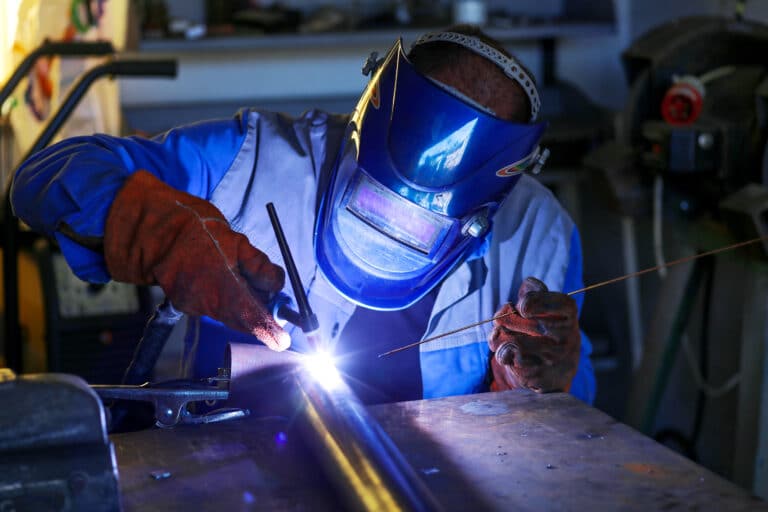
TIG welding is the preferred method for thin sheet metal when precision, appearance, and tight heat control are required, particularly for stainless steel and aluminum. Instead of feeding wire automatically, TIG lets you control heat and filler independently.
That extra control is why TIG produces the cleanest welds with minimal spatter, making it ideal for visible joints and high-end fabrication.
Recommended TIG setup:
- Tungsten: 1/16″ 2% lanthanated or ceriated
- Amperage: 30–60 amps (depending on thickness)
- Gas: 100% Argon
- Filler: ER70S-2 (steel) or ER308L (stainless)
If you need show-quality welds or work with thin stainless or aluminum, TIG is usually worth the slower pace.
Spot Welding (Resistance Welding)
Spot welding joins overlapping sheet metal by pressing the sheets together with electrodes and applying heat and pressure. Instead of a continuous bead, it creates a strong weld nugget at a single point.
This method is widely used in automotive manufacturing because it produces fast, repeatable, permanent connections without adding filler metal. For production environments, spot welding is often the most efficient way to join thin steel panels.
Stick Welding (SMAW)
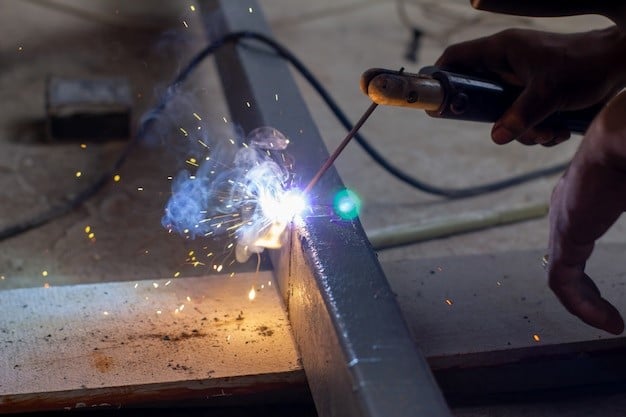
Stick welding is rarely used for very thin sheet metal because it’s harder to control heat. However, it can work in limited situations using light rods like 6013 and very short welds. For most sheet metal work, MIG or TIG will be easier and more predictable.
How to Weld Sheet Metal Without Warping?
You weld sheet metal without warping by keeping heat input low and spread out, using short welds, frequent tacks, and allowing the panel to cool between passes. Long, continuous welds are what cause most distortion.
The techniques below are what professional fabricators and auto body shops use to keep panels flat.
1. Use Stitch Welding (Skip Welding)
Stitch welding keeps heat from building up in one area. Instead of running a long bead, you weld in short sections and move around the panel.
A typical stitch pattern looks like this:
- Weld a ½-inch bead
- Stop and let the area cool
- Move to a different section
- Repeat until the joint is complete
This approach takes longer, but it’s the single most effective way to prevent sheet metal from turning into a warped mess.
2. Use Tack Welds First
Tack welding locks the panel in place before you add real heat.
Before running any bead:
- Place tacks every 1–2 inches
- Make sure the panel stays flush and aligned
- Spread tacks evenly across the joint
Good tack welds hold the shape. Poor tacks let the panel move—and once it moves, warping follows.
3. Go Slow and Let the Metal Cool
Welding sheet metal is not a race. Adding heat too quickly is the fastest way to ruin a panel.
Let each weld cool before adding the next one. If the metal is too hot to touch nearby, it’s too hot to keep welding.
4. Use Backing Bars to Prevent Burn-Through
Copper and aluminum backing bars absorb heat and support the weld puddle from behind.
Backing bars help because they:
- Pull heat away from the weld
- Reduce the chance of burn-through
- Leave a cleaner weld bead
This trick is especially helpful for beginners and for repairing thin automotive panels.
5. Lower Your Heat Settings
Too much heat causes both burn-through and distortion.
To reduce heat input:
- Lower voltage or amperage
- Increase travel speed slightly
- Avoid weaving the bead
Always test your settings on scrap metal before touching the actual panel.
6. Use Hammer and Dolly Work Between Welds
Light hammer-dolly work relaxes the metal and flattens the heat-affected zone after tacking.
This step is common in auto body repair and makes a big difference on visible panels where flatness matters.
Which Joint Type Works Best for Sheet Metal Welding?
The best joint type for sheet metal depends on strength, appearance, and how much heat control you have. Lap joints are the easiest to weld, while butt joints give the cleanest finish when done correctly.
1. Lap Joint
Lap joints are the most beginner-friendly option for thin sheet metal.
Why lap joints work well:
- More surface area for the weld
- Lower risk of burn-through
- Strong and forgiving
This joint is common in patch panels, brackets, and non-visible areas.
2. Butt Joint
Butt joints create a flat, seamless surface, which is why they’re used on visible panels.
Butt joints require:
- Tight fit-up
- Perfect alignment
- Excellent heat control
This joint is common in classic car restorations and exterior body panels where appearance matters.
3. Flange Joint
Flange joints work well when space is limited or when panels overlap slightly by design.
You’ll see them often in boxes, cabinets, and enclosures.
4. Corner Joint
Corner joints are common for frames, furniture, and decorative projects where edges meet at 90 degrees.
How Do You Weld Mild Steel Sheet Metal?
Mild steel is the easiest sheet metal to weld, which is why it’s common in automotive panels, brackets, and general fabrication. With proper heat control, it’s forgiving compared to stainless or aluminum.
For MIG welding mild steel sheet metal, these practices work best:
- Use 75/25 Argon–CO₂ Shielding Gas
- Choose 0.023″ Wire For Better Heat Control
- Keep Wire Stick-Out Short
- Avoid Weaving; Use Straight, Short Beads
- Tack Frequently To Hold Panel Shape
Galvanized mild steel requires extra care. Always grind off the zinc coating before welding.
Burning zinc doesn’t just contaminate the weld—it can cause metal fume fever, which feels like a severe flu.
How Do You Weld Stainless Steel Sheet Metal?
Stainless steel sheet metal requires tighter heat control because it heats faster, distorts more easily, and shows discoloration quickly. That’s why TIG welding is usually the best choice for thin stainless.
For TIG welding stainless sheet metal:
- Use ER308L Filler For 304 Stainless
- Use ER316L Filler For Marine Or Corrosive Environments
- Shield With 100% Argon
- Keep Amperage Low And Travel Speed Steady
Too much heat doesn’t just warp stainless—it can damage corrosion resistance through carbide precipitation.
If the weld turns dark blue or gray, you’re running too hot.
How to Weld Thin Metal Without Burning Through?
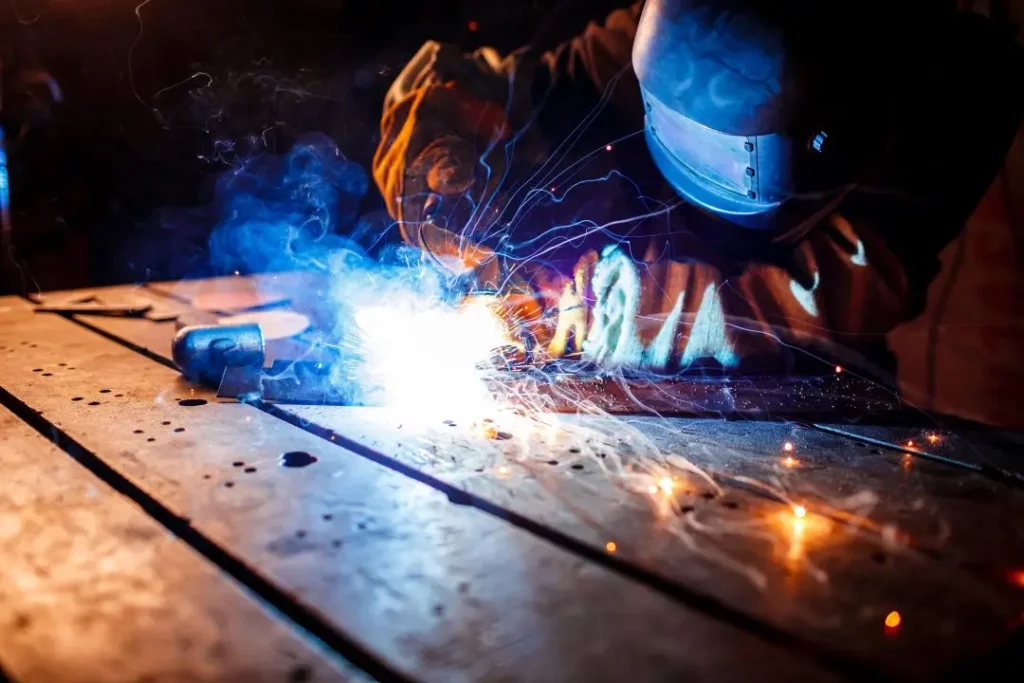
Aluminum sheet metal is challenging because it melts quickly and pulls heat away fast, which makes thin sections easy to blow through.
Cleanliness and heat control matter more here than with any other metal.
For thin aluminum sheet metal, AC TIG welding works best:
- Use ER4043 Filler For Most Applications
- Shield With Pure Argon
- Clean Thoroughly To Remove The Oxide Layer
- Use A Foot Pedal Or Pulse Settings To Control Heat
Many beginners struggle with aluminum because it looks solid right up until the moment it collapses.
Practicing on scrap is not optional here—it’s essential.
What Are the Most Common Sheet Metal Welding Problems—and How Do You Fix Them?
Most sheet metal welding problems come down to too much heat or poor fit-up. Once you control those two things, most issues disappear.
1. Burn-Through
Burn-through happens when the metal melts faster than you can control the puddle.
Common causes include:
- Excessive heat
- Slow travel speed
- Gaps in the joint
How to fix it:
- Lower voltage or amperage
- Increase travel speed
- Use a copper or aluminum backing bar
If you’re blowing holes repeatedly, stop welding and reset your machine. More wire or more heat almost never fixes this problem.
2. Warping and Distortion
Warping occurs when heat builds up in one area of the panel.
Typical causes include:
- Long, continuous welds
- High amperage
- No cooling time between passes
How to fix it:
- Stitch-weld instead of running beads
- Tack frequently
- Move around the panel and let it cool
If the panel is getting hot to the touch, you’re already past the safe zone.
3. Excessive Spatter (MIG Welding)
Excess spatter makes welds ugly and increases cleanup time.
Common causes include:
- Wire speed set too high
- Incorrect shielding gas
- Dirty base metal
How to fix it:
- Reduce wire feed speed
- Use a proper Argon–CO₂ mix
- Clean the metal before welding
4. Inconsistent or Ugly Weld Beads
Uneven weld beads usually point to inconsistent technique, not bad equipment.
How to improve bead appearance:
- Maintain steady travel speed
- Keep the torch angle consistent
- Practice on scrap metal first
Even experienced welders warm up on scrap metal before working on a visible panel.
Conclusion: Master Sheet Metal Welding With Control
Welding sheet metal is all about controlling heat, exercising patience, and employing good technique.
If you focus on low heat, short welds, proper fit-up, and frequent tacking, you can produce clean, strong welds without warping—even on thin automotive panels and stainless steel parts.
Before your next project, remember this checklist:
- Use the right welding method for the material
- Keep heat input as low as possible
- Weld in short sections and let the metal cool
- Practice on scrap before touching the real panel
If you want professional results, slow down, control the heat, and let the metal tell you when it’s ready for the next weld.
FAQs for Welding Sheet Metal
A 75/25 Argon–CO₂ mix is the most stable and versatile choice for MIG welding thin steel sheet metal.
It produces a smoother arc, less spatter, and better puddle control compared to straight CO₂, which runs hotter and is less forgiving on thin material.
Most sheet metal welding falls between 30 and 90 amps, depending on thickness and welding process.
Thin automotive panels usually sit on the lower end of that range. If you’re unsure, start cold and increase gradually while testing on scrap.
Cracks after cooling usually happen due to poor fit-up, excessive heat, or contamination in the joint.
Oil, paint, zinc coatings, or large gaps prevent proper fusion and cause stress as the metal cools. Clean metal and tight joints reduce this risk dramatically.
Pulse welding is helpful but not required for sheet metal.
Pulse settings make heat control easier by cycling current on and off, which helps on thin stainless steel or aluminum. Skilled welders can achieve the same results without pulse by using good technique.
Yes, but it’s not recommended for thin sheet metal.
Flux-cored wire runs hotter and produces more spatter, making burn-through and cleanup more likely. Shielding gas offers better control and cleaner welds on thin material.