If you’re wondering where to buy welding supplies, the short answer is this: the best place depends on how often you weld and what you expect from your equipment.
A first-time welder doesn’t need the same supplier as a fabrication shop running eight hours a day. Buy from the wrong place, and you’ll either overspend—or end up replacing tools far too soon.
In this guide, we’ll walk through the main places to buy welding supplies, explain who each option is best for, and help you choose a supplier that fits your skill level, budget, and workload.
What Are the Main Places to Buy Welding Supplies?
You can buy welding supplies through several channels. Each one serves a different type of welder.
Specialized Online Welding Retailers
Specialized online welding retailers offer one of the widest selections available. You’ll find welding machines, consumables, PPE, and accessories in one place, with clear specs and side-by-side comparisons.
This option works well if you want to:
- Compare features and prices before buying
- Read real customer feedback
- Order replacement consumables without leaving the shop
Online retailers often support both individual buyers and businesses that place repeat or bulk orders.
Big-Box Home Improvement Stores
Big-box home improvement stores focus on convenience and accessibility. They mainly stock entry-level machines, basic consumables, and safety gear.
These stores are a solid choice if you:
- Are just getting started with welding
- Need tools today, not next week
- Want simple return policies
You won’t find deep technical support here, but for beginners, that’s often a good thing.
Discount Tool Retailers
Discount tool retailers aim at price-first buyers. They carry low-cost welding machines and accessories designed for light or occasional use.
They work best for:
- Hobby projects
- Learning and practice
- One-off repairs
Just keep expectations realistic. These tools usually trade long-term durability for affordability.
Brand-Direct Websites
Brand-direct websites sell equipment straight from the manufacturer. This reduces compatibility issues and simplifies warranty claims.
Buying direct makes sense if you:
- Want guaranteed authentic products
- Need consistent replacement parts
- Value direct technical documentation and updates
This approach works for both individuals and businesses that prefer standardized equipment.
Local Welding Supply Shops
Local welding supply shops specialize in professional-grade equipment and services. Many also provide shielding gas, equipment servicing, and expert advice.
These shops are essential for:
- Small fabrication businesses
- Industrial and production welding
- Welders who need immediate support
For B2B buyers, local suppliers often become long-term partners rather than one-time vendors.
Where Should Beginners and DIYers Buy Welding Supplies?
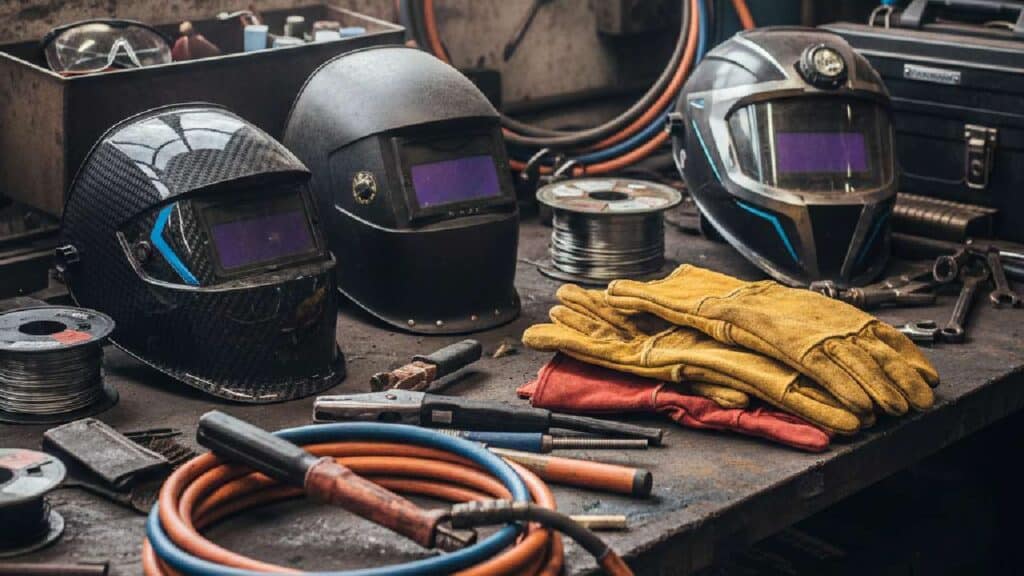
Beginners and DIY welders benefit most from suppliers that keep things simple and affordable.
Big-Box Home Improvement Stores
Large retailers are often the easiest starting point.
- Home Depot
Home Depot carries beginner-friendly MIG welders, helmets, gloves, and basic consumables. Clear labeling and in-store availability reduce guesswork for first-time buyers. - Lowe’s
Lowe’s offers similar entry-level options with easy returns and consistent quality control, which many DIYers appreciate.
Discount Tool Retailers
Discount retailers let beginners try welding without a big upfront commitment.
- Harbor Freight
Harbor Freight’s welders are suitable for light-duty projects and practice. They’re fine for learning but not built for daily use.
Entry-Level and Budget-Friendly Welding Brands
Some brands focus on making welding more approachable.
- Forney: Reliable entry-level machines and consumables for home garages and light fabrication
- VEVOR: Cost-focused options for occasional welding jobs
- YesWelder: Beginner-friendly machines with digital controls and multiprocess capability
Beginner-Friendly Machine Types
Choosing the right machine matters as much as choosing the supplier.
- MIG Welders: Easy to learn, consistent results, and minimal setup
- Multi-Process Welders: Let you start with MIG and expand into TIG or Stick later without buying another machine
Where Should Serious DIYers and Small Shops Buy Welding Supplies?
Serious DIYers and small workshops need consistency, parts availability, and dependable support.
Authorized Distributors and Brand-Specific Retailers
Authorized sellers ensure:
- Genuine equipment
- Valid warranties
- Access to original replacement parts
This reduces downtime and avoids compatibility issues.
Specialty Welding Suppliers
Specialty suppliers focus on professional-grade tools and consumables. They stock:
- Higher-duty machines
- Premium wires and electrodes
- Advanced accessories
They’re a strong fit for frequent welding and production work.
Automotive and Garage-Focused Suppliers
Automotive-focused suppliers tailor equipment for:
- Exhaust fabrication
- Chassis repair
- Custom metal work
Their product selections match real garage workflows, not generic use cases.
Where Do Professional Welders Buy Welding Supplies?
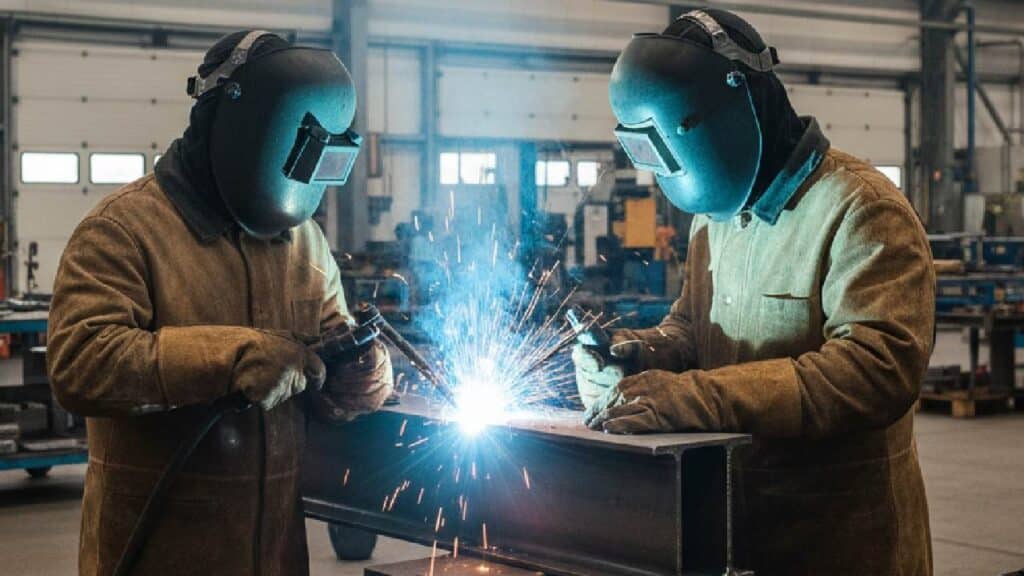
Professional welders prioritize reliability, service, and long-term support.
Local Welding Supply Stores
Local suppliers remain the top choice for many professionals. They provide:
- Industrial-grade machines
- Shielding gas refills
- Immediate technical help
When a machine goes down, local support keeps jobs on schedule.
Professional Online Welding Retailers
Online retailers serving professionals combine convenience with technical depth. They support:
- Bulk purchasing
- Detailed specifications
- Fast job-site delivery
Brand-Direct Purchasing Channels
Brand-direct purchasing helps larger shops standardize equipment. This simplifies:
- Training
- Maintenance
- Inventory management
What Should You Prioritize No Matter Where You Buy Welding Supplies?
No matter where you shop, a few priorities never change.
Quality PPE
Proper personal protective equipment reduces injury risk and fatigue.
- Protects against burns, sparks, and arc exposure
- Improves comfort during long welding sessions
Welding Helmets
Auto-darkening helmets adjust instantly to arc brightness, improving visibility and weld accuracy.
Gloves and Protective Apparel
Flame-resistant gloves and clothing protect against heat and molten metal while reducing hand strain.
Consumables Compatibility
Consumables must match your machine and welding process.
- Improves weld quality
- Reduces waste
- Prevents equipment issues
Welding Wire and Electrodes
Correct sizing improves penetration, bead consistency, and machine longevity.
Shielding Gas or Flux-Cored Wire
- Gas-shielded welding works best indoors
- Flux-cored wire handles outdoor conditions better
Vendor Support and Service
Good support saves time and money.
- Faster troubleshooting
- Clear warranty coverage
- Long-term parts availability
Conclusion: Choose the Supplier That Matches Your Welding Reality
The best place to buy welding supplies depends on how you weld, how often you weld, and how much downtime you can afford.
Beginners usually do best with big-box stores and budget-friendly brands that keep learning simple and affordable. Serious DIYers and small shops benefit from specialty suppliers that offer stronger machines and reliable support. Professional welders rely on local welding supply stores and direct brand channels to keep operations running smoothly.
Choose the right supplier, and you’ll weld safer, work more efficiently, and spend less over the long run.
FAQ: Buying Welding Supplies
Yes. Tractor Supply carries basic welding supplies such as entry-level welders, helmets, gloves, and common consumables. Their selection is mainly for light-duty, farm, and repair work, not daily fabrication or industrial welding.
Beginners should buy welding supplies from retailers that focus on ease of use, clear labeling, and simple return policies. Big-box home improvement stores and beginner-friendly brands are often the safest starting point because they reduce setup complexity and buying mistakes.
DIY welders usually do best with specialized online welding retailers or authorized distributors.
These suppliers offer better product comparisons, clearer specifications, and easier access to compatible consumables and replacement parts.
Professional welders typically rely on local welding supply stores for machines, shielding gas, and fast technical support.
Online retailers work well for planned purchases, but local suppliers are critical when downtime affects job schedules.
The golden rule is to buy equipment that matches how you actually weld today. Oversized machines waste money, while undersized tools lead to frustration and early replacement. Start with your most-used process, then scale up only when your workload demands it.