MIG welding and arc welding solve very different welding problems. MIG welding focuses on speed, clean welds, and ease of use. Arc welding (commonly called stick welding) prioritizes strength, portability, and outdoor reliability.
If you’re deciding between MIG welding vs arc welding, the right choice depends on where you weld, what material you weld, and how much experience you have. In this guide, we break down how each process works, how they differ in setup and performance, and when one clearly makes more sense than the other—so you can choose based on real work conditions, not marketing claims.
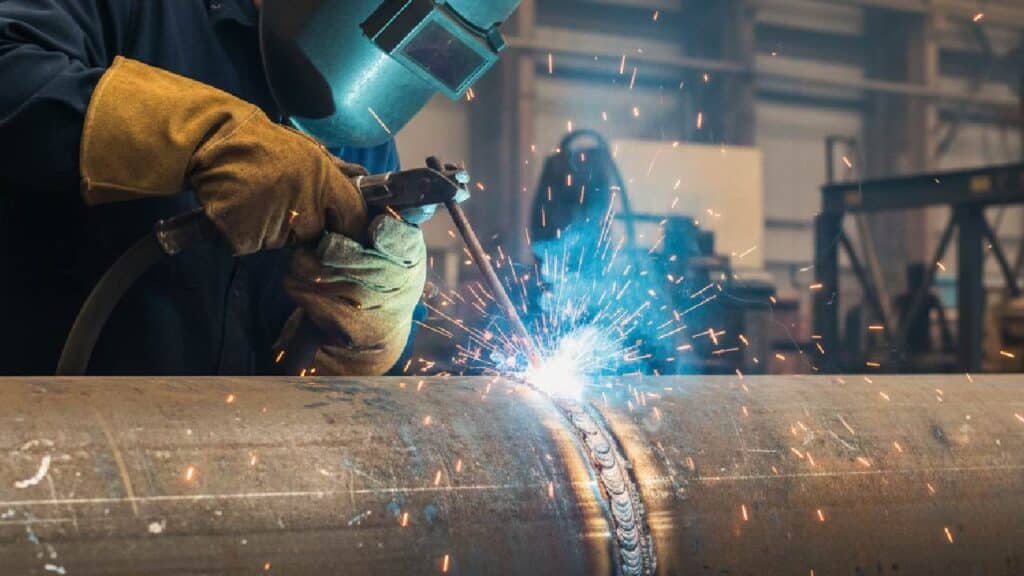
Working Principle: How MIG Welding and Arc Welding Actually Differ
The core difference between MIG welding and arc welding lies in how the electrode is delivered and how the weld is protected. MIG welding uses a continuously fed wire and external shielding gas, while arc welding relies on a flux-coated stick electrode that generates its own protection.
Here’s a clear side-by-side comparison:
| Feature | Arc Welding (Stick / SMAW) | MIG Welding (GMAW) |
| Welding Method | Flux-Coated Stick Electrode | Continuous Wire-Fed Electrode |
| Shielding Method | Flux Creates Gas And Slag | External Shielding Gas |
| Best Material Condition | Rusty, Dirty, Outdoor Steel | Clean, Prepared Surfaces |
| Material Thickness | Medium To Thick | Thin To Medium |
| Weld Appearance | Strong But Rough | Smooth And Clean |
| Welding Speed | Slower | Faster |
| Learning Curve | Skill-Heavy | Beginner-Friendly |
| Automation | Manual Only | Semi-Automatic / Automatic |
| Equipment Complexity | Simple | More Components |
Why this matters:
If you want clean, consistent welds with minimal effort, MIG welding is far easier to control. If you need deep penetration on rough steel or you’re working outdoors in wind and dust, arc welding keeps going when MIG struggles.
How Does MIG Welding Work in Real-World Applications?
MIG welding feeds a solid wire electrode continuously through a welding gun while shielding gas—typically argon, CO₂, or a mix—protects the weld pool from contamination. This setup keeps the arc stable and the weld consistent.
In real-world use, MIG welding stands out for speed and control:
- Continuous Wire Feed: No stopping to change electrodes.
- Stable Arc: Easier control for beginners.
- Clean Welds: Minimal spatter and no slag cleanup.
- Indoor Friendly: Best used where wind won’t disturb shielding gas.
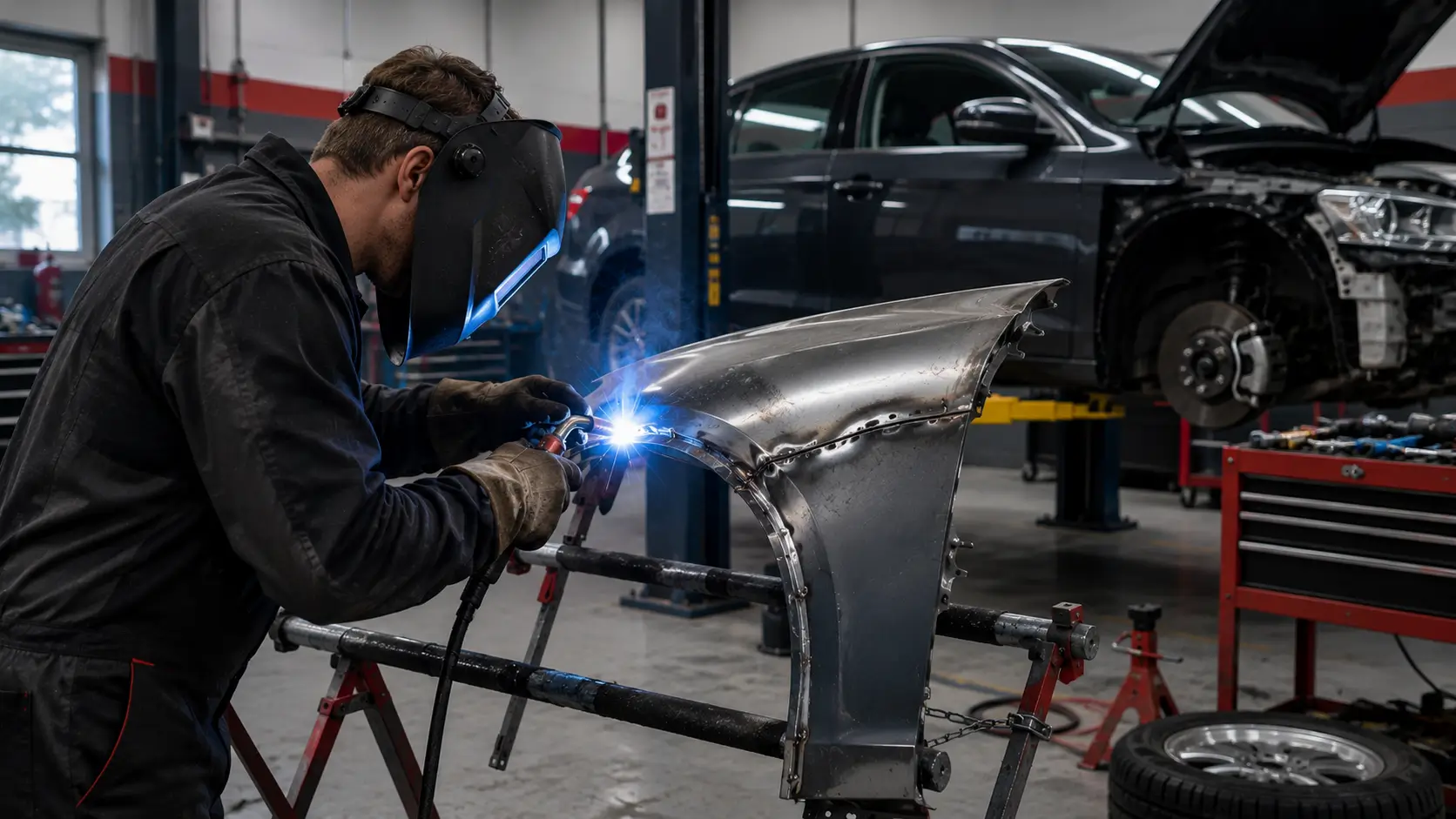
If you’ve ever welded thin steel or automotive panels, you know how unforgiving mistakes can be. MIG welding reduces those mistakes and shortens the learning curve (which is exactly why many people start here).
How Does Arc Welding (Stick Welding) Work?
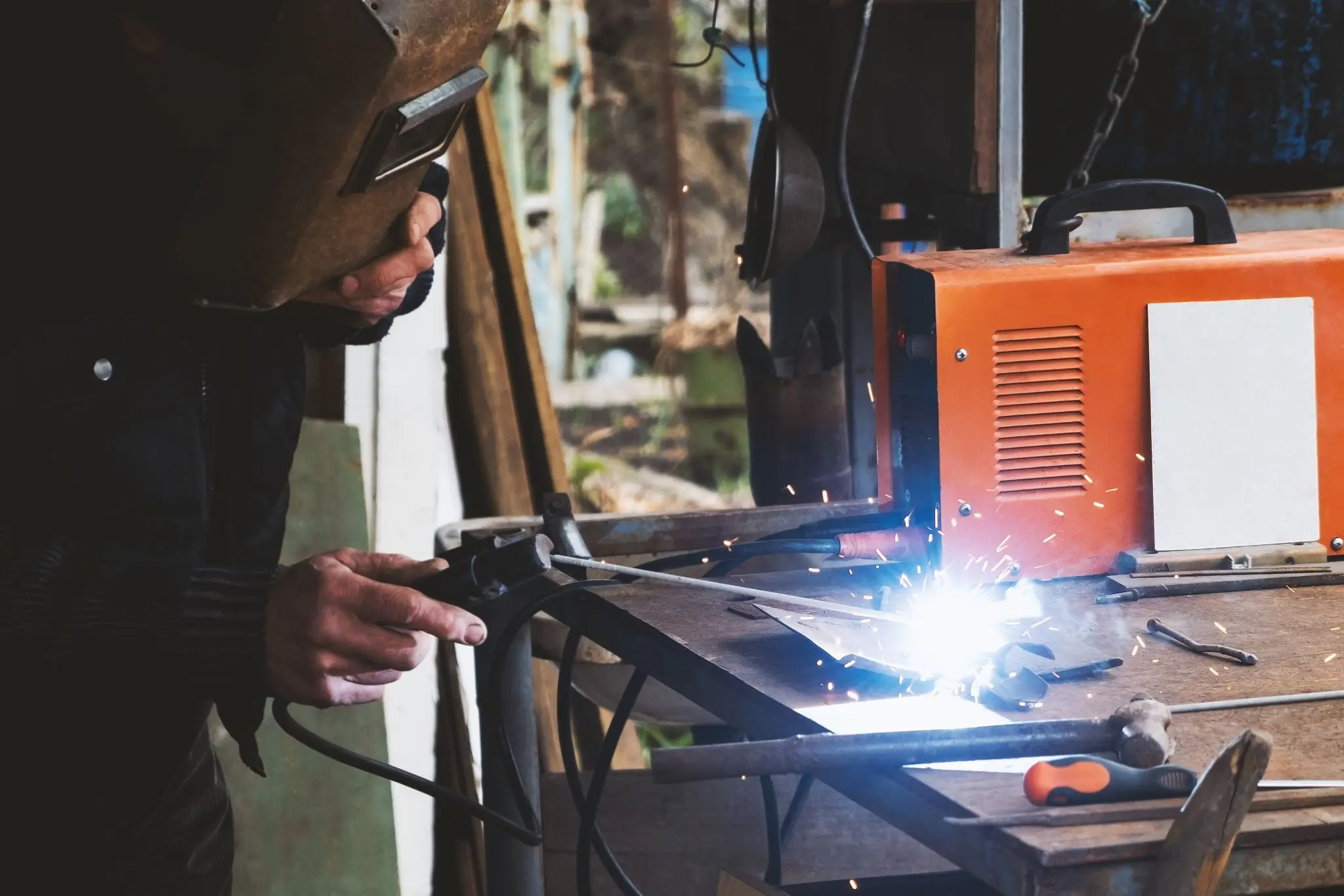
Arc welding uses a flux-coated consumable electrode and a manual electrode holder. When the electrode burns, the flux creates a protective gas and slag layer, shielding the weld from air without any external gas supply.
This design makes arc welding extremely practical in tough conditions:
- Flux-Coated Electrodes: No gas cylinders required.
- Strong Penetration: Ideal for thick steel.
- Outdoor Ready: Wind, dust, and surface rust are less of an issue.
- Simple Setup: Fewer components to carry and maintain.
Arc welding may not look pretty, but when strength matters more than appearance, it delivers reliable results where other processes fail.
What Equipment and Setup Differences Exist Between MIG and Arc Welding?
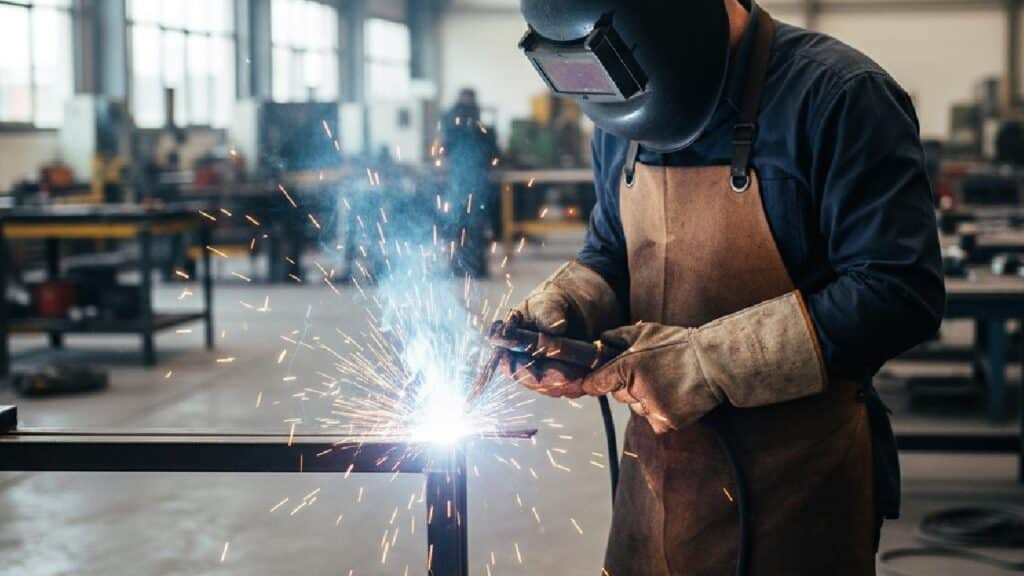
The equipment required for each process affects cost, portability, and ease of setup.
MIG Welding Setup Components
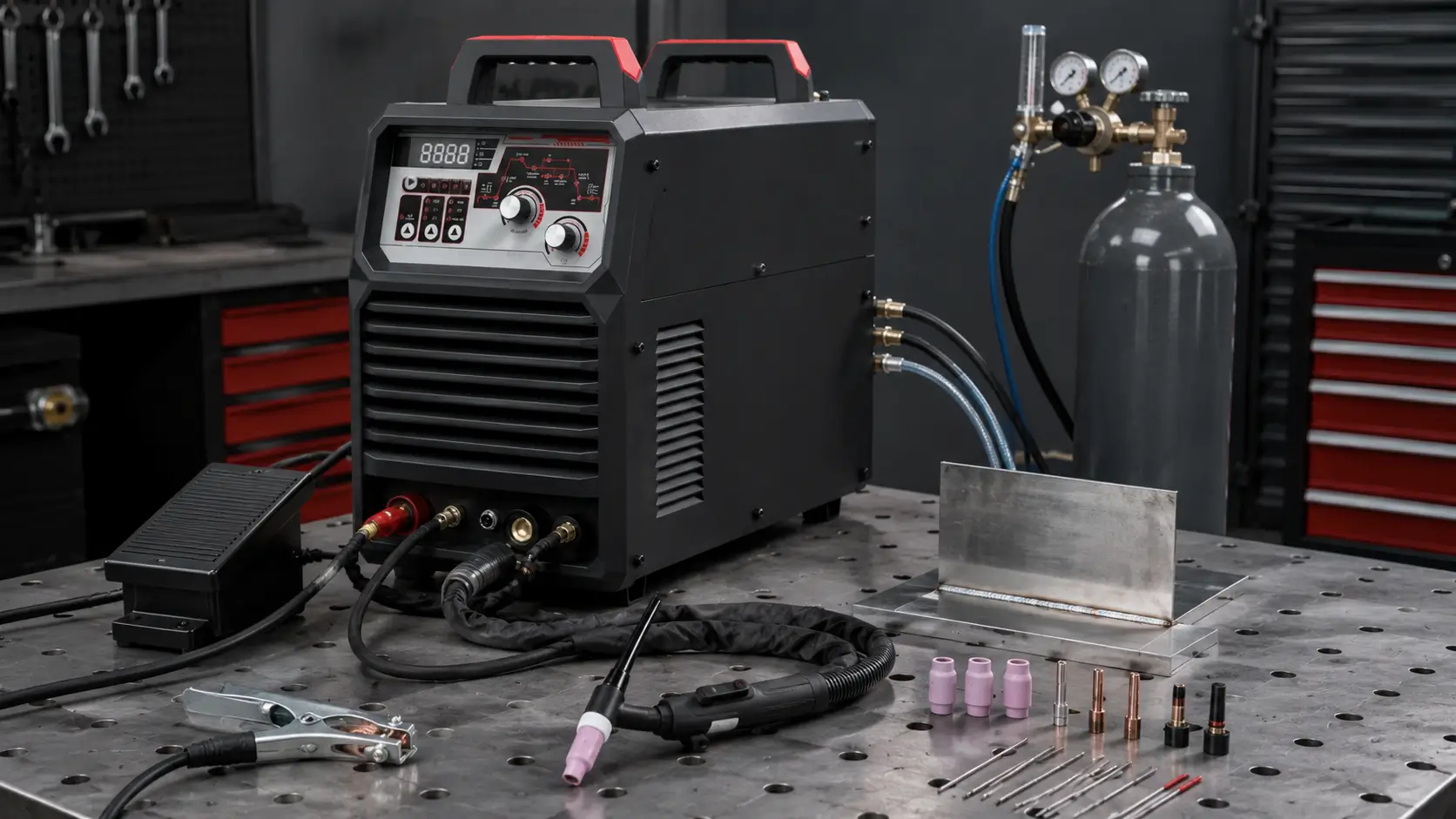
A MIG welding setup typically includes:
- Power Source
- Wire Feeder
- MIG Gun
- Shielding Gas Cylinder
- Regulator And Hoses
- Ground Clamp
- Spool Of Welding Wire
This setup offers precision and speed, but it’s heavier and less mobile.
Arc Welding Setup Components
Arc welding requires fewer parts:
- Power Source
- Electrode Holder
- Flux-Coated Electrodes
- Ground Clamp
- Welding Leads
With no gas cylinder and minimal accessories, arc welding setups are easier to transport and quicker to deploy on job sites.
What Materials Are MIG Welders and Arc Welders Best Suited For?
MIG and arc welders excel with different materials and surface conditions.
MIG Welding Material Compatibility
MIG welding works best with clean, well-prepared metals:
- Mild Steel
- Stainless Steel
- Aluminum
- Copper Alloys
- Thin Sheet Metal
- Automotive Panels
Arc Welding Material Compatibility
Arc welding handles tougher materials and conditions:
- Carbon Steel
- Structural Steel
- Cast Iron
- Stainless Steel
- Heavy Plates
- Outdoor Construction Steel
If surface prep is limited or the steel is thick and uneven, arc welding offers far more forgiveness.
Which Welding Process Is Easier to Learn: MIG or Arc Welding?
MIG welding is easier for beginners.
The continuous wire feed, simple trigger control, and stable arc reduce hand coordination and mistakes.
Arc welding requires more skill. You must control arc length, electrode angle, and travel speed manually, while also managing slag and frequent electrode changes. It takes longer to master—but the skill translates well to real-world job sites.
MIG Welding Learning Curve
- Easier For Beginners
- Simple Trigger Operation
- Continuous Wire Feed
- Stable Arc Control
- Faster Skill Development
Arc Welding Learning Curve
- Harder For Beginners
- Frequent Electrode Changes
- Slag Removal Required
- Precise Arc Length Control
- Slower Skill Progression
How Do Weld Quality and Appearance Compare Between MIG and Arc Welding?
MIG welding produces welds that are smooth, clean, and visually consistent. There’s little spatter and no slag to remove, making it ideal for visible welds.
Arc welding produces strong, penetrating welds, but appearance takes a back seat. Slag must be chipped away, and beads are usually rougher.
MIG Weld Quality
- Clean, Uniform Beads
- Minimal Spatter
- No Slag Cleanup
- Best For Visible Or Cosmetic Welds
Arc Weld Quality
- Deep Penetration
- Rougher Appearance
- More Spatter And Slag
- Best For Structural Strength
Which Welding Process Offers Higher Speed and Productivity?
MIG welding is faster in most production settings. Continuous wire feeding and minimal cleanup keep work moving.
Arc welding is slower. Electrode replacement and slag removal interrupt workflow, but the process prioritizes strength over speed.
- MIG Welding: Continuous, High-Efficiency Welding
- Arc Welding: Interrupted, Moderate-Speed Welding
Which Welding Method Is More Portable and Flexible on Job Sites?
MIG welding setups are heavier and less flexible due to gas cylinders and wire feeders. They work best in fixed locations with stable power.
Arc welding is far more portable. Without gas cylinders or complex feeders, it’s easier to carry to rooftops, pipelines, and outdoor job sites.
MIG Welding Portability
- Limited Mobility
- Heavy Gas Cylinders
- Fixed Work Locations
Arc Welding Portability
- Easy To Transport
- No External Gas
- Ideal For Outdoor Jobs
Which Welding Process Performs Better in Harsh Environmental Conditions?
MIG welding relies on shielding gas, which can be blown away by wind and contaminate the weld.
Arc welding creates its own shielding through flux, making it far more resistant to environmental factors like wind, dust, and surface rust.
- MIG Welding: Sensitive To Wind And Contamination
- Arc Welding: Reliable In Outdoor And Harsh Conditions
How Do Safety Requirements Compare Between MIG and Arc Welding?
MIG welding generally produces fewer fumes, less spatter, and cleaner working conditions. Arc welding generates more fumes, slag, and sparks, increasing the need for proper protective gear.
Regardless of the process, proper helmets, gloves, and protective clothing are essential.
Which Welding Process Is More Cost-Effective: MIG or Arc Welding?
MIG welding has higher startup costs due to equipment, gas cylinders, and ongoing gas refills. However, it delivers higher productivity over time.
Arc welding is more budget-friendly. Equipment costs are lower, electrodes are inexpensive, and maintenance is minimal.
MIG Welding Costs
- Higher Initial Investment
- Shielding Gas Expenses
- Higher Productivity Long Term
Arc Welding Costs
- Lower Equipment Cost
- Affordable Electrodes
- Ideal For Budget-Conscious Users
Common Applications by Industry
MIG Welding Applications
- Automotive Manufacturing
- Furniture Fabrication
- Sheet Metal Work
- Robotic Welding
- Industrial Production
Arc Welding Applications
- Construction Projects
- Pipeline Welding
- Shipbuilding
- Heavy Equipment Repair
- Outdoor Structural Work
Final Thoughts: Which Welding Process Should You Choose?
There’s no single winner in the MIG welding vs arc welding debate. Each process excels in different conditions.
Choose MIG welding if you work indoors, need clean and precise welds, or want a faster learning curve. Choose arc welding if you weld outdoors, handle thick or dirty steel, or need maximum portability and penetration.
The best welding results come from matching the process to your real work environment—not just choosing the most popular option. Once you know where and how you weld, selecting the right equipment becomes much easier.
FAQ: MIG Welding vs Arc Welding
Neither process is universally better. MIG welding is better for indoor work, thin to medium materials, and faster, cleaner welds. Arc welding is better for outdoor jobs, thick or dirty steel, and situations where portability and deep penetration matter more than appearance. The “better” option depends entirely on your working conditions and goals.
Yes, MIG welding is technically a type of arc welding. Both processes use an electric arc to generate heat and fuse metal. The difference is in how the electrode and shielding are handled: MIG welding uses a continuously fed wire and external shielding gas, while traditional arc (stick) welding uses a flux-coated electrode that creates its own shielding.
A MIG weld can be just as strong as a stick weld when done correctly. Strength depends more on joint preparation, penetration, and technique than the process itself. Stick welding often achieves deeper penetration on thick or rough steel, while MIG welding delivers consistent strength on clean, properly prepared materials.
MIG welding is best for clean, indoor environments where speed, consistency, and appearance matter. It works especially well for thin to medium materials, automotive panels, fabrication work, and production settings where efficiency and minimal cleanup are important.
The main disadvantage of MIG welding is its reliance on shielding gas. Wind can blow the gas away, making outdoor welding difficult. MIG setups are also less portable due to gas cylinders and wire feeders, and they generally require cleaner materials and higher initial equipment costs than stick welding