Choosing between MIG and MMA welding can feel overwhelming when you’re starting out or upgrading your equipment.
Should you invest in a MIG welder for its speed and ease of use, or is MMA’s rugged simplicity and portability a better fit for your projects?
This guide breaks down the real differences between MIG and MMA welding so you can make a confident decision based on your specific needs rather than just comparing technical definitions.
What Is the Difference Between MIG and MMA Welding?
MIG uses a continuous wire feed and shielding gas for faster, cleaner welds, while MMA uses a flux-coated rod and does not rely on external gas, which makes it more portable and better suited to rough conditions. These fundamental differences affect everything from the equipment you need to the environments where each process excels.
MIG Welding Basics
MIG (Metal Inert Gas) welding feeds a continuous solid wire electrode through a welding gun while simultaneously delivering shielding gas to protect the molten weld pool. The welder controls gun position while the machine manages wire feed speed and electrical parameters.
Key MIG Characteristics
- Continuous wire feed, so you do not stop often to change electrodes
- External shielding gas, usually CO2 or an argon/CO2 mix
- Cleaner-looking welds with less slag and usually less cleanup
- Best results on clean metal in a stable indoor workspace
- Easier control for many beginners, especially on thin-to-medium steel
When you’re ready to invest in quality MIG welding equipment, explore YesWelder’s complete MIG welder lineup designed for both beginners and professional fabricators.
MMA Welding Basics
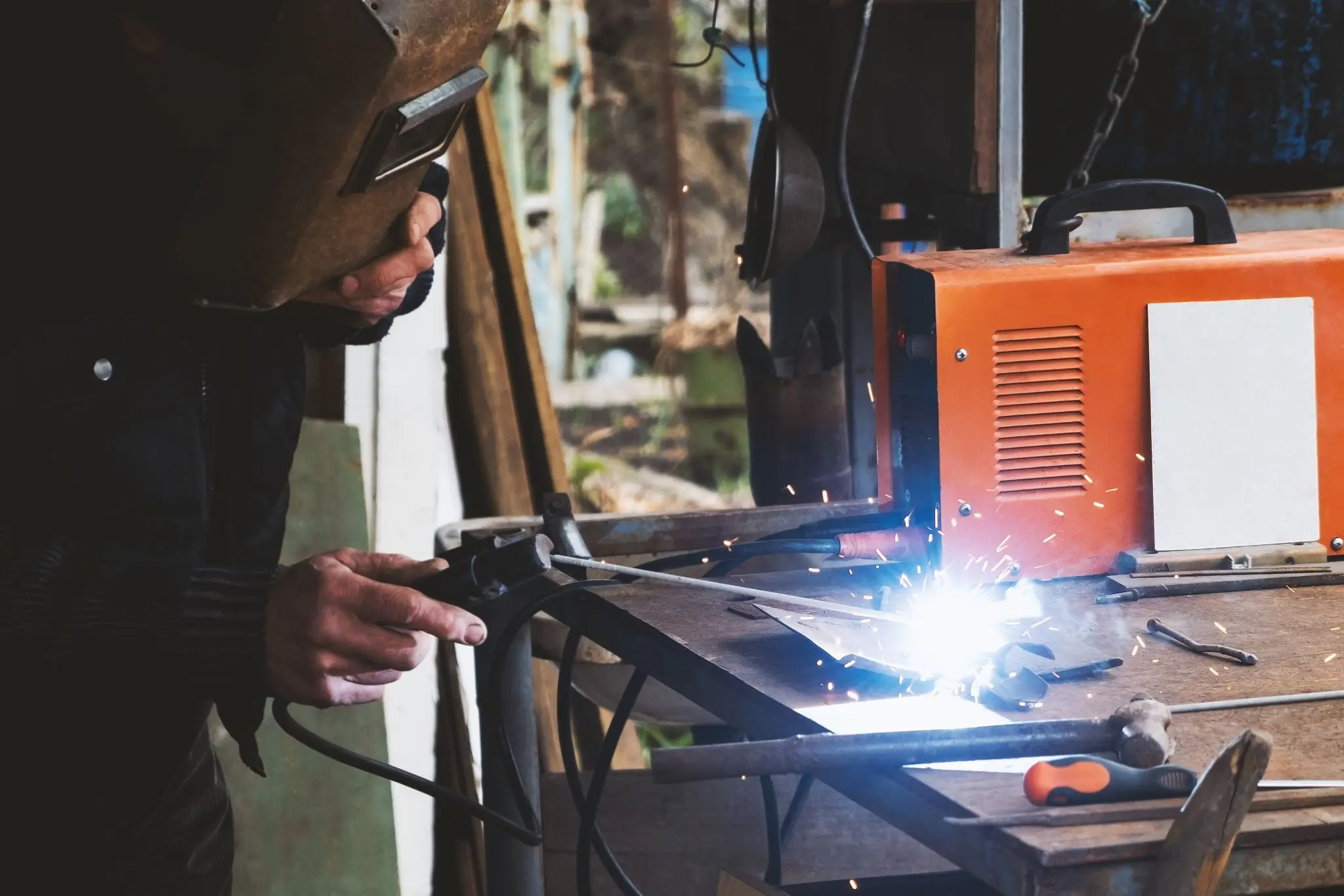
MMA (Manual Metal Arc) welding uses a flux-coated consumable electrode that you manually feed into the weld joint. As the electrode burns, the flux coating creates its own shielding gas and protective slag layer, eliminating the need for external gas cylinders.
Key MMA Characteristics:
- Manual electrode control, so arc length takes more practice
- No external gas cylinder because the flux coating shields the weld pool
- Better outdoor performance when wind would disturb MIG shielding gas
- Better tolerance for light rust and mill scale than MIG
- Slag removal after each pass
- Strong portability for farm repairs, field work, and outdoor maintenance
For rugged, reliable stick welding equipment, check out YesWelder’s stick welder collection built for field work and challenging conditions.
Quick Comparison Table
| Feature | MIG Welding | MMA Welding |
| Wire Feed | Continuous automatic | Manual stick feeding |
| Shielding | External gas required | Self-shielding flux |
| Portability | Less portable (gas cylinder) | Highly portable |
| Surface Prep | Requires clean metal | Works on dirty/rusty metal |
| Learning Curve | Easier for beginners | Steeper learning curve |
| Speed | Faster welding | Slower overall process |
| Wind Sensitivity | Gas blown away outdoors | Works in windy conditions |
| Cleanup | Minimal spatter | Slag removal required |
When Should You Use MIG vs MMA Welding?
MIG is usually the better choice for stable indoor environments, cleaner materials, and faster, cleaner-looking results, while MMA is usually the better choice for outdoor repairs, thicker metal, and less-than-perfect surfaces. Understanding when each process shines helps you select the right tool for specific jobs.
Best Situations for MIG Welding
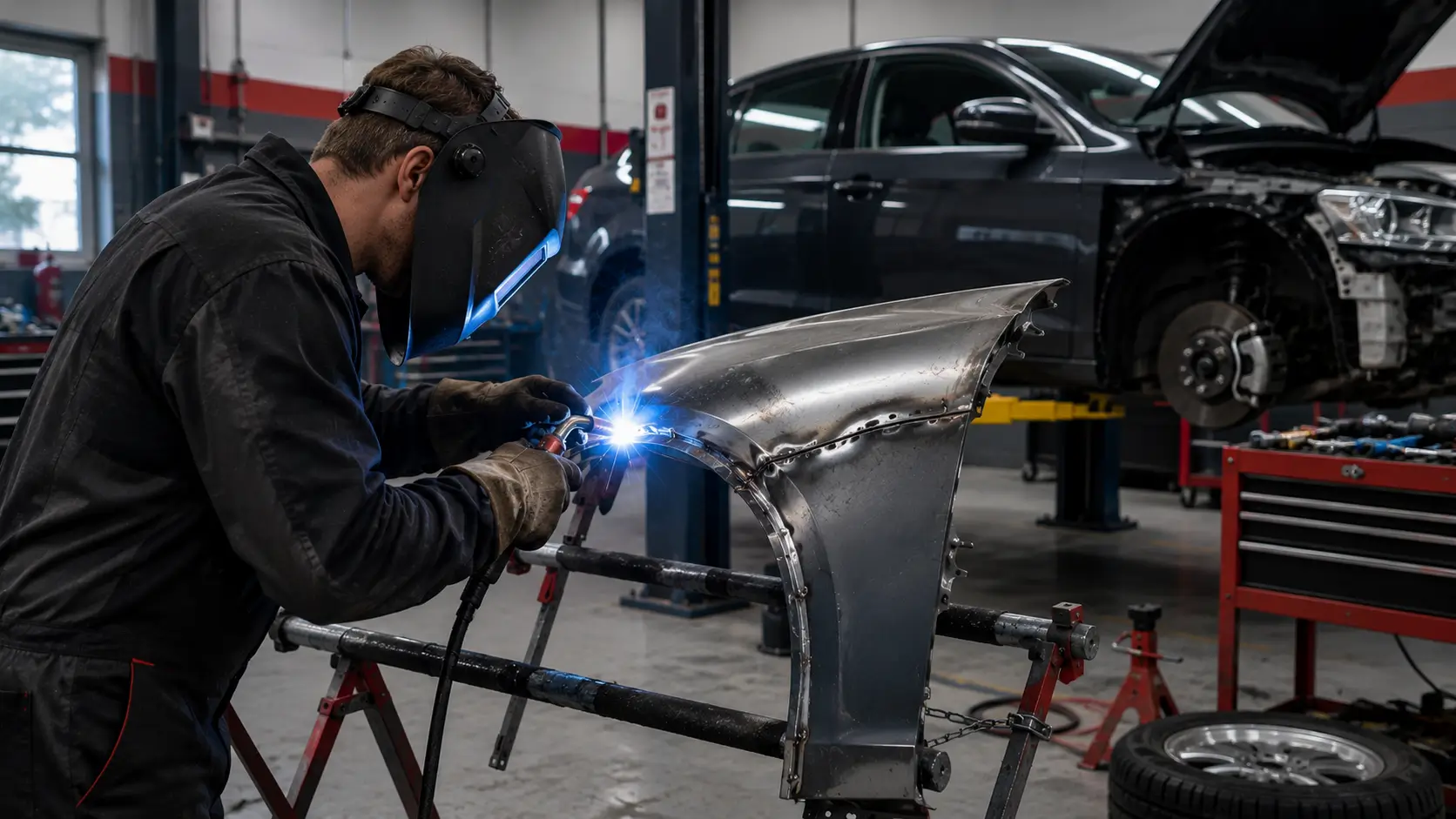
Automotive and Body Work: MIG excels at welding thin sheet metal without burn-through, making it ideal for auto body repairs, custom car fabrication, and restoration work where clean, professional-looking welds matter.
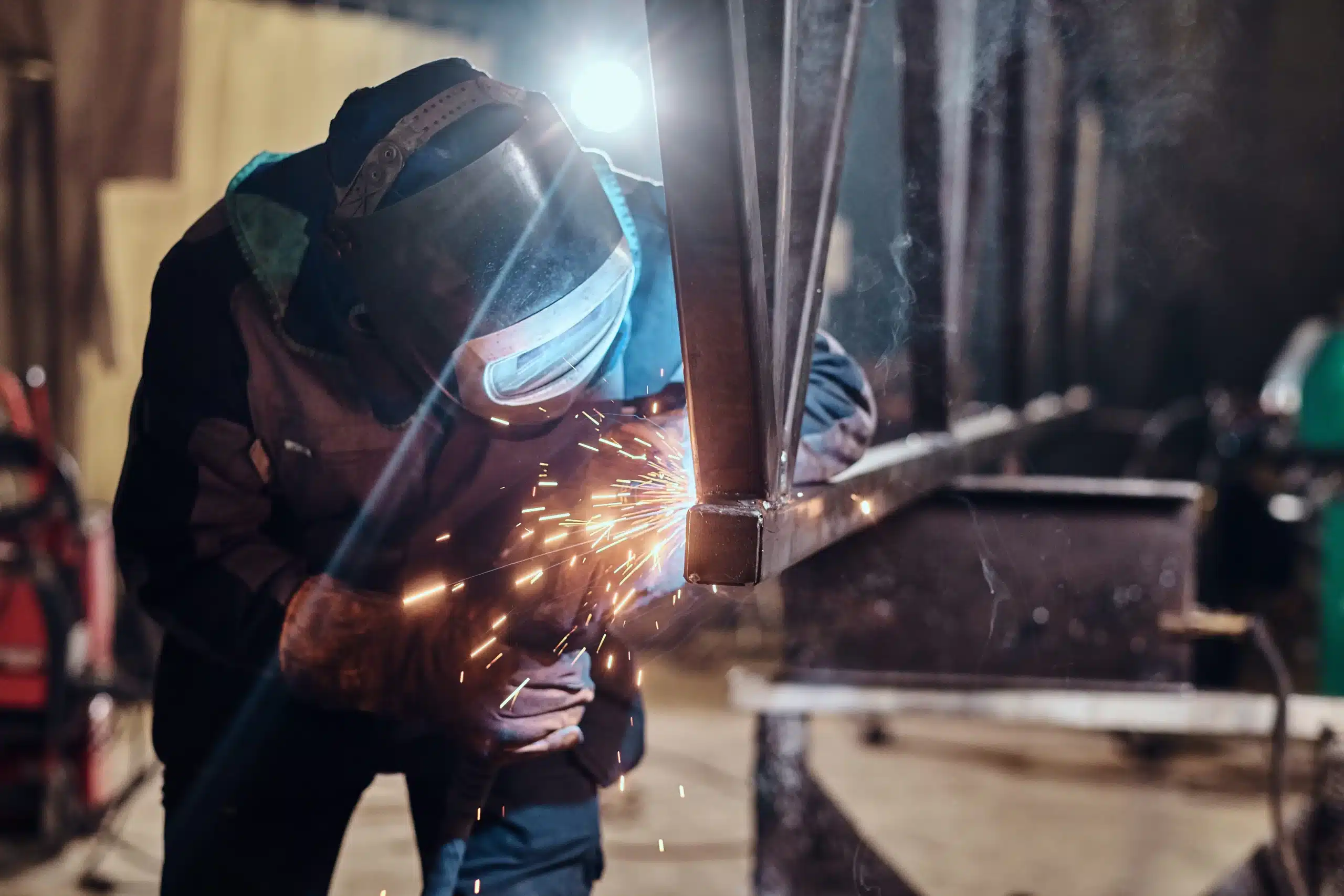
Production and Fabrication: MIG’s continuous wire feed and fast travel speeds dramatically increase productivity for small manufacturing shops and fabrication businesses welding identical parts repeatedly.
Thin to Medium Materials: MIG handles thin materials (20 gauge and lighter) far better than MMA, with excellent control over heat input to prevent warping and distortion.
Clean Indoor Workshop Environments: In climate-controlled shops with clean materials, MIG delivers superior weld quality and faster completion times.
Best Situations for MMA Welding
Field Repairs and Maintenance: When fixing equipment on construction sites, farms, or remote locations, MMA’s portability and ability to work without gas cylinders makes it the practical choice.
Outdoor and Windy Conditions: Wind disrupts MIG shielding gas coverage, causing porosity and weak welds. MMA’s self-shielding flux works reliably in outdoor conditions where MIG fails.
Thick Steel and Structural Work: MMA excels at welding thick structural steel, heavy equipment repairs, and applications requiring deep penetration on 1/4″ and thicker material.
Contaminated or Rusty Materials: MMA punches through rust, paint, and mill scale that would cause serious problems for MIG welding.
Fast Decision Guide by Project Type
Choose MIG For: Automotive restoration and body work, thin sheet metal fabrication, production welding in a shop, projects requiring minimal cleanup, beginners learning to weld.
Choose MMA For: Equipment repair in the field, outdoor construction and maintenance, heavy structural steel welding, working on rusty or contaminated metal, situations requiring maximum portability.
Which Welding Process Is Easier for Beginners to Learn?
For most beginners, MIG is easier to learn because the wire feed is continuous and the process is more forgiving, while MMA usually takes more control over arc length, rod angle, and movement. The learning curve difference is significant enough that many beginners choose their first welder based primarily on ease of learning.
Why MIG Is Usually Easier to Start With
- Automatic Wire Feed Simplifies Technique: The continuous wire feed means you focus only on gun angle, travel speed, and direction without simultaneously managing electrode feeding and arc length.
- Instant Visual Feedback: MIG’s clean process lets you see the weld pool clearly without slag obscuring your view, helping beginners learn proper technique faster and make real-time adjustments.
- More Forgiving Settings: Modern MIG welders often include preset programs for different materials and thicknesses, helping beginners achieve decent results without deep understanding of voltage and wire speed relationships.
Why MMA Has a Steeper Learning Curve
- Arc Length Control Requires Practice: Maintaining correct arc length demands constant attention and hand-eye coordination. Too long creates a weak weld; too short causes the electrode to stick.
- Multiple Variables to Manage: You must control arc length, electrode angle, travel speed, and feeding rate simultaneously. This multi-tasking challenge frustrates many beginners before they develop muscle memory.
- Slag Obscures Learning: The slag layer covering your weld means you can’t evaluate quality until after chipping it off, slowing the learning process compared to MIG’s immediate visual results.
What Are the Equipment and Cost Differences Between MIG and MMA?
MIG welding usually costs more to set up because you may need shielding gas, a regulator, wire, tips, and extra accessories. MMA welding is usually cheaper to start because it only needs a power source, electrode holder, ground clamp, electrodes, and safety gear.
That said, the cheapest option is not always the best one. A low-cost MMA welder is a poor fit if 80% of your work is thin auto body metal. A MIG setup costs more, but it can save time and frustration in a clean workshop.
MIG Welder Setup and Ongoing Costs
- Initial Equipment Investment: A complete MIG welding setup requires the welder, shielding gas cylinder (often rented with monthly fees), regulator, welding gun, ground clamp, and safety equipment. Budget $400-$800 for a quality entry-level complete MIG setup.
- Consumable Costs: MIG wire costs vary by type and quality but typically run $15-$40 per 10-pound spool. YesWelder offers professional-grade MIG welding wire for consistent performance and value.
- Gas Cylinder Considerations: Many suppliers charge cylinder rental fees ($5-$15 monthly) on top of gas refill costs, an ongoing expense that adds up over time.
MMA Welder Setup and Practical Costs
- Initial Equipment Investment: MMA welding requires only the power source, electrode holder, ground clamp, and basic safety gear. Quality entry-level MMA welders start around $200-$400, making the barrier to entry significantly lower than MIG.
- Consumable Costs: Electrodes are your primary ongoing expense, typically $10-$30 per 10-pound package. No gas refills or cylinder rentals add to operational costs.
- True Portability Value: Without gas cylinders to transport, MMA setups fit in a vehicle trunk and deploy anywhere with electrical power.
Can One Welder Do Both MIG and MMA?
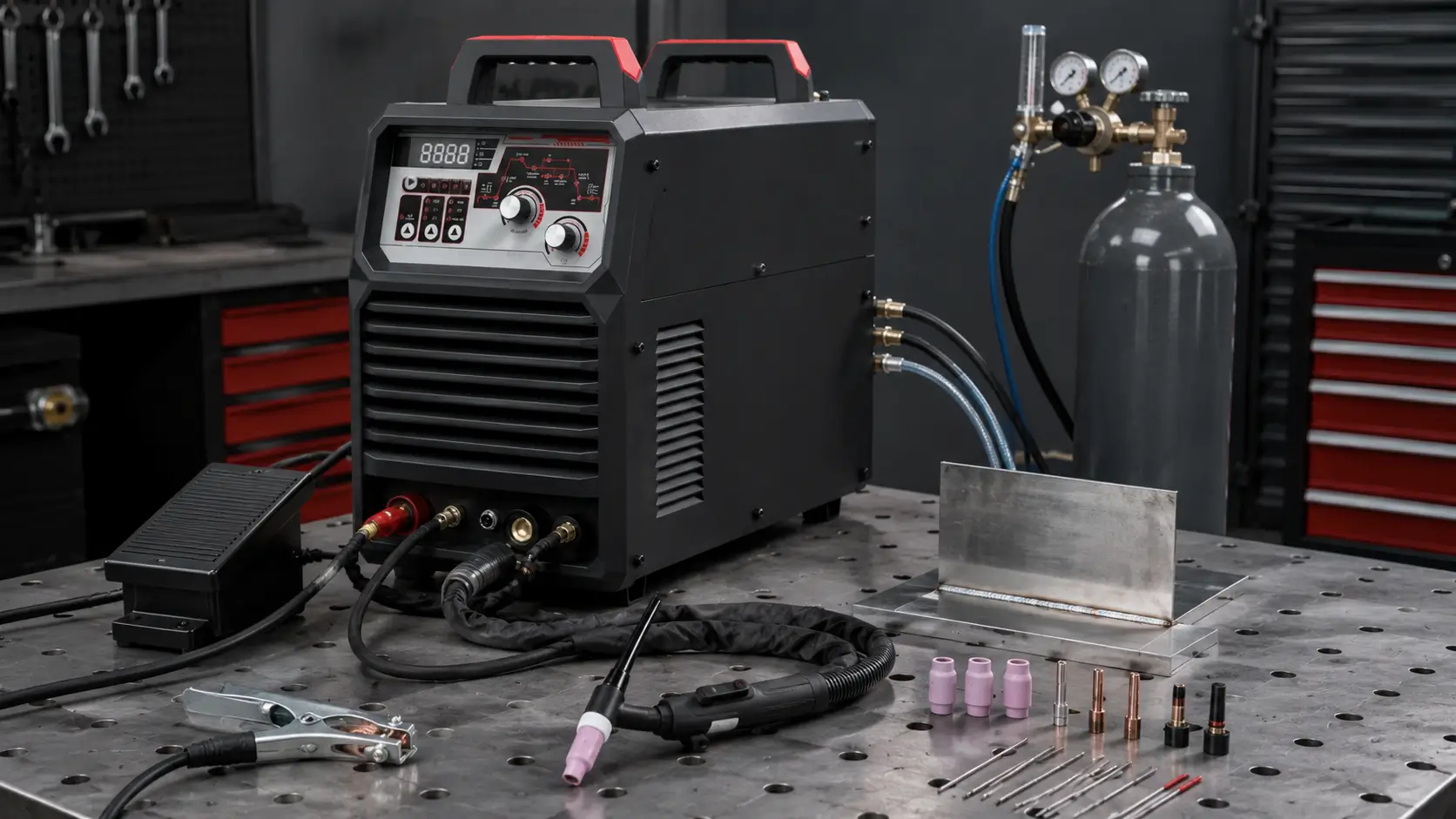
Yes, many modern multiprocess welders can handle both MIG and MMA, which makes them a practical choice for users who want more flexibility or are not ready to commit to only one process.
These versatile machines eliminate the need to choose between processes and allow you to match the welding method to each specific job.
YesWelder’s multiprocess welders combine MIG and MMA capabilities in a single machine, delivering professional versatility at competitive wholesale pricing. Browse our complete range as a trusted welding supplier.
Who Should Consider a Multiprocess Welder
- Hobbyists with Diverse Projects: If you’re tackling everything from auto restoration to farm equipment repair, a multiprocess welder lets you use MIG for bodywork and MMA for field repairs without owning two separate machines.
- Small Business Fabricators: Shops handling varied customer work benefit from flexibility to quote both precision fabrication (MIG) and heavy repair work (MMA) without investing in multiple dedicated machines.
- Users Still Exploring Welding: When you’re not sure which process you’ll use most, a multiprocess machine lets you experiment with both before specializing.
- Budget-Conscious Buyers: While multiprocess welders cost more than basic single-process machines, they’re typically cheaper than buying separate quality MIG and MMA welders.
How Do You Choose Between MIG and MMA Welding for Your Own Work?
The best way to choose between MIG and MMA welding is to look at your normal work, not the rare project you might do someday. Pick the process that fits 80% of your real jobs.
Ask yourself these questions:
- Where do you weld most often? Choose MIG for a clean indoor shop. Choose MMA for outdoor repairs, farms, construction sites, or field work.
- What metal thickness do you handle most? Choose MIG for thin sheet metal and cleaner fabrication. Choose MMA for thicker steel and repair work.
- Do you care more about appearance or portability? Choose MIG for cleaner-looking welds. Choose MMA when you need to carry the setup easily.
- Can you get shielding gas easily? Choose MIG if gas refills are convenient. Choose MMA if gas supply is inconvenient or expensive.
- Do your projects change often? Choose a multiprocess welder if you need both MIG and MMA in one machine.
Conclusion
MIG and MMA welding are both useful, but they solve different problems. Choose MIG if you mostly weld indoors, work on clean thin-to-medium steel, and want an easier learning curve. Choose MMA if you repair thicker steel outdoors, need a portable setup, or cannot rely on shielding gas.
If your work includes both clean shop projects and outdoor repair, a multiprocess welder may be the better long-term buy. Compare YesWelder MIG welders, stick welders, and multiprocess machines by amperage, input voltage, material thickness, and accessory needs before you choose your next setup.
Frequently Asked Questions
No, when done correctly, both MIG and MMA produce equally strong welds that typically exceed the base metal’s strength. Weld strength depends on proper technique, correct settings, and appropriate filler material selection rather than the welding process itself.
No, MMA welding does not require external shielding gas. The flux coating on the electrode creates its own shielding gas and protective slag layer as it burns. This self-shielding characteristic is one of MMA’s primary advantages.
Gasless MIG (flux-cored wire) offers some advantages over MMA for outdoor work, including continuous wire feed and faster travel speeds. However, MMA generally handles windy conditions better and works more reliably on contaminated or rusty materials.
Most home MIG and MMA welders run on standard 120V household circuits and draw 20-30 amps for light-duty work. For serious welding capability, 240V models provide better performance and handle thicker materials.
If you’re genuinely uncertain about which process fits your needs best, consider a multiprocess welder that handles both MIG and MMA. Alternatively, start with an entry-level MMA welder due to its lower cost and versatility, you can always add a MIG welder later if your work demands it.