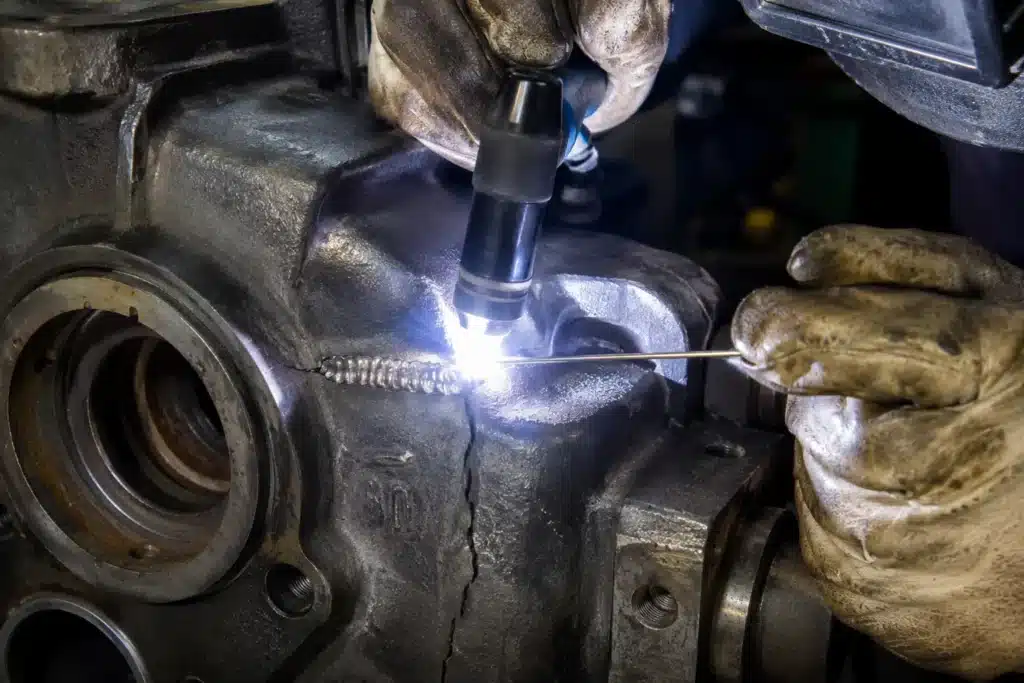
A cracked cast iron pump housing can stop a repair job fast. In some cases, replacement means long lead times, high part costs, or a part that simply is not available anymore. The same problem shows up with gearbox casings, machine bases, and vintage engine blocks.
Cast iron welding rods help with these repairs, but only when you match the rod to the casting, control heat carefully, and avoid the mistakes that cause new cracks.
This guide explains how cast iron rods work, how Ni-99 and Ni-55 electrodes differ, how to choose the right rod, and what your stick welder needs to handle the repair.
What Is a Cast Iron Welding Rod?
Cast iron welding rods are specialized stick electrodes used to repair cracked, worn, or broken cast iron parts. They run through the shielded metal arc welding process, but they are different from general-purpose steel electrodes.
Why the Filler Metal Matters
Cast iron contains more carbon and has lower ductility than mild steel, so it reacts badly to fast heating, fast cooling, and hard weld deposits. A standard steel electrode can leave a hard, brittle weld that shrinks and cracks as it cools.
Cast iron welding rods use nickel-based or special iron-alloy filler metals to create a softer, more ductile deposit. That extra ductility helps the repair handle shrinkage stress instead of cracking right after welding.
Softer, More Ductile, and More Machinable Weld Deposits
Cast iron welding rods produce weld deposits substantially softer than the surrounding cast iron base metal. While this might sound like a weakness, the softer, more ductile deposit actually represents the key to successful cast iron repair. When the weld cools and contracts, the soft nickel deposit stretches slightly rather than cracking under shrinkage stresses that would fracture a hard, brittle steel deposit. This ductility also makes nickel-based cast iron welds machinable with standard cutting tools, essential when repairing bearing surfaces or precision components.
How These Rods Differ from Standard Steel Electrodes
Standard E6010, E7018, or other steel stick electrodes designed for mild steel produce hard, high-strength deposits that crack almost immediately when used on cast iron. The deposit metal shrinks as it cools but cannot stretch to accommodate the shrinkage, creating cracks in the weld or heat-affected zone. Cast iron electrodes solve these problems through completely different filler metal chemistry, providing ductility where strength would crack, and machinability where hardness would make finishing impossible.
Why Is Cast Iron So Difficult to Weld?
Cast iron holds 2–4% carbon, roughly ten times more than mild steel. That carbon makes the metal hard and brittle, and welding heat turns the area around the weld into an even more fragile structure.
The real enemy is not the welding itself. It is the thermal stress that builds when hot metal cools and shrinks against cold surrounding material.
Gray cast iron is often specified under ASTM A48, which classifies gray iron castings by minimum tensile strength, not by a fixed chemical composition.
For broader context on welding cast metals, read our guide on how to weld cast metals.
High Carbon Content and Brittle Heat-Affected Zones
Cast iron contains 2-4% carbon compared to mild steel’s typical 0.05-0.25% carbon. This high carbon content makes cast iron hard and brittle rather than tough and ductile like steel. When you heat cast iron during welding, the area adjacent to the weld, the heat-affected zone, experiences rapid heating and cooling that can transform carbon-rich iron into extremely hard, brittle structures prone to cracking.
Thermal Stress and Cracking During Heating and Cooling
Cast iron’s low ductility means it cannot stretch or deform to relieve internal stresses. When you weld cast iron, the localized heating expands the metal while surrounding cool areas remain dimensionally stable. As the weld cools and contracts, these stresses intensify. Without sufficient ductility to accommodate shrinkage, the cast iron cracks, either in the weld deposit itself, in the heat-affected zone, or propagating from existing damage.
Heat Control Matters More Than Welding Force
Successful cast iron welding depends more on thermal management than welding amperage or technique. You’re not trying to force molten metal into a joint with heat, you’re trying to make a repair without creating the thermal shock and stress that cause cracking. These thermal challenges explain why standard steel electrodes crack on cast iron and why professionals turn to rods with completely different chemistry.
What Types of Welding Rods Are Used for Cast Iron Repair?
Cast iron welding rods fall into several categories, each suited to different repair requirements and working conditions. AWS A5.15 specification covers nickel and nickel-alloy welding electrodes for cast iron, providing the classification framework most manufacturers follow.
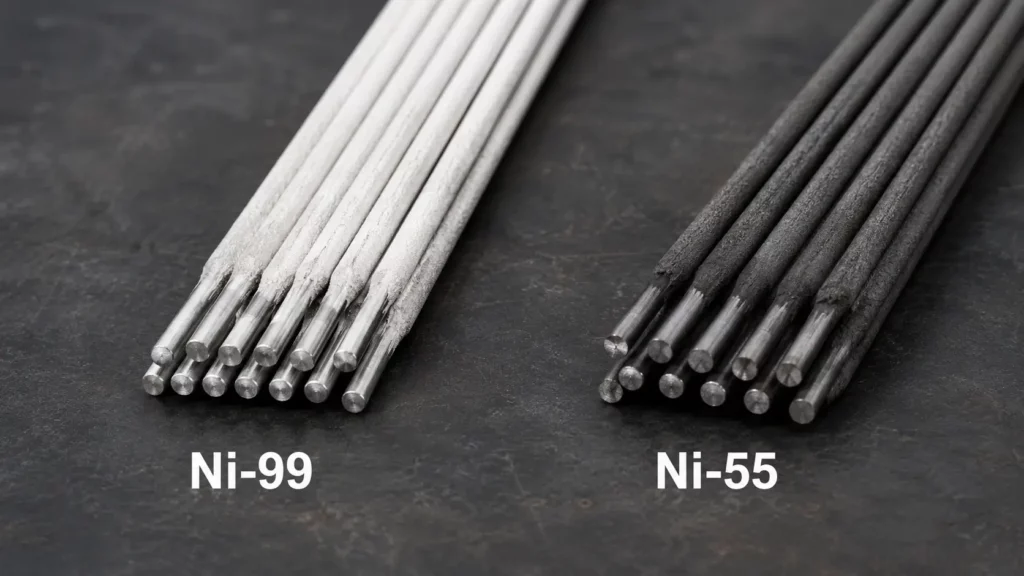
Ni-99 Electrodes for Machinable Repairs
Ni-99 electrodes contain 99% pure nickel filler metal, producing the softest, most machinable weld deposits available for cast iron repair. The nearly pure nickel remains ductile after welding and machines easily with standard carbide or high-speed steel cutting tools. This machinability makes Ni-99 ideal for repairing bearing surfaces, mounting faces, and precision components requiring post-weld machining. However, Ni-99’s softness means lower strength compared to nickel-iron alloys.
Ni-55 Electrodes for Stronger and Broader Repair Use
Ni-55 electrodes contain approximately 55% nickel with the balance being iron and small amounts of other alloying elements. This nickel-iron alloy provides a practical compromise between the extreme machinability of Ni-99 and the higher strength of steel electrodes. Ni-55 represents the workhorse cast iron electrode for general repair applications, handling structural repairs, pressure-containing components, and load-bearing parts better than Ni-99 while maintaining enough ductility to resist cracking.
Steel-Based and Specialty Alternatives
Steel Electrodes: Some manufacturers offer steel-core electrodes with special flux coatings designed for cast iron. These typically cost less than nickel-based rods but produce harder, less machinable deposits with higher cracking risk.
Bronze Welding Rods: While technically brazing rather than fusion welding, bronze rods produce lower-strength but crack-resistant joints on cast iron.
| Rod Type | Nickel Content | Strength | Machinability | Best Applications |
| Ni-99 Electrodes | ~99% | Lower | Excellent | Bearing surfaces, precision parts, thin crack-prone castings |
| Ni-55 Electrodes | ~55% | Good | Good | General structural repairs, ductile iron, load-bearing parts |
| Steel-Core Cast Iron Electrodes | 0% | High, but harder | Poor | Low-cost, non-machined, non-critical repairs |
| Bronze Brazing Rods | 0% | Lower | Good | Thin sections, decorative repairs, lower-heat cast iron repair |
Knowing the rod types is the first step. The next is matching the right rod to your specific casting and repair goal.
How Do You Choose the Right Rod for the Cast Iron Part You Are Repairing?
Choose the cast iron welding rod by asking two questions first: what type of cast iron are you repairing, and does the finished weld need to be machined?
Matching the Rod to the Cast Iron Type
Gray Cast Iron: The most common type, gray cast iron machines easily and welds reasonably well with proper technique. Both Ni-99 and Ni-55 work well on gray iron.
Ductile Cast Iron: Higher strength than gray iron with some ductility. Ni-55 generally performs better than Ni-99 for ductile iron repairs.
White Cast Iron: Extremely hard and brittle, white cast iron resists welding even with specialized rods. Repairs often prove impractical.
Matching the Rod to the Repair Goal
Machinability Required: Choose Ni-99 when post-weld machining is essential. Bearing journals, mounting faces, and precision surfaces demand the easy machinability pure nickel provides.
Strength Priority: Select Ni-55 for structural repairs, pressure vessels, or load-bearing components where weld strength matters more than easy machining.
Crack-Resistance Critical: Use Ni-99 for thin sections or situations where cracking risk is highest.
Handling Unknown Cast Iron Grades
When the cast iron grade is unknown, Ni-55 is often a practical starting point for general repair work because it balances strength, ductility, and cost.
If the repaired area must be machined, or if the casting is thin and crack-prone, Ni-99 may be the safer choice.
Once you have the right rod selected, the welding technique itself determines whether the repair holds or cracks.
What Techniques Help Prevent Cracking When Welding Cast Iron?
Even with correct rod selection, welding technique determines whether cast iron repairs succeed or fail.
Uniform Preheating Before Welding
Preheating the casting to about 500–1200°F before welding helps reduce cracking by lowering the temperature difference between the weld area and the surrounding metal. Avoid overheating the casting; temperatures above about 1400°F can create additional metallurgical problems.
For large castings, uniform preheating is best. If full preheating is not practical, heat the repair area and nearby metal as evenly as possible before welding.
Short Beads, Low Heat Input, and Peening
Short Weld Beads: Deposit short weld beads (1-2 inches) rather than long continuous passes. This limits heat input per area and allows better heat dissipation.
Low Amperage: Use the minimum amperage that maintains a stable arc and adequate fusion. Lower heat input reduces thermal stress and shrinkage forces.
Peening: Immediately after depositing each bead while the weld remains red-hot, peen (hammer) the weld metal lightly with a ball-peen hammer. This mechanical working stretches the hot metal, relieving shrinkage stresses before the weld cools and hardens.
Slow Cooling After the Repair
After completing welding, slow the cooling rate as much as practical. For preheated parts, this means allowing the entire casting to cool slowly in the furnace or under insulating blankets. For parts that weren’t preheated, bury the completed repair in dry sand, vermiculite, or lime to slow cooling. Never quench hot cast iron repairs in water, this virtually guarantees cracking.
What Mistakes Cause Cast Iron Welds to Fail?
Most cast iron repairs fail for one of three reasons: too much heat, the wrong rod, or cooling too fast. Check these three points before striking the arc, because cast iron usually cracks after the repair looks finished.
Overheating the Base Metal
The most common failure involves excessive heat input from high amperage welding or long continuous beads that overheat the base metal. This creates severe thermal stress, large brittle heat-affected zones, and shrinkage forces the cast iron cannot accommodate. Using a stick welder capable of stable low-amperage operation helps prevent this problem.
Using the Wrong Electrode
Steel electrodes on cast iron almost always crack. Choosing Ni-99 for high-stress structural repairs may produce joints that lack adequate strength. Selecting Ni-55 for precision bearing repairs creates machining difficulties.
Cooling Too Fast
Allowing completed repairs to cool too quickly, through inadequate preheating, insufficient post-weld insulation, or exposure to cold drafts, creates thermal shock that cracks cast iron. Never quench hot repairs in water.
What Should Your Welder Be Able to Do for Cast Iron Repair?
A stick welder for cast iron repair needs stable low-amperage output, clean DC arc characteristics, and controls that keep heat input consistent. The machine matters as much as the rod.
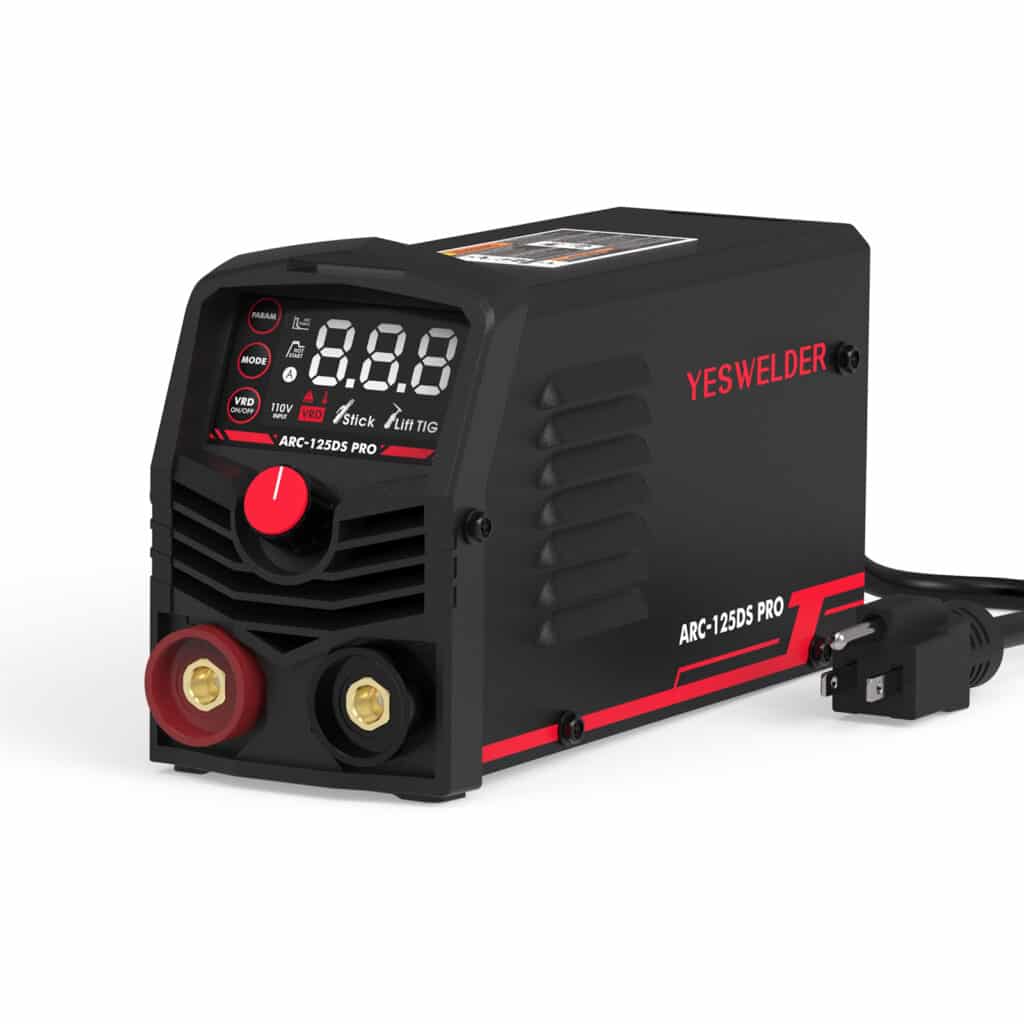
Stable Output at Low Amperage
Cast iron repair typically uses 60-90 amps for 1/8″ electrodes, substantially lower than the 110-140 amps common for steel welding with the same rod diameter. The welder must maintain a stable, smooth arc at these lower currents without sputtering or providing erratic heat input. Modern inverter-based stick welders excel at low-amperage stability, providing smooth arc characteristics down to 20-30 amps when needed for delicate repairs.
DC Output and Useful Arc-Start Control
Nickel-based cast iron electrodes typically run DCEN (DC electrode negative / straight polarity) to reduce penetration and minimize dilution of the base metal. Some steel-core cast iron rods use DCEP instead. Check the electrode data sheet or spec sheet before setting polarity. Arc-start features like hot-start and anti-stick prove particularly valuable for cast iron repair where maintaining consistent low heat input matters.
Practical Fit for Shop Maintenance and Field Repair
Cast iron repairs occur in maintenance shops, industrial facilities, and field locations, not just controlled welding booths. The welder should provide reliable performance across varying input power quality and offer portability when repairs must happen where the broken equipment sits.
For shops that repair cast iron regularly, spec sheet consistency matters as much as machine capability. If your team handles pump housings, gearbox casings, and machine bases across different facilities, standardized consumables, same rod type, same amperage range, same preheat protocol, reduce setup errors and keep replacement parts easier to manage.
When comparing options from a welding equipment supplier, check whether the welder, electrode recommendations, replacement consumables, and support documents fit the same repair workflow.
Conclusion
Successful cast iron repair comes down to four decisions: choose the right rod, control heat, avoid fast cooling, and use a stick welder that can hold a stable low-amperage arc.
Ni-99 is the better fit when machinability or crack resistance comes first. Ni-55 is often better for stronger general repairs. No rod can make up for poor heat control, so preheating, short beads, peening, and slow cooling still matter.
If your shop handles cast iron repair often, the next step is matching those rods with a welder that supports stable DC output, smooth arc starts, low-amp control, and reliable consumable support. YesWelder offers stick welders and welding accessories for repair work, making it easier to compare machine capability, portability, and setup needs before choosing a cast iron repair setup.
FAQ
Brazing works better than fusion welding for thin cast iron sections, decorative repairs, and situations where minimal heat input proves critical. Bronze brazing creates lower thermal stress than fusion welding. However, brazed joints provide lower strength than welded repairs and may not suit pressure-containing or highly loaded applications.
Yes, a quality DC stick welder with good low-amperage stability serves both cast iron repair and general steel maintenance welding. The same machine that provides controlled 70-amp operation for cast iron handles standard E7018 electrode welding at 120 amps for steel fabrication.
Cold welding (welding without preheating) works for some cast iron repairs but increases cracking risk substantially. It suits small, non-critical repairs and situations where preheating proves genuinely impractical. Use Ni-99 electrodes for maximum ductility, deposit very short beads with low heat input, peen thoroughly, and insulate completed repairs for slow cooling.
Replace rather than repair when cracks extend through critical load paths, when multiple repairs have already failed, when the casting shows extensive cracking indicating general deterioration, or when repair costs approach replacement costs. Pressure vessels with cracks require particularly careful evaluation, replacement often proves safer than repair.
Yes, cast iron can be welded to steel using nickel-based electrodes (typically Ni-55) or 309/312 stainless steel electrodes. The ductile deposit accommodates the different thermal expansion rates and properties of the dissimilar metals. Preheat both sides, use low heat input, and allow slow cooling.