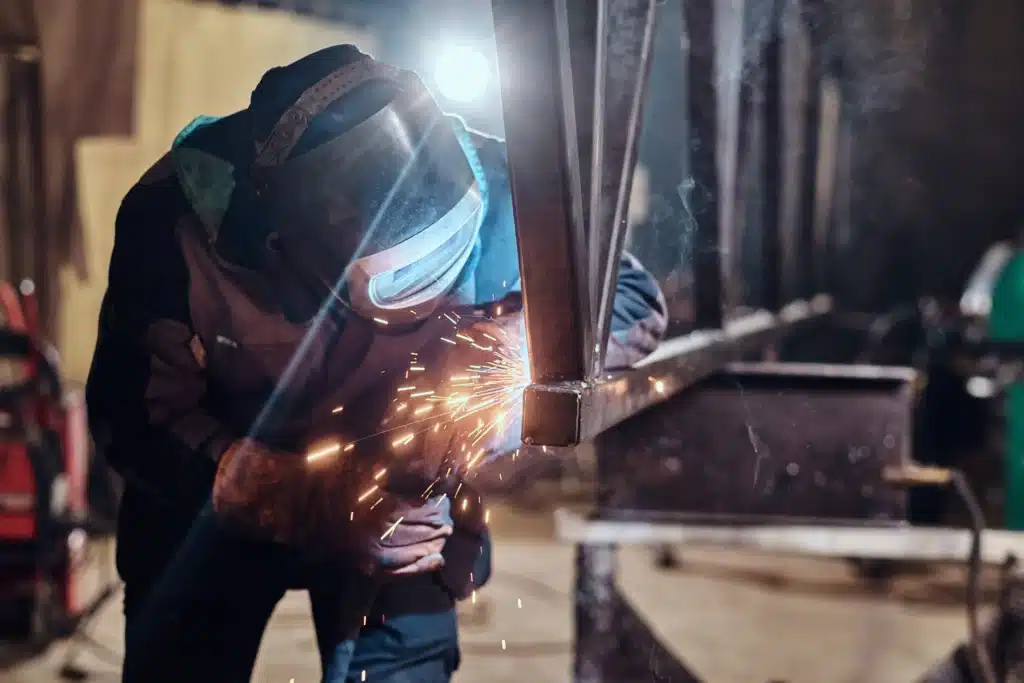
An industrial plasma cutter is usually the better choice when your shop cuts mixed metals, repeatable parts, CNC profiles, stainless steel, or aluminum. Oxy-fuel still makes sense for very thick carbon steel, rough field cuts, heating work, and jobs where power or compressed air is limited.
This guide helps you decide which cutting setup fits your real workload. You will compare CNC plasma tables, heavy-duty handheld plasma cutters, oxy-fuel systems, thickness range, amperage, duty cycle, torch type, safety needs, and cost per finished part before you commit to equipment or inventory.
What Does an Industrial Plasma Cutter Do?
An industrial plasma cutter cuts electrically conductive metal with a focused arc and a high-velocity gas stream. It helps your shop cut faster profiles, repeatable holes, slots, brackets, panels, and repair parts with less layout work than many manual cutting methods.
Plasma cutting starts when an electric arc passes through compressed gas. The arc ionizes the gas into plasma, melts the metal, and uses the gas stream to push molten material out of the kerf. In industrial work, the system may be a handheld cutter for repair work, a high-output power source for heavy plate, or a CNC table for nested production parts.
The process works on conductive metals such as:
- Carbon steel
- Stainless steel
- Aluminum
- Copper alloys, depending on system capability
- Mixed repair parts found in maintenance and fabrication shops
That material range is one reason plasma has become common in fabrication, repair, and production cutting. Oxy-fuel mainly serves ferrous cutting work, while plasma gives your team more flexibility when the workload includes stainless steel, aluminum, or mixed-metal jobs.
Gas choice still affects edge quality, oxidation, and consumable life. For now, the main point is simple: plasma is not just a torch. It is a cutting system made up of the power source, torch, gas supply, consumables, and control method.
What Types of Industrial Plasma Cutters Are Used in Heavy Fabrication?
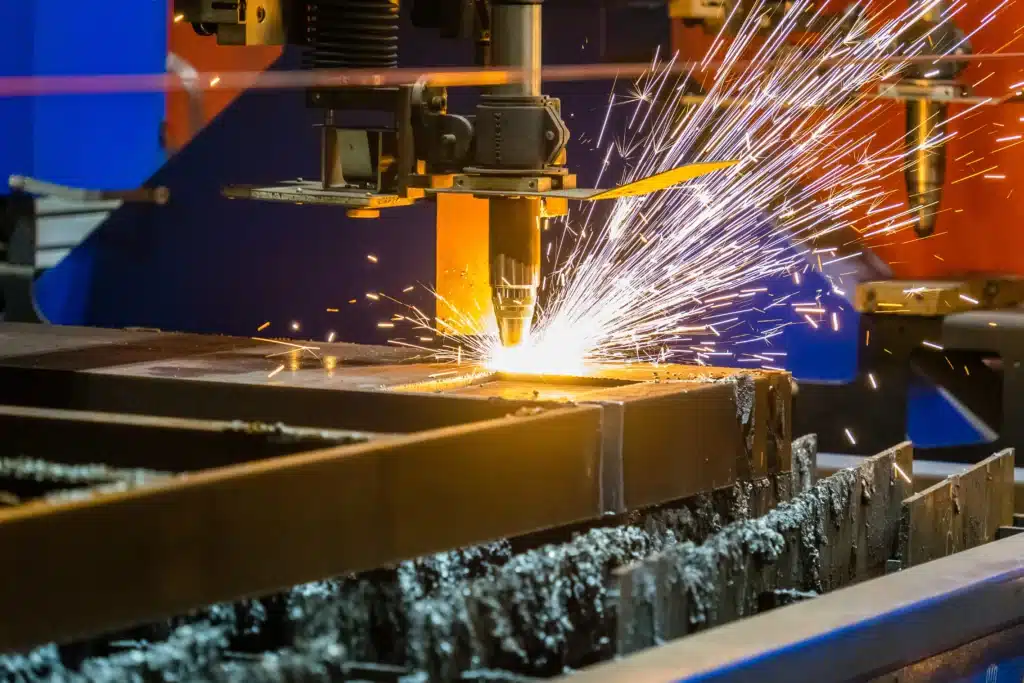
Industrial plasma cutters usually fall into two practical groups: CNC plasma tables and heavy-duty handheld cutters. The right choice depends on whether your team needs repeatable production parts, mobile repair cuts, or both.
CNC Plasma Tables
CNC plasma tables use a computer-controlled gantry to move the torch across plate, sheet, or nested part layouts. They fit fabrication shops that cut brackets, gussets, base plates, panels, slots, and bolt patterns in repeat batches.
A CNC setup usually needs more than a power source. Your team also has to plan table size, nesting software, torch height control, downdraft or water table setup, consumables, grounding, operator training, and service support. For a dealer catalog, this makes CNC plasma a system sale rather than a single-machine sale.
Heavy-Duty Handheld Cutters
Heavy-duty handheld plasma cutters fit repair shops, maintenance teams, construction work, field service trucks, and lower-volume fabrication work. They are easier to move than a CNC table and can be useful when your team needs fast cuts on brackets, panels, guards, worn sections, or moderate-thickness plate.
Before choosing a handheld system, check input power, generator compatibility, rated cut thickness, duty cycle, torch lead length, air quality needs, and consumable availability. A portable cutter that cannot keep up with your common plate thickness will create downtime, rejected cuts, and extra grinding.
Machine Torch vs. Handheld Torch
A machine torch is usually the better fit for CNC cutting because it mounts to the table, works with torch height control, and supports repeatable part programs. A handheld torch is better for repair work, layout cuts, irregular parts, and jobs where the operator has to bring the torch to the work.
This choice affects more than comfort. Torch type changes the consumables, lead setup, training needs, service plan, and spare-parts inventory your shop or product line must support.
How Does Oxy-Fuel Cutting Work?
Oxy-fuel cutting uses fuel gas and oxygen to heat carbon steel to ignition temperature, then uses an oxygen jet to oxidize and remove the metal. It is simple, portable, and strong on thick ferrous plate.
The flame starts the cut, but oxygen does much of the work after the steel reaches cutting temperature. The oxygen reacts with hot iron, forms iron oxide, and blows that oxide out of the kerf. This is why oxy-fuel is effective on mild steel but does not cut stainless steel or aluminum in the same clean, controlled way.
Oxy-fuel remains common in heavy fabrication because the torch is rugged and the equipment cost is low compared with a CNC plasma system. It also handles thick plate well. For shops cutting heavy carbon steel beams, scrap plate, or large repair sections, oxy-fuel can still be the right tool.
Oxy-Fuel Has Narrower Material Limits
The major limit is material. Oxy-fuel depends on oxidation, so it performs best on low-carbon and medium-carbon steel. Stainless steel forms refractory oxides that resist the normal cutting reaction. Aluminum also does not cut cleanly by the same method.
For a dealer serving general fabrication customers, this matters. A plasma cutter can serve more mixed-material shops. Oxy-fuel serves a more specific customer: thick carbon steel cutting, field cutting, heating, bending, and repair work.
How Do Plasma and Oxy-Fuel Compare?
Plasma usually fits better when your shop needs mixed-material cutting, CNC repeatability, and faster work on thin to medium plate. Oxy-fuel usually fits better when your team cuts thick carbon steel, needs a lower-cost manual setup, or works in field conditions where gas cylinders are easier to support than power and dry air.
| Factor | Industrial Plasma Cutter | Oxy-Fuel Cutting |
| Best materials | Conductive metals, including carbon steel, stainless steel, aluminum, and some copper alloys | Mainly carbon steel and some ferrous materials |
| Typical strength | Fast cuts, repeatable profiles, and cleaner geometry on suitable thicknesses | Practical cutting for very thick carbon steel and rough separation work |
| Automation fit | Strong fit for CNC tables, nesting software, and repeat part programs | Can be automated, but usually runs slower and adds more heat input |
| Edge quality | Often cleaner with less heat distortion when settings match the material | More slag and a wider heat-affected zone on many cuts |
| Startup cost | Higher for CNC-ready or high-output industrial systems | Lower for many manual torch setups |
| Operating setup | Needs power, dry air or cutting gas, consumables, grounding, and torch maintenance | Needs oxygen, fuel gas, regulators, hoses, tips, and flashback protection |
| Material flexibility | Better fit when your work mix includes stainless steel or aluminum | Narrower fit when non-ferrous or stainless work is common |
| Field repair use | Useful when power and air are available | Useful when portability and thick carbon steel cutting matter most |
Use this comparison as a first filter, not the final answer. The stronger choice depends on your material mix, plate thickness, production volume, field conditions, cleanup tolerance, and support plan for consumables and spare parts.
Which Process Works Better for Heavy Fabrication?
The better process depends on the work your team repeats most. Plasma usually takes the production role. Oxy-fuel stays valuable for thick carbon steel, rough separation cuts, heating, and field repair.
Many heavy fabrication teams use both. The real question is which process protects your part flow, cut quality, cleanup time, and field support conditions.
Structural Steel and Plate Fabrication
Plasma fits structural steel work when your shop needs slots, gussets, base plates, brackets, and repeatable bolt patterns. CNC control reduces layout time and helps operators repeat the same part file.
Oxy-fuel still fits thick carbon steel sections when edge finish matters less, or when rough cuts come before machining, fitting, or grinding.
Shipyards and Heavy Equipment Repair
Shipyards and repair yards often need both processes. Plasma helps with repeatable shapes, cleaner edges, stainless steel, and aluminum. Oxy-fuel helps with thick carbon steel in less controlled conditions.
For field repair, support conditions decide a lot. Handheld plasma needs enough generator capacity and dry compressed air. Oxy-fuel may be easier when power is limited and the cut is rough.
Production Cutting and Nested Parts
Production cutting usually favors plasma when part count is high. A CNC plasma table can nest many parts on one sheet, reduce scrap, and repeat files across shifts.
Oxy-fuel can also run on automated tables, especially for heavy plate. The tradeoff is slower speed and more heat input. For cleaner holes, tighter profiles, less cleanup, and faster part flow on moderate thicknesses, plasma usually makes more sense.
What Thickness, Amperage, and Duty Cycle Should You Compare?
Do not choose a cutting process by maximum thickness alone. Your team should compare daily material thickness, plasma amperage range, production pierce capacity, and duty cycle at the output you will actually use.
A plasma cutter that can sever a thick plate is not always the right production machine for that plate. For CNC work, production pierce capacity affects part flow, consumable life, rejected cuts, and cleanup time.
Thickness Numbers to Check
Compare three thickness numbers against your daily plate range, not your rare maximum job.
- Rated cut thickness tells you the upper range the machine is designed to cut under normal conditions.
- Recommended production cut thickness is the number to use for daily work, quoting, stocking, and customer recommendations.
- Production pierce thickness matters most for CNC cutting because the torch must pierce the plate before it follows the part file.
A simple buying rule works well: match the machine to the thickness your team cuts every week, then leave extra capacity for occasional heavier work. If your customers cut 1/2 inch plate every day and 1 inch plate only a few times a month, do not choose a machine only because it can sever 1 inch material. Check whether it can pierce and cut 1/2 inch plate at production speed with acceptable edge quality and consumable life.
Severance thickness is the last number to trust for production planning. It tells you what the machine can eventually cut through under ideal conditions, not whether it can pierce, cut, and repeat parts all day.
Amperage and Duty Cycle Filters
Amperage should match the material your team cuts most often, not the thickest plate you may cut once a month. Many general fabrication shops use mid-range plasma systems for common steel, stainless steel, and aluminum work. Heavier plate, faster travel speed, or high-volume cutting may require a higher-output system.
Duty cycle shows how long the machine can cut at a rated output within a set time period without overheating. A repair shop that cuts in short bursts may accept a lower duty cycle. A plate-processing team running nested parts across a shift needs stronger duty cycle performance and cooling.
Large fabrication shops do not only cut on CNC tables. Your team may also need a portable cutter for repair bays, field service trucks, maintenance work, and quick support cuts when a part is too large or awkward to move back to the table.
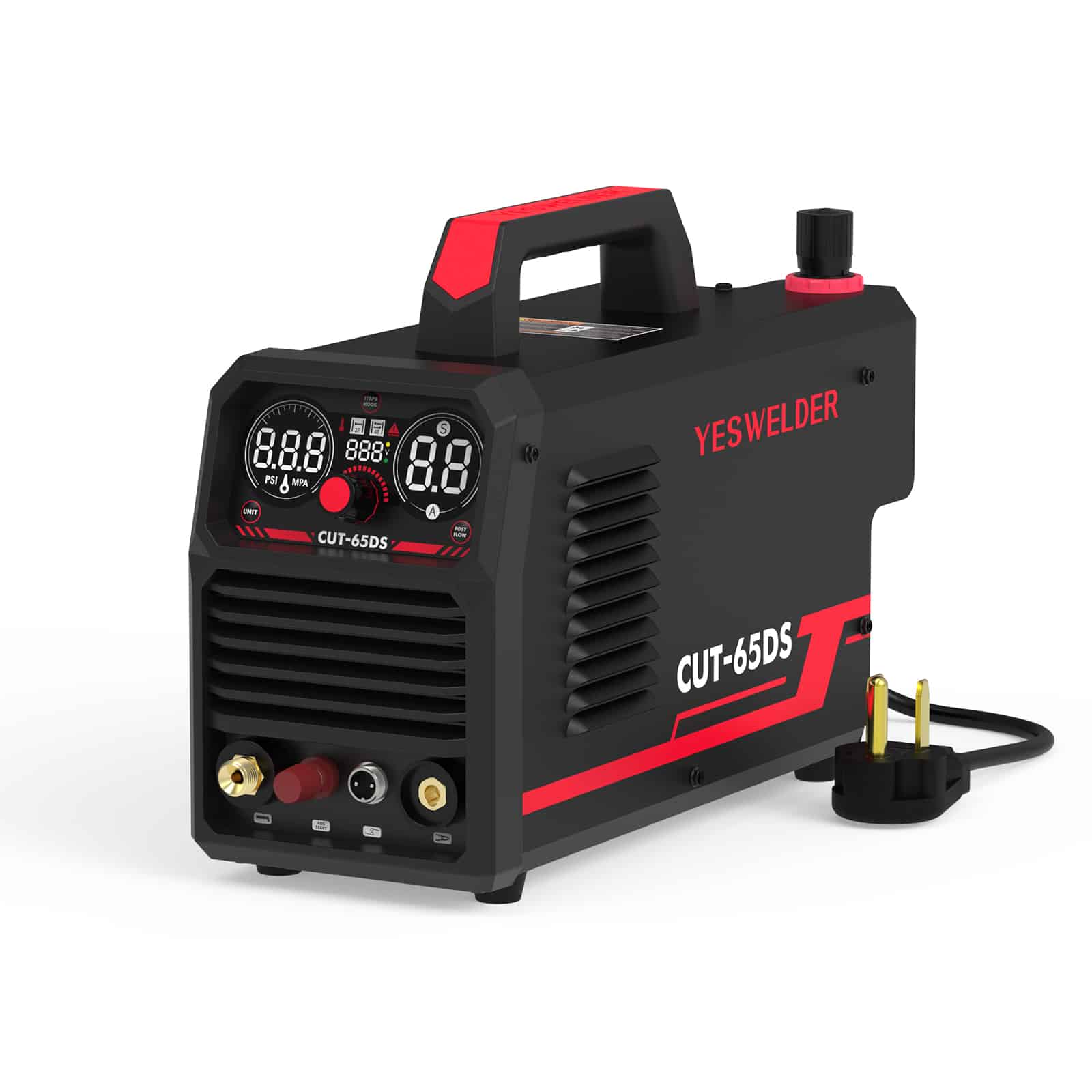
That is where YesWelder’s portable industrial-grade plasma cutters fit the need. The CUT-55DS PRO gives your catalog a 55A non-touch pilot arc option with safety temperature control, over-current and overload protection, and a listed duty cycle of 100% at 35A and 60% at 55A. For shops that need more cutting output, the CUT-65DS PRO adds a 65A non-touch pilot arc setup, MCU digital control, safe non-HF start, and a listed duty cycle of 100% at 45A and 60% at 65A.
Both models are positioned for handheld cutting demand in industrial and repair environments, especially when your customers need portable plasma support for mixed metals, rough or painted surfaces, maintenance work, and dealer-ready cutting equipment.
Practical Buying Filter
| Workload | What to Check First | Likely Direction |
| Thin gauge to 1/4 inch mixed metal | Cut quality, speed, consumables, and material flexibility | Plasma usually fits best |
| 1/4 inch to 1 inch production parts | Production pierce capacity, duty cycle, CNC fit, and cleanup time | Plasma usually fits best |
| 1 inch to 2 inch carbon steel | System class, travel speed, gas cost, and edge expectations | Compare plasma and oxy-fuel |
| Over 2 inch carbon steel | Rough cut needs, equipment cost, preheat work, and field conditions | Oxy-fuel often stays practical |
| Stainless steel or aluminum | Material compatibility, gas choice, oxidation, and edge quality | Plasma is usually the normal choice |
These ranges are buying filters, not fixed rules. Confirm the data sheet, duty cycle rating, torch type, gas requirements, consumable chart, MOQ, lead time, and service support before you commit to equipment or inventory.
What Equipment Features Matter Beyond Cutting Power?
Cutting power is only one part of a plasma setup. Your team should also compare CNC workflow, gas or air supply, torch package, consumables, spare parts, and service support behind the machine.
Two plasma systems with similar amperage can perform differently in daily work. The stronger choice is the one your team can set up, maintain, restock, and support without slowing down production.
CNC Integration
For production shops, CNC integration may matter more than raw cutting power. Look for automatic torch height control, nesting software compatibility, water table or downdraft support, part file workflow, grounding, operator training, and consumable availability.
A CNC plasma setup works as a system. The power source, torch, table, software, height control, consumables, and service response all affect cut quality and part flow. If one part of that workflow is weak, a high-output plasma cutter can still create delays, rework, or rejected parts.
Gas and Air Supply
Compressed air is common because it is affordable and easy to supply. For higher-end cutting, shops may use oxygen, nitrogen, argon-hydrogen blends, or other gas combinations based on material and edge-quality goals.
Gas choice affects oxidation, edge appearance, consumable life, and cleanup time. Stainless steel and aluminum often need more care than mild steel. Always match gas setup to the machine manual, consumable chart, and job requirements.
Torch Package and Consumables
The torch package affects cut quality, operator comfort, maintenance, and parts availability. Check torch lead length, consumable type, tip availability, electrode life, and whether your team can replace parts quickly during a shift.
For your customers, consumables affect uptime. If nozzles, electrodes, torch parts, and shields are hard to replace, a good plasma cutter can still sit idle during repair or production work. Before stocking a model, check whether the matching consumables and replacement parts are easy to order in repeat quantities.
Service and Spare Parts Support
Service support matters because cutting equipment stops earning money when consumables, torches, or repair parts are hard to get. Before choosing a supplier, confirm warranty terms, spare-parts availability, technical follow-up, MOQ, lead time, and packaging support.
This is also where supplier support affects the purchase. A shop may choose a plasma cutter for amperage and cut thickness, but it will keep using that model only if warranty terms, spare parts, technical follow-up, and repeat consumable supply are reliable.
What Safety and Compliance Points Matter?
Both cutting processes need trained operators, PPE, ventilation, fire control, and disciplined setup. Plasma adds arc radiation, electrical hazards, grounding needs, and fume control. Oxy-fuel adds oxygen handling, fuel gas, flashback risk, regulators, hoses, tips, and cylinder storage.
Eye and face protection should match the process, amperage, and site rules. OSHA 1910.133 gives minimum filter lens shade guidance for plasma arc cutting and oxygen cutting, but your team should still check the machine manual, PPE supplier guidance, and local safety requirements before setting shop policy.
Plasma Safety Checks
- Check work clamp contact, grounding, and torch condition before cutting.
- Use the correct lens shade, face protection, gloves, and PPE.
- Keep compressed air dry and clean.
- Vent fumes when cutting coated, galvanized, painted, or stainless material.
- Follow the machine manual for generator use and electrical setup.
Oxy-Fuel Safety Checks
- Use the correct regulators, hoses, tips, and flashback arrestors.
- Leak-test connections before cutting.
- Keep oil and grease away from oxygen fittings.
- Store oxygen and fuel gas cylinders according to applicable rules.
- Train operators on shutdown order and flashback response.
Safety also shapes the full equipment package. Plasma customers may need PPE, torch parts, clean-air support, and consumables. Oxy-fuel customers may need regulators, hoses, tips, flashback arrestors, cylinder storage support, and training aids.
Which Cutting Process Costs Less Per Finished Part?
The lower-cost process is the one that produces acceptable parts with less labor, cleanup, scrap, and downtime. Plasma may cost more upfront, but it can lower finished-part cost when your team needs faster cutting, repeatable profiles, and less grinding.
Oxy-fuel often costs less to start, especially for manual thick carbon steel cutting. It can become more expensive when slower travel speed, heat distortion, slag, gas use, and cleanup time affect the job.
Compare the full job cost, not only the machine price. Include consumables, torch parts, gas or compressed air, electricity or fuel, setup time, operator time, grinding, failed pierces, rejected edges, downtime, training, PPE, and safety controls.
For your customers, the cost question usually comes down to workload. A repair team making rough cuts in thick carbon steel may accept oxy-fuel’s slower speed because the starting cost is lower. A fabrication shop cutting repeat brackets, guards, panels, or nested parts may pay more for plasma because faster part flow and less rework save money across repeated jobs.
How Should You Choose the Right Cutting Setup?
Choose the setup around the work your customers repeat most, not the process name. Start with the material mix, daily thickness range, finished-edge expectations, cutting hours, field conditions, and support needs.
The next filter is support capacity. A shop may need CNC nesting, handheld repair cutting, or both, but the setup only works if dry air, gas, power, PPE, consumables, and replacement parts are available.
For cutting and welding equipment supply, YesWelder Wholesale can fit the handheld plasma side of this decision with portable industrial-grade plasma cutters such as the CUT-55DS PRO and CUT-65DS PRO, along with PPE, accessories, consumables, and spare parts. Before stocking inventory, confirm current product specifications, MOQ, lead time, packaging support, warranty terms, and after-sales support with the wholesale team.
Conclusion
Plasma and oxy-fuel both have a place in heavy fabrication. Plasma is usually the stronger choice when your customers need mixed-metal cutting, faster part flow, CNC repeatability, and cleaner work on suitable thicknesses. Oxy-fuel still earns its place for thick carbon steel, rough field cuts, heating work, and lower-cost manual setups.
The better purchase depends on workload, not the process name. Compare material mix, daily thickness range, amperage, duty cycle, torch type, gas or air supply, consumables, safety needs, and cost per finished part before you commit to equipment or inventory.
If your catalog serves repair shops, fabrication teams, maintenance crews, or industrial supply accounts, YesWelder Wholesale can support portable industrial-grade plasma cutter demand with models such as the CUT-55DS PRO and CUT-65DS PRO, along with welding machines, PPE, accessories, consumables, and spare parts. Contact the wholesale team to confirm current specifications, MOQ, lead time, warranty terms, packaging support, and after-sales support before placing an order.
FAQs
Start with the work the shops and teams you sell to repeat most. Repair shops and field service teams may need portable plasma cutters, oxy-fuel accessories, PPE, and consumables, while production shops may also ask about CNC plasma support.
Check amperage, duty cycle, clean cut thickness, severance thickness, input power, torch package, consumable availability, and warranty terms. For CNC use, also check machine-torch compatibility and production pierce capacity.
Yes. Large shops may still need portable plasma cutters for repair bays, field service trucks, maintenance work, and quick support cuts away from the CNC table. Match the model to daily thickness range, power supply, air quality, and consumable supply.
Common support items include PPE, nozzles, electrodes, torch parts, shields, clean-air support, and replacement consumables. Stocking these items helps reduce downtime after the machine is sold.
Keep oxy-fuel in the product line when the shops and teams you sell to cut thick carbon steel, need heating or bending capability, or work where power and dry air are limited. Plasma and oxy-fuel often serve different jobs rather than replacing each other completely.