Stick welding (SMAW) is the right choice when you need strong welds in tough conditions—wind, dirt, rust, and remote job sites. It’s not the fastest or cleanest-looking process, but it keeps working when shielding gas fails.
In this guide, we’ll compare SMAW with MIG, TIG, and FCAW. You’ll see the real differences in speed, cost, portability, and environmental performance—so you can choose the right process for your next job.
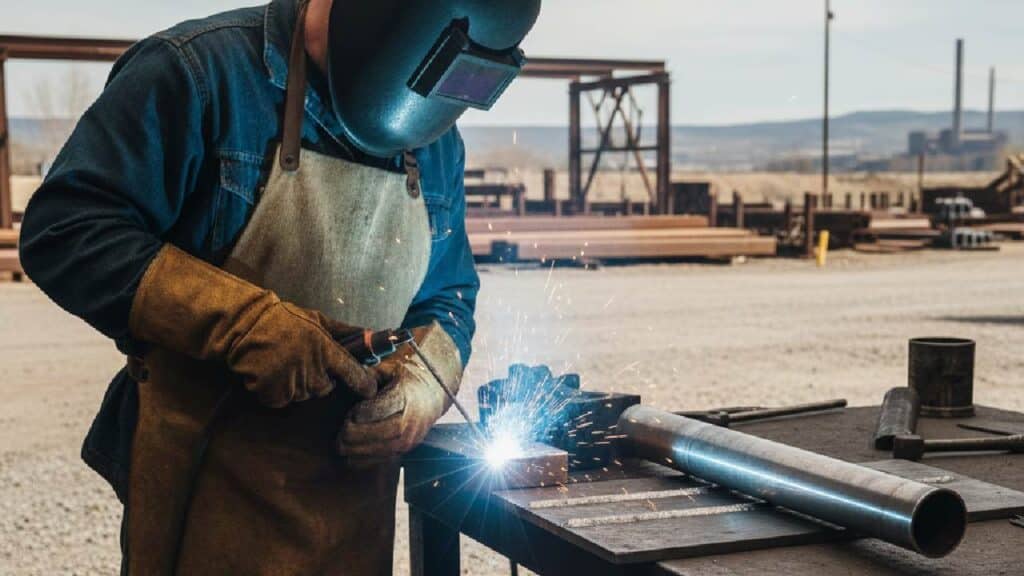
What Are the Main Welding Processes Compared to SMAW?
The main alternatives to SMAW are MIG (GMAW), TIG (GTAW), and Flux-Cored Arc Welding (FCAW). The biggest difference between them is how they protect the weld pool.
- MIG and TIG rely on shielding gas to protect the arc.
- FCAW can use gas or self-shielded wire.
- SMAW uses a flux-coated rod, so no external gas is needed.
Each process serves a different purpose depending on your environment, material thickness, and production goals. In practice, the work environment—especially whether you’re indoors or outdoors—often determines the most reliable option before speed or appearance even becomes a factor.
Quick Comparison: SMAW vs MIG vs TIG vs FCAW
| Feature | SMAW (Stick) | MIG | TIG | FCAW |
| Shielding | Flux coating | External gas | External gas | Gas or self-shielded |
| Speed | Moderate | Fast | Slow | Very fast |
| Outdoor Use | Excellent | Poor in wind | Poor in wind | Good (self-shielded) |
| Appearance | Moderate cleanup | Clean | Very clean | Moderate |
| Portability | High | Medium | Medium | Medium-Low |
| Equipment Cost | Low | Medium | High | Medium-High |
| Best For | Outdoor repair & structural steel | Indoor fabrication | Precision & thin metals | Heavy production |
In most cases, your work environment narrows the decision first.
- If you operate in a controlled indoor shop and value speed and clean beads, MIG is usually the practical choice.
- If precision and visual finish are critical, TIG stands out.
- If production output is your priority, FCAW delivers higher deposition rates.
- If you work outdoors or in harsh conditions, SMAW remains the most dependable option.
SMAW vs MIG Welding: Which One Is Better?
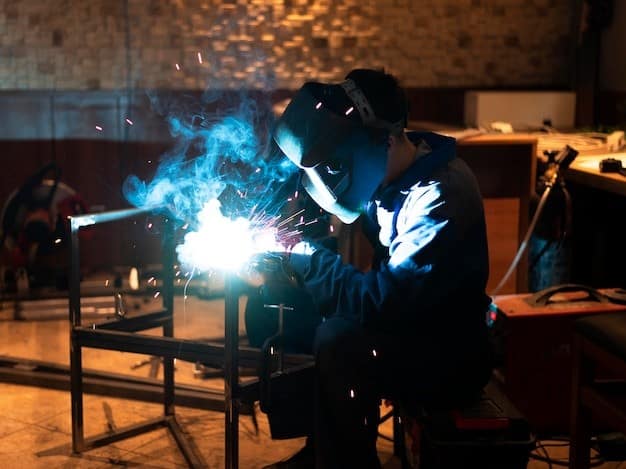
If your projects are primarily indoor fabrication where speed and bead appearance matter daily, MIG is usually the smarter long-term investment. However, if your work involves structural steel, outdoor sites, or unpredictable conditions, SMAW provides greater reliability and flexibility.
Equipment
- SMAW needs a power source and an electrode holder. Simple setup.
- MIG requires a wire feeder, shielding gas cylinder, and more components.
If portability matters, stick welding is easier to transport.
Ease of Use
- MIG is easier for beginners because the wire feeds automatically.
- SMAW requires manual arc control and rod replacement.
For new welders in a shop setting, MIG usually feels smoother.
Speed
- MIG is faster because of continuous wire feed.
- SMAW slows down due to rod changes.
If production speed is your priority, MIG saves time.
Outdoor Performance
- SMAW performs far better outdoors. Flux protects the weld pool from wind.
- MIG struggles in windy environments because shielding gas blows away.
If you’re welding on construction sites or open areas, stick welding is more dependable.
When SMAW Is Better Than MIG
- Windy construction sites
- Remote areas without a gas supply
- Thick structural steel
- Repairing rusted or dirty metal
- Budget-limited projects
SMAW vs TIG Welding: What’s the Real Difference?
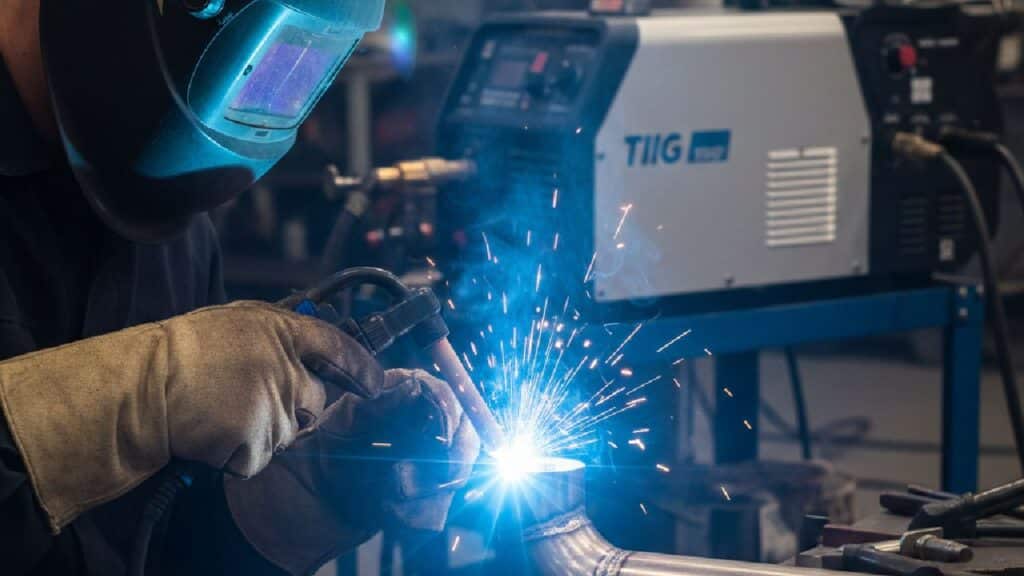
The TIG welder is typically chosen in fabrication environments where bead appearance directly affects product quality. SMAW offers strength and field reliability.
Precision and Appearance
- TIG produces smooth, clean weld beads with minimal spatter.
- SMAW produces strong welds but often requires slag removal and cleanup.
If visual finish matters, TIG is the better option.
Skill Level
- TIG requires higher skill, as you control filler and heat separately.
- SMAW requires practice, but setup is simpler.
TIG is often preferred for professional fabrication shops.
Material Thickness
- TIG excels at thin materials like stainless steel and aluminum.
- SMAW works better on medium to thick steel sections.
For structural steel jobs outdoors, SMAW is more practical.
Cost
- TIG equipment is more expensive, and shielding gas adds cost.
- SMAW has lower initial setup costs.
When SMAW Is Better Than TIG
- Outdoor structural jobs
- Thick steel welding
- Budget-conscious projects
- Field maintenance and repair
SMAW vs FCAW: Which Is More Practical?
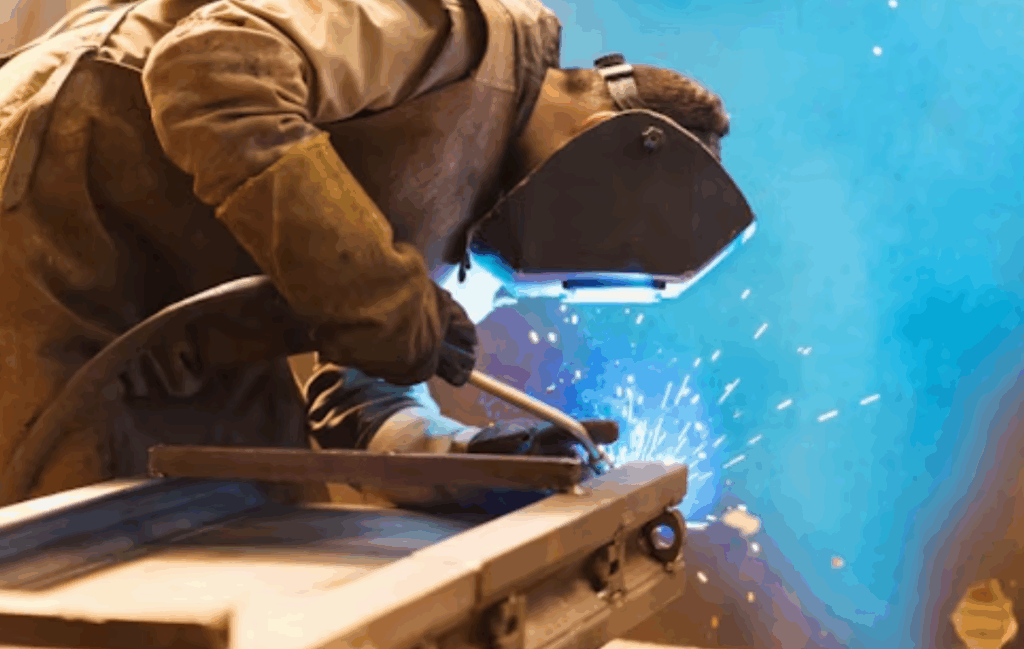
FCAW delivers higher productivity. SMAW delivers simplicity and portability.
Deposition and Speed
- FCAW offers higher deposition rates, ideal for heavy fabrication.
- SMAW operates at moderate speed.
If you need high output in a fabrication shop, FCAW is efficient.
Portability
- SMAW is lighter and easier to carry.
- FCAW machines can be heavier, especially when using gas.
For quick repair work in the field, stick welding is simpler.
Outdoor Use
- SMAW performs very well outdoors.
- Self-shielded FCAW can also work outside.
- Gas-shielded FCAW struggles in wind.
When SMAW Is Better Than FCAW
- Remote construction sites
- Limited power availability
- Quick repair jobs
- Portable setup requirements
- Lower equipment budgets
When Should You Use Stick Welding?
Use stick welding when reliability in harsh conditions matters more than production speed or cosmetic appearance.
SMAW is not the fastest or cleanest process—and it is not ideal for high-volume production lines. However, in many real-world job sites where wind, rust, and limited equipment are factors, it remains one of the most dependable options available.
1. Outdoor Welding in Windy Conditions
If you’re welding outdoors where wind can disrupt shielding gas, stick welding is often the safest choice.
MIG and gas-shielded FCAW depend on stable gas coverage. Even moderate wind can cause porosity or arc instability. SMAW doesn’t rely on external gas, so performance remains consistent in open environments.
That’s why stick welding is common on construction sites, bridges, and structural steel erection.
2. Remote or Field Work
When portability matters, SMAW is hard to beat.
You only need:
- A power source
- An electrode holder
- Welding rods
No gas cylinders. No wire feeder. Fewer components to transport or fail. This makes stick welding ideal for pipeline repair, farm equipment fixes, and on-site structural maintenance.
3. Welding Rusty, Painted, or Dirty Metal
If surface prep is limited, SMAW is more forgiving than most processes.
While proper cleaning is always recommended, flux-coated electrodes tolerate light rust, mill scale, and contaminants better than MIG or TIG. This reduces prep time in repair scenarios.
For maintenance crews working on aging structures, that matters.
4. Thick Structural Steel
Stick welding delivers strong penetration and structural integrity.
It performs well on medium-to-thick carbon steel sections and is widely used in load-bearing applications. For heavy steel outdoors, SMAW is often more practical than TIG and simpler to deploy than FCAW systems.
5. Repair and Maintenance Jobs
If the job is short-term, urgent, or location-based, stick welding saves setup time.
You can strike an arc quickly without adjusting gas flow, wire tension, or feeder settings. That’s why field repair teams and industrial maintenance crews rely on SMAW.
6. Budget-Conscious Operations
If equipment investment needs to stay low, SMAW offers the most economical entry point.
Machines are generally affordable, consumables are widely available, and there’s no recurring shielding gas cost.
For small contractors or occasional welders, that can make a big difference.
Which Industries Use SMAW Most?
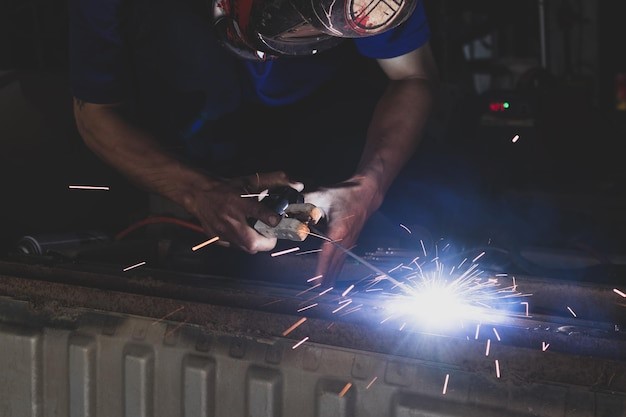
SMAW remains common in industries that demand strong welds under tough conditions.
Construction
Stick welding is widely used for structural steel erection, where outdoor reliability is critical. Wind exposure and large steel sections make SMAW a dependable choice on active job sites.
Oil and Gas Pipelines
Pipeline welding often occurs in remote areas where shielding gas logistics are difficult. SMAW provides consistent performance in field conditions and is trusted for strong, durable joints.
Shipbuilding
Large steel assemblies and heavy sections benefit from SMAW’s deep penetration and strength. It remains a practical option for outdoor and dockside work.
Maintenance and Repair
Industrial maintenance teams prefer SMAW because it sets up quickly and tolerates surface contamination. It reduces downtime in urgent repair situations.
Heavy Manufacturing
For structural fabrication involving medium-to-thick steel, SMAW remains a cost-effective and durable solution.
What Should You Consider When Choosing Between SMAW and Other Processes?
Before choosing, think about these six factors:
- Work Environment – Windy outdoor sites favor SMAW. Indoor shops may favor MIG or TIG.
- Material Thickness – Thin metal favors TIG. Thick steel favors SMAW or FCAW.
- Production Speed – MIG and FCAW are faster for high-volume work.
- Budget – SMAW has the lowest setup cost.
- Skill Level – MIG is easier for beginners. TIG requires advanced control.
- Portability Needs – If mobility matters, stick welding is easier to transport.
The best process depends on your priorities—not just popularity.
Final Thoughts
SMAW remains one of the most dependable welding processes available. It may not be the fastest or cleanest, but it delivers strength, portability, and consistent results in harsh conditions.
If your work involves structural steel, outdoor welding, or remote repair jobs, stick welding is often the smartest choice. For shop fabrication or precision projects, MIG or TIG may serve you better.
Evaluate your environment, materials, and production needs carefully. Choosing the right welding process improves safety, efficiency, and long-term quality.
When selecting welding equipment, prioritize reliability, duty cycle, portability, and long-term operating cost. The right machine should match your environment—not just your budget. Reputable suppliers such as YesWelder provide field-ready solutions designed for real job site conditions.
FAQs
Yes. While arc control takes practice, the equipment setup is simple and affordable, making it accessible for new welders. However, achieving consistent bead quality requires hands-on training.
The main advantage of SMAW is its reliability in outdoor and harsh environments. It does not depend on external shielding gas and requires minimal equipment, making it highly portable and practical for fieldwork.
SMAW has a slower production speed compared to MIG or FCAW. It requires frequent electrode changes and slag removal after each pass. Weld consistency also depends heavily on operator skill.
Both SMAW and GMAW can produce strong structural welds when performed correctly. Weld strength depends more on technique, joint preparation, and filler material than on the welding process itself.
SMAW can operate on either AC or DC power, depending on the machine and electrode type. DC typically offers smoother arc control, while AC machines are common in basic or portable setups.