The difference between TIG welding and stick welding isn’t about which process is “better.”
It’s about what kind of job you’re doing, where you’re doing it, and how much control you actually need.
In short, TIG welding focuses on precision and clean appearance, while stick welding prioritizes strength, portability, and reliability in rough conditions. If you’re trying to decide between the two, this guide will help you make the call without overthinking it.
We’ll compare TIG and stick welding based on real-world factors like materials, setup, learning curve, weld quality, cost, and common use cases—so you can choose the right process with confidence.
Core Differences Between TIG Welding and Stick Welding
Here’s a quick side-by-side view before we break things down in detail:
| Feature | TIG Welding | Stick Welding |
| Electrode | Non-Consumable Tungsten | Consumable Flux-Coated |
| Shielding | External Shielding Gas | Flux Creates Its Own Shield |
| Weld Appearance | Clean And Smooth | Strong But Rough |
| Skill Level | High | Moderate |
| Welding Speed | Slower | Faster |
| Portability | Limited | High |
| Best Environment | Indoor / Controlled | Outdoor / Harsh Conditions |
If one column already lines up with your work environment, you may have your answer already. If not, keep reading.
What Materials Do TIG and Stick Welding Handle?
Both processes can weld steel, but they shine on very different materials and thicknesses.
TIG Welding Materials
TIG welding works best when heat control and cleanliness matter more than speed. It’s commonly used for:
- Stainless Steel: Clean, corrosion-resistant welds with tight bead control
- Aluminum: Stable arcs using AC and shielding gas
- Titanium: Contamination-free welds when shielding is done correctly
- Copper & Magnesium: Controlled heat reduces burn-through
- Thin Mild Steel: Smooth welds with minimal spatter
If you’re working with thin metal or visible joints, TIG gives you far more control.
Stick Welding Materials
Stick welding is built for thicker materials and imperfect surfaces. It handles:
- Carbon And Mild Steel: Deep penetration even on rusty or dirty metal
- Structural Steel: Strong joints for load-bearing applications
- Cast Iron: Repairs using nickel electrodes
- Stainless Steel: Durable joints with specialized rods
If surface prep is limited or conditions are unpredictable, stick welding is usually the safer option.
Equipment and Setup: TIG vs Stick Welding
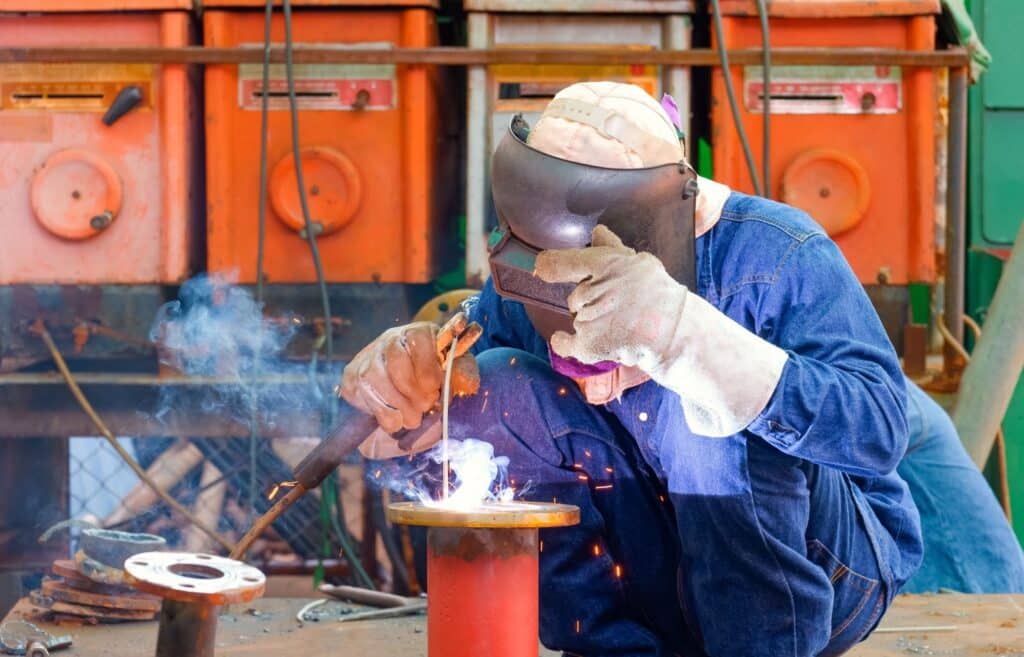
The setup difference alone explains why many beginners start with stick welding.
TIG Welding Equipment
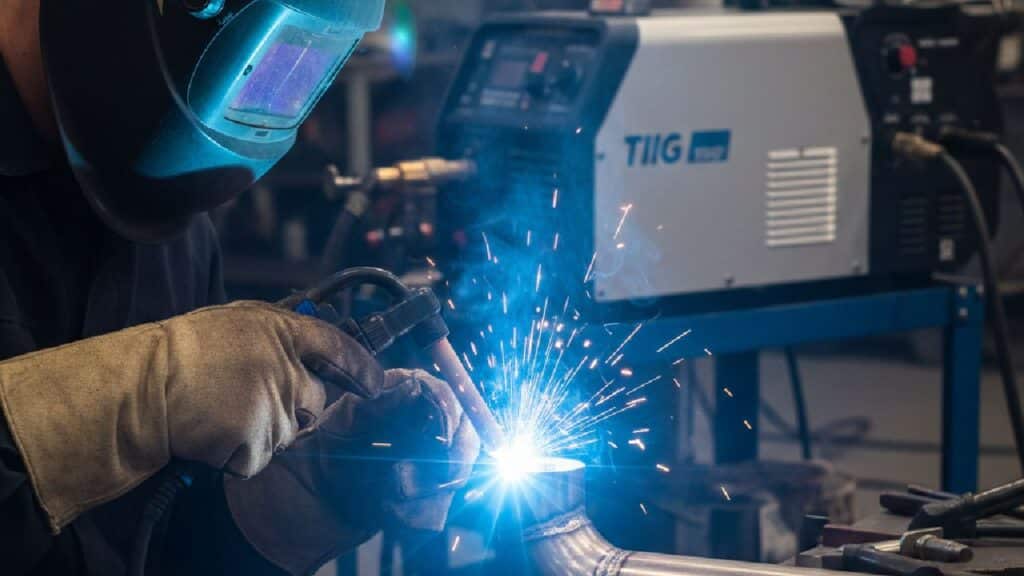
TIG welding requires a more complex setup because control is the entire point:
- TIG Power Source (AC for aluminum, DC for steel and stainless)
- TIG Torch With Tungsten Electrode
- Shielding Gas Cylinder (usually argon)
- Gas Regulator And Hoses
- Foot Pedal Or Torch Control
- Separate Filler Rods
This setup gives you precision—but it also means more things to adjust and manage.
Stick Welding Equipment
Stick welding keeps things simple and rugged:
- Welding Power Source (AC or DC)
- Electrode Holder
- Ground Clamp
- Flux-Coated Electrodes
No gas cylinders. No pedals. Fewer failure points. That simplicity matters on job sites.
Ease of Use and Learning Curve
This is where many people make the wrong choice.
TIG Welding: Steep but Rewarding
TIG welding demands coordination. You control the torch with one hand, feed filler with the other, and often adjust amperage with your foot. Small mistakes show immediately in the weld.
It takes time and practice to get consistent results—but once you do, the precision is unmatched.
Stick Welding: Forgiving and Practical
Stick welding focuses mainly on rod angle and arc length. The flux creates its own shielding, so you don’t fight wind or drafts.
That’s why many welders learn stick welding first. You can produce strong, reliable welds with far less setup and training.
Weld Quality: Appearance vs Strength
TIG and stick welding don’t compete in the same category here.
TIG welds look clean, smooth, and controlled.
They’re ideal for visible joints, thin materials, and applications where appearance matters.
Stick welds prioritize strength over looks.
You’ll deal with slag and spatter, but the joints hold up under vibration, impact, and harsh environments.
If the weld will be hidden or structural, appearance rarely matters. Strength does.
Safety Considerations
Both processes require proper PPE, but the risks differ.
TIG Welding Safety
TIG welding produces less spatter and debris. The arc is stable and predictable, which reduces unexpected hazards. Still, proper protection is essential:
- Welding Helmet
- Heat-Resistant Gloves
- Flame-Resistant Clothing
- Proper Ventilation
Stick Welding Safety
Stick welding produces more sparks, slag, and fumes. Extra attention is needed:
- Eye And Face Protection
- Fume Extraction
- Heat-Resistant Gloves
- Careful Slag Removal
Skipping safety steps here leads to burns fast.
Environmental Performance: Indoor vs Outdoor
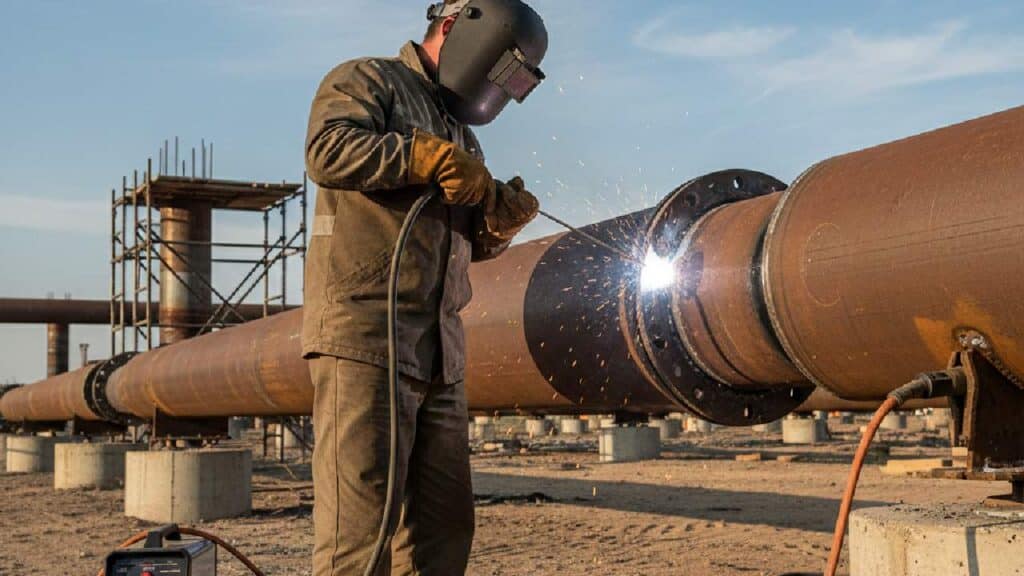
The environment plays a bigger role than most people expect.
TIG welding works best indoors.
Wind can blow shielding gas away, causing porosity and weak welds. Without a controlled environment, quality drops quickly.
Stick welding thrives outdoors.
Flux-coated electrodes protect the weld even in wind, rain, and dusty conditions. That reliability makes it a go-to choice for field repairs and construction.
Cost Comparison: Which Is More Budget-Friendly?
TIG welding costs more upfront and over time:
- TIG Welder
- Gas Cylinders
- Tungsten Electrodes
- Filler Rods
- Regulators And Pedals
Stick welding stays affordable:
- Simple Power Source
- Electrode Holder
- Consumable Rods
- Ground Clamp
If you’re welding thick steel outdoors, TIG’s extra cost rarely pays off.
Common Applications for Each Process
TIG Welding Applications
- Aerospace Components
- Automotive And Motorcycle Fabrication
- Pipe And Tube Welding
- Food And Pharmaceutical Equipment
- Artistic And Decorative Metalwork
- Thin Sheet Metal
Stick Welding Applications
- Construction And Structural Steel
- Shipbuilding And Marine Work
- Equipment Repair And Maintenance
- Heavy Industrial Fabrication
- Pipelines And Pressure Vessels
- Outdoor Field Repairs
Which One Should You Choose?
Choose TIG welding if you need:
- High precision and clean appearance
- Thin material control
- Full control over heat and filler
- Indoor or controlled environments
Choose stick welding if you need:
- Strong, durable welds
- Outdoor reliability
- Thick material penetration
- Simple setup and portability
- Lower equipment cost
Final Thoughts
TIG and stick welding aren’t rivals—they’re tools designed for different problems.
TIG welding rewards patience with precision and clean results. Stick welding delivers strength and reliability when conditions aren’t perfect.
If you’re deciding between the two, start with this question: Where will you weld, and what matters more—appearance or durability? Answer that honestly, and the right choice becomes obvious.
Frequently Asked Questions
Stick welding is generally stronger for thick materials and structural work. It delivers deeper penetration and holds up better under vibration, impact, and outdoor stress. TIG welding can still produce strong joints, but it’s designed more for precision and clean appearance than maximum strength. If strength and durability matter more than looks, stick welding is usually the better choice.
The main disadvantages of TIG welding are its slower speed, higher cost, and steep learning curve. It also requires a clean, controlled environment because wind can disrupt the shielding gas and weaken the weld. TIG welding delivers excellent results, but only when conditions, setup, and skill level are right.
Yes, TIG welding is hard for beginners compared to stick welding.
It requires precise coordination between the torch, filler rod, and often a foot pedal. Small mistakes show up immediately in the weld bead. Beginners can learn TIG welding, but it usually takes more practice and patience to achieve consistent results.
Stick welding is often the best choice for beginners. It uses simple equipment, tolerates dirty metal, and works well outdoors. The learning curve is more forgiving, and beginners can produce strong welds relatively quickly. TIG welding is better suited for learners who already have welding experience or need high-precision results.
TIG welding works best on thin to medium-thickness metal. In most real-world applications, TIG is commonly used on materials up to about 1/8 inch (3 mm). Thicker sections are possible with proper technique, but efficiency drops quickly. For thicker metal, stick welding is usually faster, easier, and more practical.