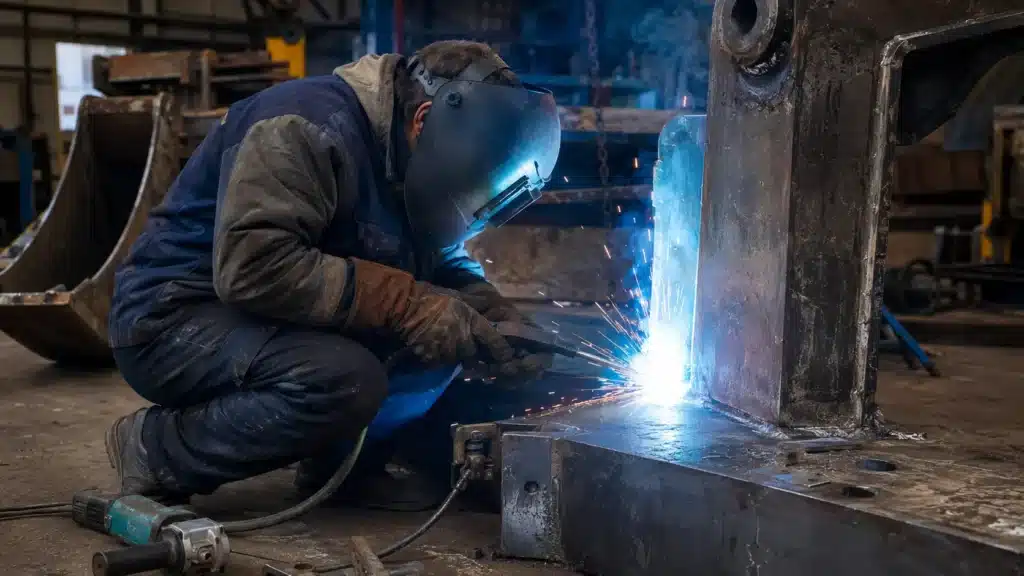
Welding for Industrial and Heavy Equipment is not normal light-fabrication work. It often involves thick steel, worn parts, difficult access, and costly downtime if a weld fails.
A strong repair depends on more than welder skill. You also need the right welding process and equipment that can deliver stable output, enough duty cycle, and flexible performance in both shop and field conditions.
This guide covers process selection, thick-plate control, hardfacing, crack prevention, and machine setup for real heavy-duty work.
Why Is Heavy Equipment Welding So Demanding?
Welding for industrial and heavy equipment is demanding because the weld must survive high loads, repeated vibration, abrasion, impact, and harsh working conditions. These repairs are not cosmetic. They often support buckets, frames, loader arms, blades, brackets, attachments, and other parts that go straight back into service.
Thick Sections, Wear, Vibration, and High Loads
Heavy equipment parts are usually thicker, heavier, and more worn than standard shop parts. A bucket lip, excavator attachment, dozer blade, or loader frame may have old welds, surface hardening, dirt, paint, oil, cracks, and uneven wear.
That means the weld area often needs grinding, gouging, beveling, cleaning, and inspection before welding starts. A quick surface bead rarely solves the real problem if the crack extends deep into the part.
High Downtime Costs and the Consequences of Poor Welding Decisions
Heavy equipment downtime can stop an entire job. If an excavator, loader, crane part, scraper, crusher component, or industrial frame fails, the lost time may cost more than the repair itself.
- Repeat Repairs: A weak repair may crack again after only a short time in service.
- Lost Production: One broken machine can delay digging, loading, lifting, hauling, or processing work.
- Higher Repair Cost: Failed welds often need gouging, grinding, new filler metal, new wear parts, and extra labor.
- Safety Concerns: A failed structural weld can create risk for the operator and nearby workers.
Which Welding Processes Are Most Practical for Heavy Equipment Work?
The most practical welding processes for heavy equipment work are FCAW, SMAW, GMAW/MIG, and limited TIG. Each process has a different role, so the best choice depends on the repair location, steel thickness, surface condition, and productivity needs.
FCAW for Productivity and Heavy Repair
FCAW is a strong fit for heavy repair because it deposits weld metal faster than stick welding and handles thick sections well. It is useful for buildup, repair passes, and larger joints where productivity matters.
Self-shielded FCAW can work outdoors because it does not rely on external shielding gas in the same way MIG does. Gas-shielded FCAW fits better in shops where wind is not a problem and the team wants cleaner, more controlled welds.
SMAW for Field Repair and Remote Work
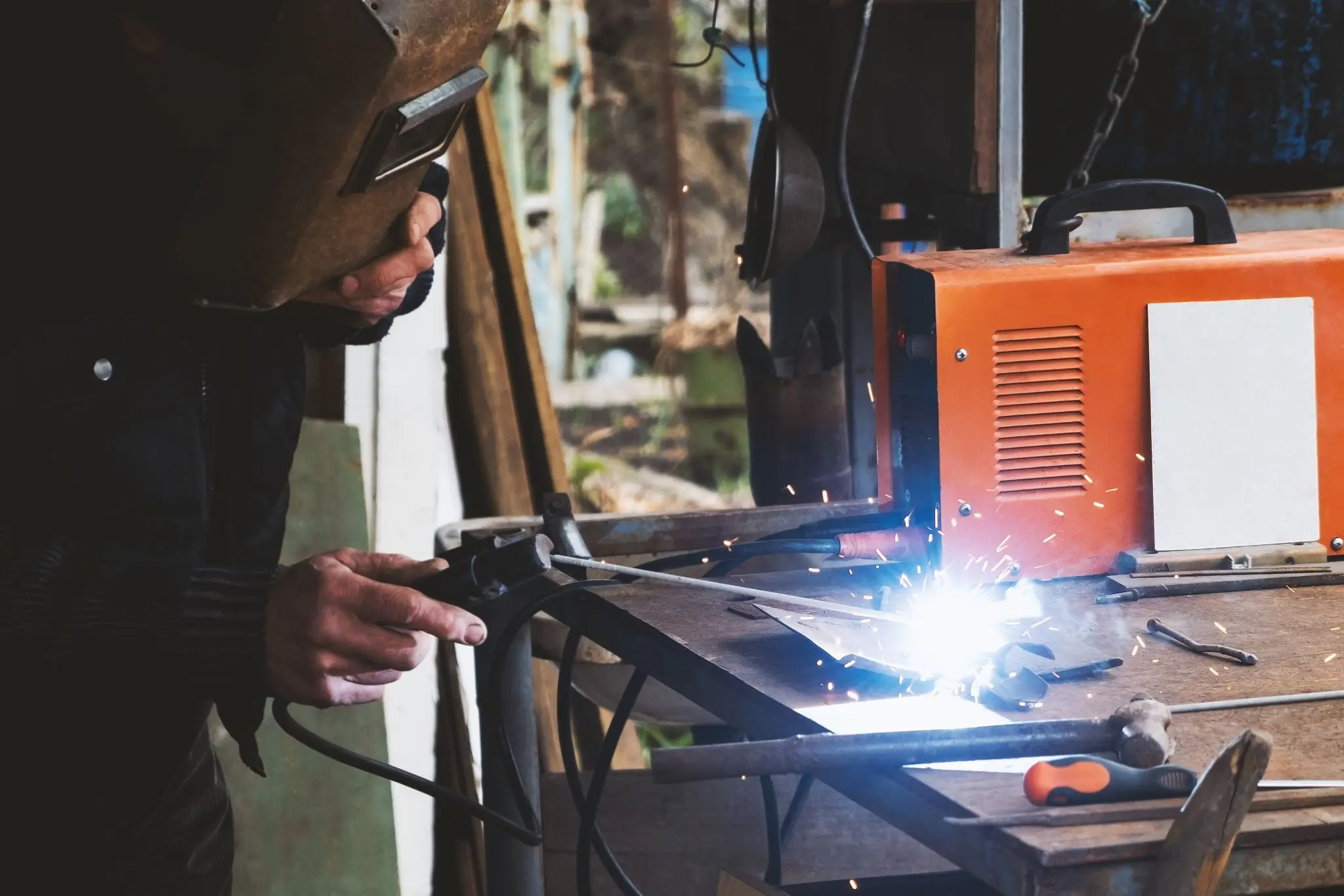
SMAW, or stick welding, remains popular for heavy equipment field repair because it is portable and simple to set up. It does not require shielding gas, so it works better in outdoor and remote conditions.
Stick welding is useful on jobsite repairs where the equipment cannot move easily. A welder can carry electrodes, leads, clamps, grinders, and a portable power source to the machine. This makes it practical for farm equipment, construction machines, and repair trucks.
GMAW/MIG for Controlled Shop Environments
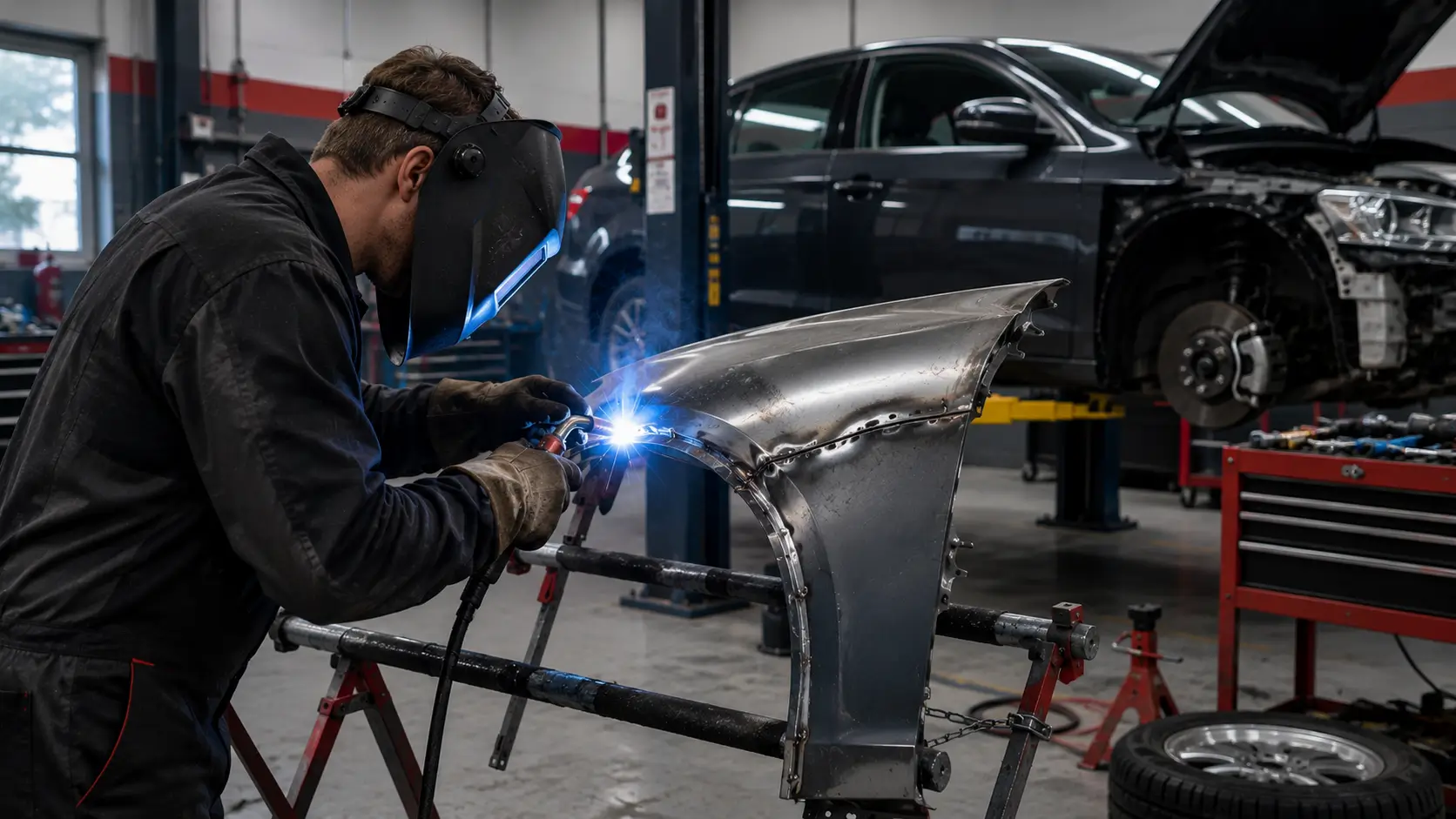
GMAW/MIG works best in controlled shop environments. It offers faster travel speed, continuous wire feed, cleaner welds, and easier repeatability when the metal is clean and shielding gas is protected.
MIG is useful for brackets, guards, frames, fixtures, panels, and repair work that can be brought indoors. It also fits production-style repair because it supports consistent welds when the setup is stable.
TIG for Specialized and Limited Applications
TIG is best for specialized heavy equipment work where precision, control, and clean weld appearance matter. It is not usually the main process for thick bucket repairs or large structural rebuilds because it is slower and more skill-heavy.
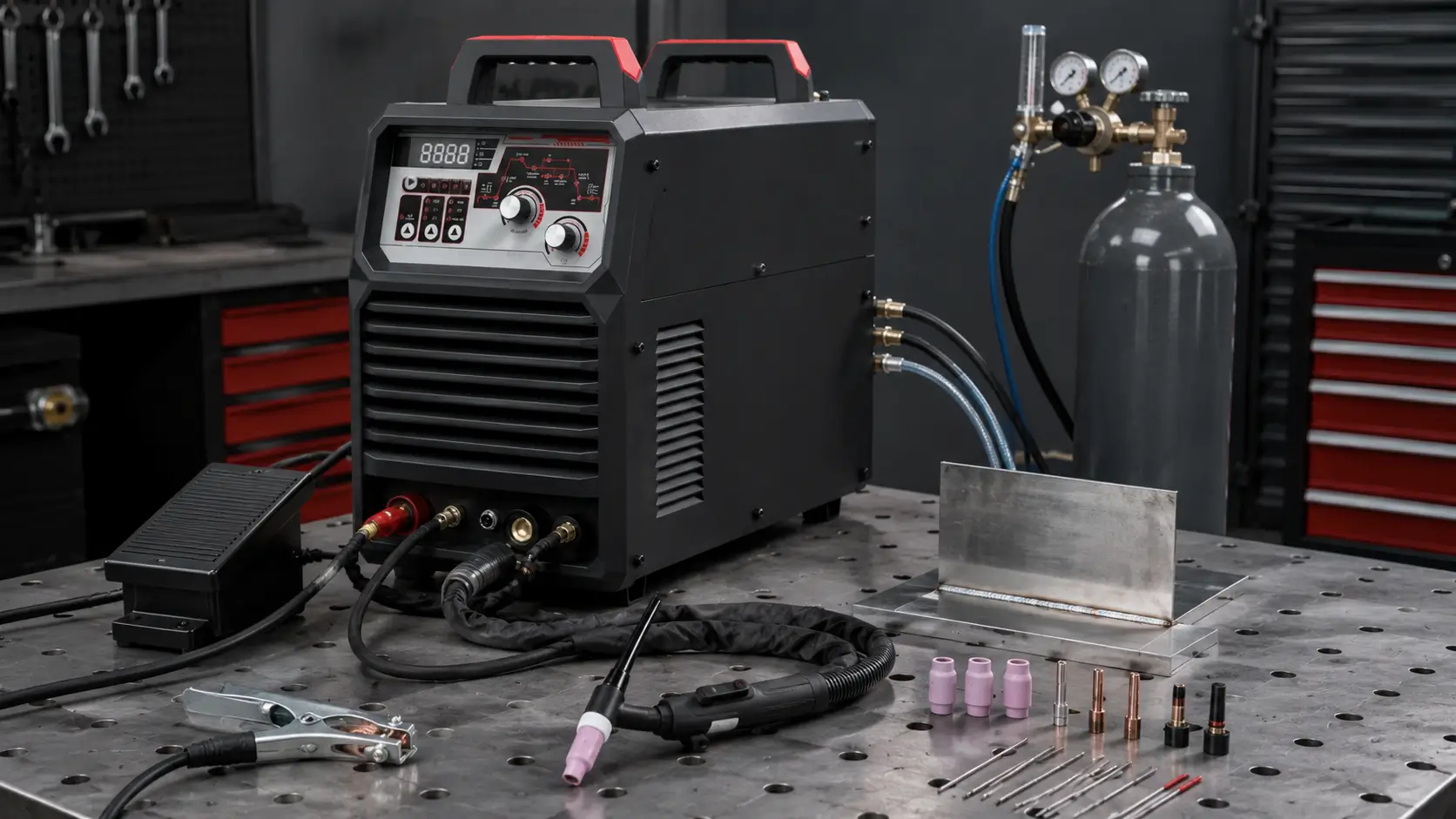
A tig welder can be useful for stainless parts, aluminum components, thin brackets, hydraulic-related fittings, and small controlled repairs. TIG also gives better puddle control when the repair needs a clean finish and low spatter.
Consumables matter in TIG work. Proper tungsten welding electrodes help maintain arc stability, while matched tig welding rods help the weld fit the base metal and service condition.
Process Selection at a Glance
Use this compact process guide for Welding for Industrial and Heavy Equipment before choosing a welding setup:
| Process | Best Fit | Main Benefit | Watch For |
| FCAW | Heavy repair and buildup | High deposition | Slag and fumes |
| SMAW | Field and remote repair | Portable setup | Slower speed |
| MIG | Controlled shop work | Clean, fast welding | Wind affects gas |
| TIG | Precision repair | Clean weld control | Low productivity |
Why Is Thick Plate Welding More Demanding in Heavy Equipment Work?
Thick plate welding is more demanding because the weld must reach deeper into the joint and often needs several passes. A surface weld may look acceptable, but it can still hide lack of fusion, trapped slag, or an untreated crack below the bead.
Joint Preparation and Root Access
Joint preparation controls how well the weld reaches the damaged area. Thick parts often need beveling, grinding, gouging, or carbon arc removal before welding begins. This gives the welder access to the root and removes damaged metal that could cause the crack to return. A cracked heavy section should not be covered with a bead. The crack should be removed or opened properly, then welded with enough access for fusion.
Multi-Pass Welding and Heat Control
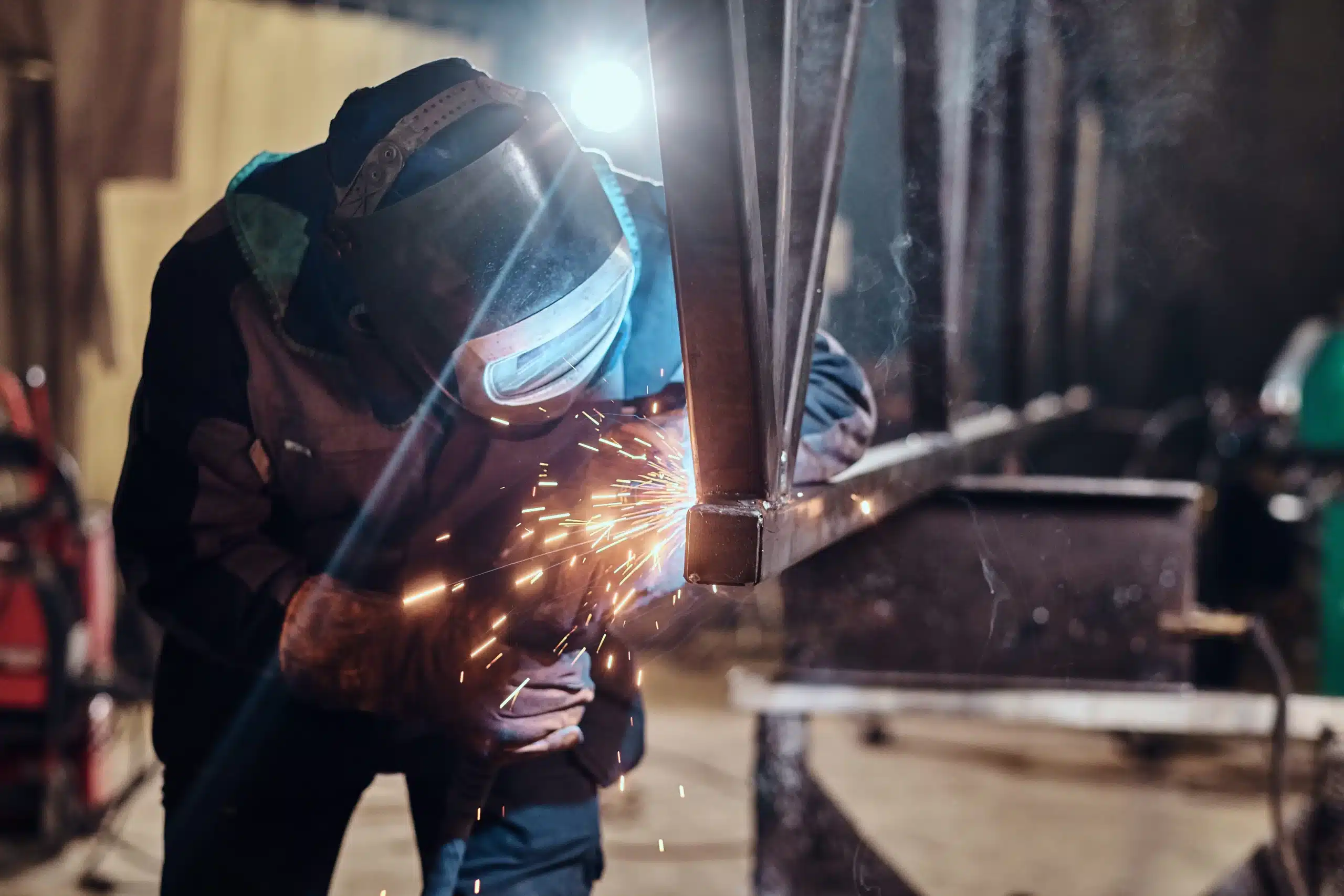
Thick plate often needs multi-pass welding. Each pass has to tie into the base metal and the previous pass. The welder must also clean slag, remove visible defects, and control heat between passes.
Too little heat can cause poor fusion. Too much heat can increase distortion, soften some steels, or create a larger heat-affected zone. This is especially important on high-strength and abrasion-resistant steels.
Distortion and Handling Challenges
Thick parts can still move during welding. Long welds shrink as they cool, and that shrinkage can pull parts out of position. Heavy frames, buckets, blades, and brackets may need clamps, tack welds, braces, or balanced weld sequencing.
Handling is also a safety issue. Large parts need stands, lifting equipment, and stable support before welding. A part should never depend on a temporary weld or poor support while the repair is being done.
When Does Hardfacing Make Sense for Heavy Equipment?
Hardfacing makes sense when a heavy equipment part loses material from abrasion, impact, or metal-to-metal contact. It is used to extend service life, not only to fix broken parts.
Hardfacing in Plain English
Hardfacing means welding a wear-resistant layer onto a part. The base metal provides the structure, while the hardfacing deposit protects the surface from wear.
This is different from rebuilding. Rebuilding restores lost shape or thickness. Hardfacing adds a protective layer after the part has been rebuilt or while the part is still in good enough condition to protect.
Parts That Benefit Most from Hardfacing
Hardfacing works best on parts with repeated wear patterns. Common examples include buckets, cutting edges, dozer blades, crusher parts, conveyor components, agricultural tools, teeth, adapters, liners, and wear plates.
Buckets and blades are the most obvious examples, but they are not the only ones. Any part that scrapes, digs, crushes, pushes, or carries abrasive material may benefit from hardfacing when the base metal is still sound enough to repair.
Process Consistency and Machine Setup
Hardfacing needs a consistent machine setup because uneven beads can wear unevenly or create stress points. The machine should run the selected wire or electrode smoothly and maintain output during repeated welds.
Duty cycle matters here. Overlay welding can involve long runs and many passes. If the machine overheats often, the job slows down and consistency drops.
How Do You Avoid Cracking in High-Strength and AR Steel?
You avoid cracking in high-strength and AR steel by controlling heat, using low-hydrogen practice, choosing proper consumables, and following the steel maker’s welding guidance.
Why High-Strength and AR Steel Need Tighter Control
High-strength and abrasion-resistant steels can crack when heat, hydrogen, restraint, and filler choice are not controlled. Fast cooling may create a hard, brittle area near the weld. Moisture can add hydrogen to the weld. A highly restrained part may crack as the weld shrinks.
This does not mean these steels cannot be welded. It means the welder must respect the material. Guesswork is risky, especially on thick or load-bearing parts.
Preheat, Low-Hydrogen Practice, and Interpass Control
Preheat, low-hydrogen practice, and interpass control reduce cracking risk by slowing cooling and limiting moisture in the weld. Follow the material guidance for grade, thickness, and repair condition.
- Check The Steel Grade: Know what material you are welding before choosing filler or heat settings.
- Keep Consumables Dry: Store rods and wire properly to reduce hydrogen risk.
- Use Controlled Preheat: Apply preheat when the steel grade, thickness, or temperature requires it.
- Watch Interpass Temperature: Keep the part within the recommended heat range between weld passes.
Process Setup and Long-Term Durability
Long-term durability depends on weld design, heat input, filler choice, and finishing. An oversized weld can add stress without improving the repair. A sharp weld toe can also become a stress point.
Use smooth transitions where the part carries load. Avoid undercut, porosity, trapped slag, and lack of fusion. Inspect the repair before the machine returns to work, especially on lifting, digging, or load-bearing parts.
Should You Weld Heavy Equipment in the Field or in the Shop?
You should weld heavy equipment in the field when the machine cannot be moved easily, but shop welding is better when the repair needs cleaner preparation, better positioning, controlled heat, and higher productivity.
When Field Welding Demands Portability and Simplicity
Field welding demands portable equipment, simple setup, and processes that can handle outdoor conditions. Stick welding and self-shielded FCAW are common because they do not depend on shielding gas coverage the same way MIG does. Field conditions are rarely ideal. The welder may deal with wind, mud, cold steel, poor access, and limited power. That makes preparation even more important.
When Shop Welding Supports Better Control and Productivity
Shop welding supports better control because the part can be positioned, cleaned, clamped, heated, and inspected more easily. Gas-shielded MIG and FCAW also work better indoors because shielding gas is protected from wind.
Equipment Priorities by Work Environment
Equipment priorities change with the work environment. A field setup should focus on mobility and simple operation. A shop setup should focus on power, duty cycle, process control, and repeat productivity.
- Field Priorities: Portable power, stick support, self-shielded flux-cored capability, long leads, strong clamps, and dry consumable storage.
- Shop Priorities: Higher duty cycle, stable wire feeding, MIG/FCAW support, preheat tools, lifting equipment, ventilation, and inspection tools.
- Shared Priorities: Good PPE, proper grounding, clean consumables, grinding tools, and stable machine output.
What Kind of Welding Machine Helps with Heavy Equipment Welding?
A welding machine for heavy equipment should provide sustained power, stable output, enough duty cycle, and process flexibility. It should support the actual repair work, not just show a high amperage number on paper.
A reliable welding equipment supplier can help shops, distributors, and industrial buyers match machine capability with the work their customers do most often.
Thick Steel Needs Sustained Power
Thick steel needs sustained welding output because large joints and multi-pass repairs take time. A machine with low duty cycle may overheat and slow the job.
Look at output stability, duty cycle, process support, and cable capacity. A steady arc helps the welder control fusion and bead shape. Good duty cycle helps the team keep working during long repair cycles.
Field Repairs Need Mobile Setup
Field repairs need mobile welding equipment because the broken machine may be stuck on-site. Portability is often more useful than extra features when the repair happens outdoors.
The machine should support stick welding and, where useful, self-shielded FCAW. Simple controls also help because field welders need fast setup and repeatable settings.
Wear Parts Need Hardfacing Support
Wear parts need a machine that can run hardfacing electrodes or wire smoothly. Buckets, blades, teeth, liners, and cutting edges often need repeated beads over larger surface areas.
A good setup should provide stable output, enough duty cycle, and process control for consistent overlays. The machine should support the consumables required for abrasion, impact, or mixed wear conditions.
Conclusion
Heavy equipment welding works best when the process, machine, material, and repair environment all match the job. Thick plate repair, hardfacing, high-strength steel, field access, shop control, and duty cycle can all affect the final weld.
The main takeaway is simple: do not treat heavy equipment welding like light fabrication. Prepare the joint, choose the right process, control heat, use suitable consumables, and rely on equipment that can handle repeated heavy-duty use.
For industrial welding equipment support, process-planning insight, or help choosing a machine setup for heavy-duty repair and fabrication, contact YesWelder Wholesale and discuss the best option for your shop, repair team, or distribution needs.
Stick is better for simple remote repairs where portability and wind tolerance matter most. FCAW is better when the repair needs faster weld metal deposition on larger joints or worn parts.
One multi-process machine can handle many heavy equipment repair jobs if it supports stick, MIG, flux-cored welding, and enough output for thick steel.
Heavy equipment repairs do not always need preheating. Preheat is often needed for thick steel, high-strength steel, cold parts, and restrained joints.
Before welding directly on heavy equipment, check the material, crack depth, cleanliness, grounding, nearby fuel lines, hydraulic hoses, electronics, paint, oil, and fire risks.
Hardfacing is not only for buckets and blades. It is also useful for teeth, adapters, liners, crusher parts, conveyor parts, agricultural tools, cutting edges, and other wear surfaces.