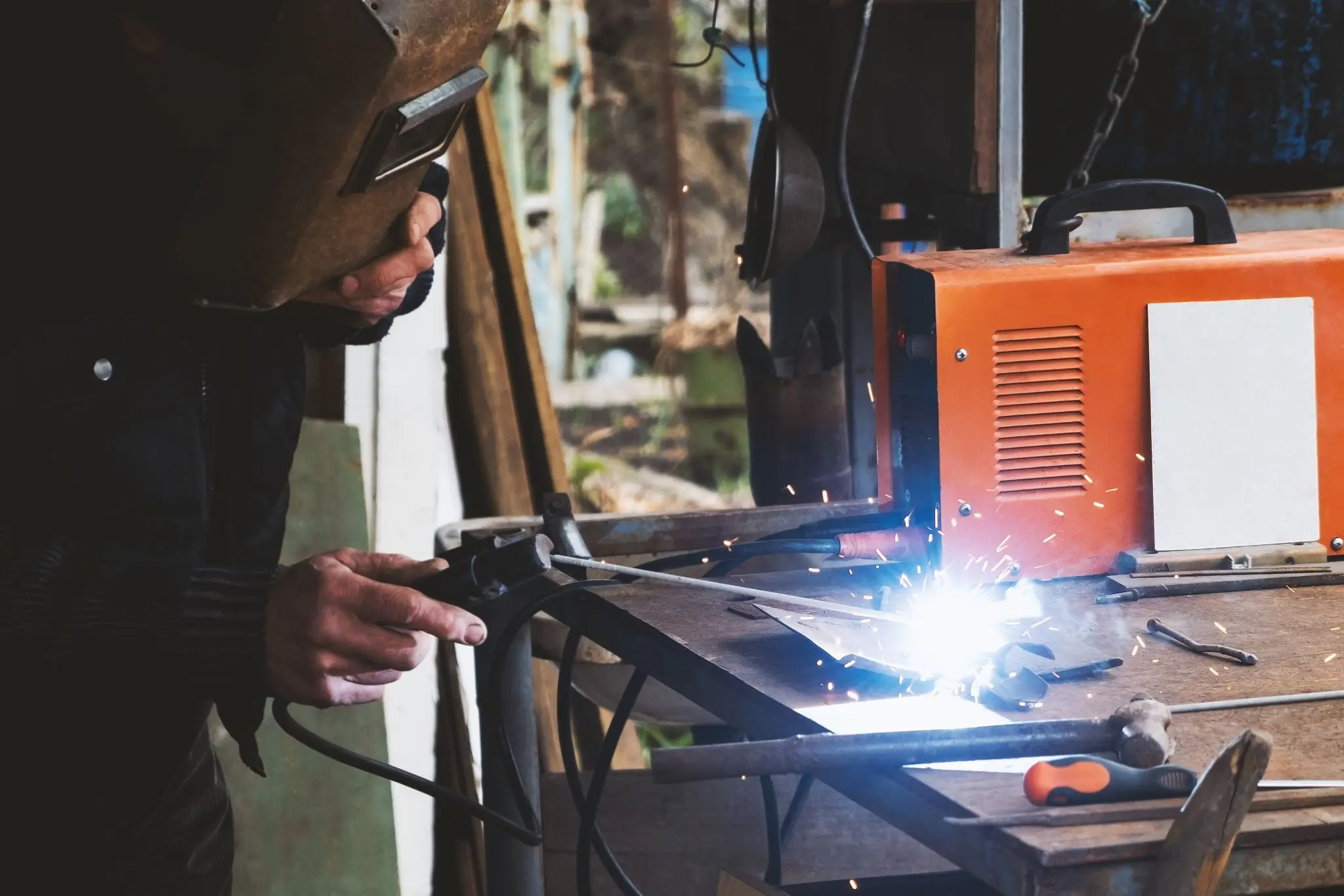
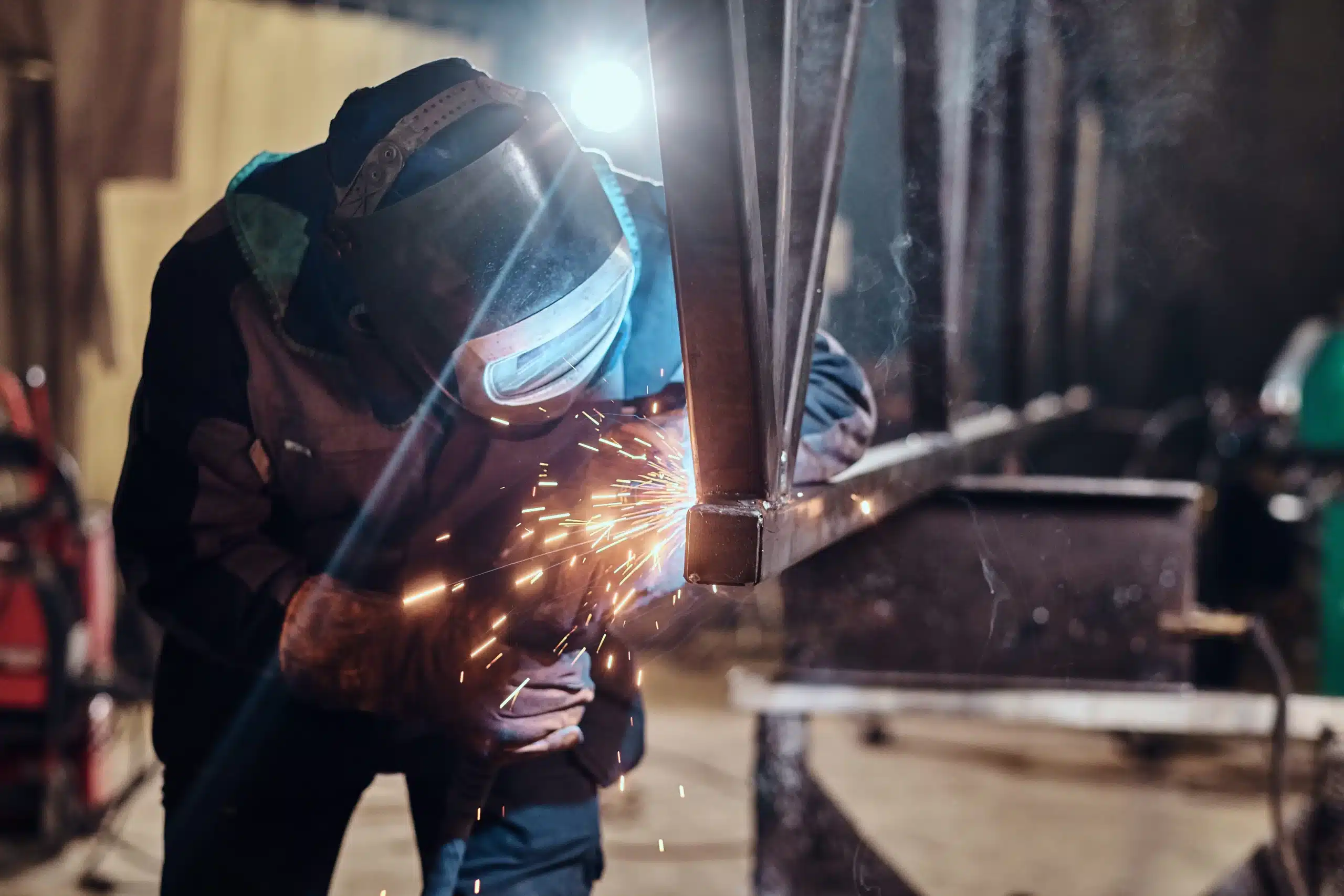
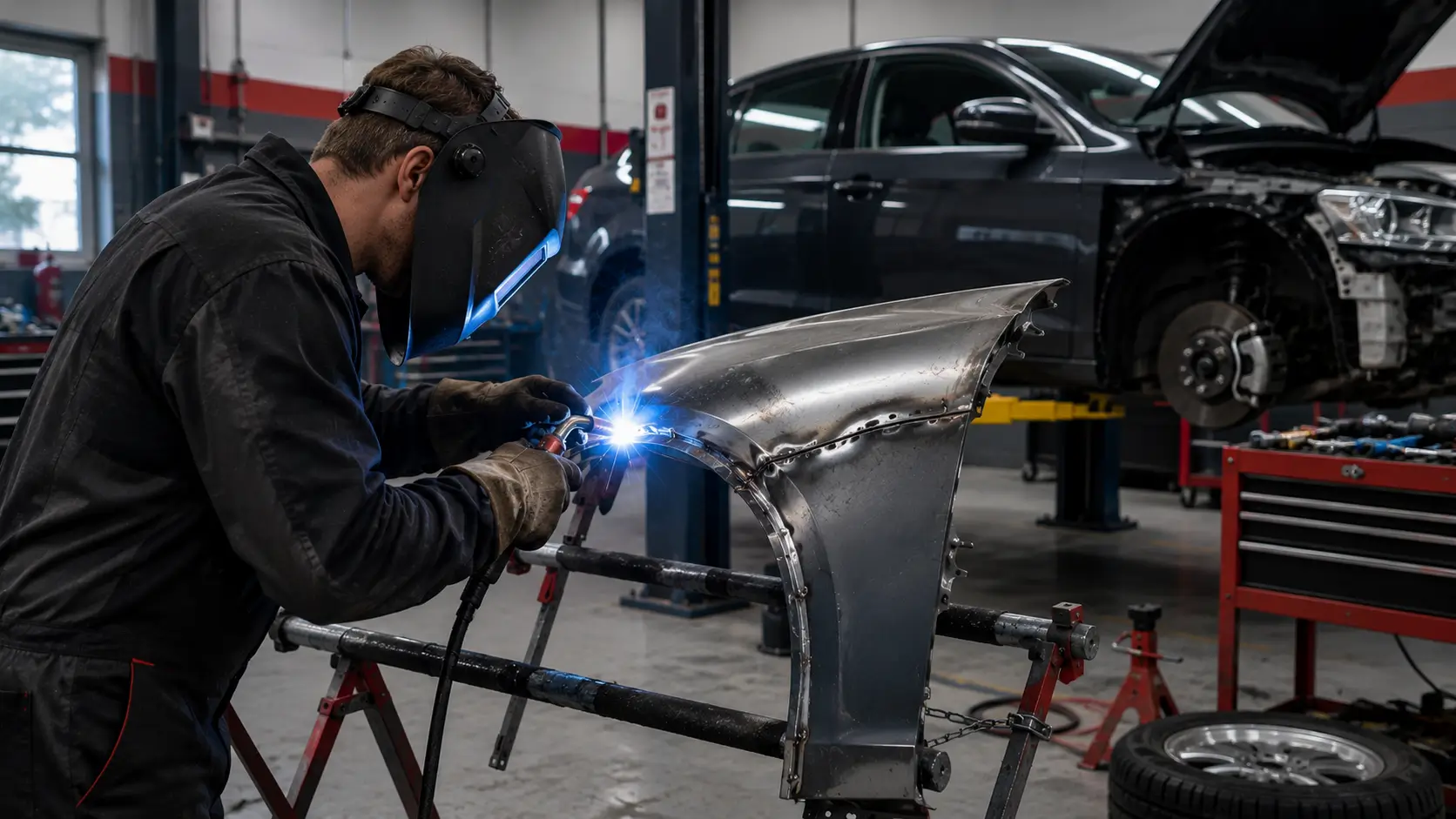
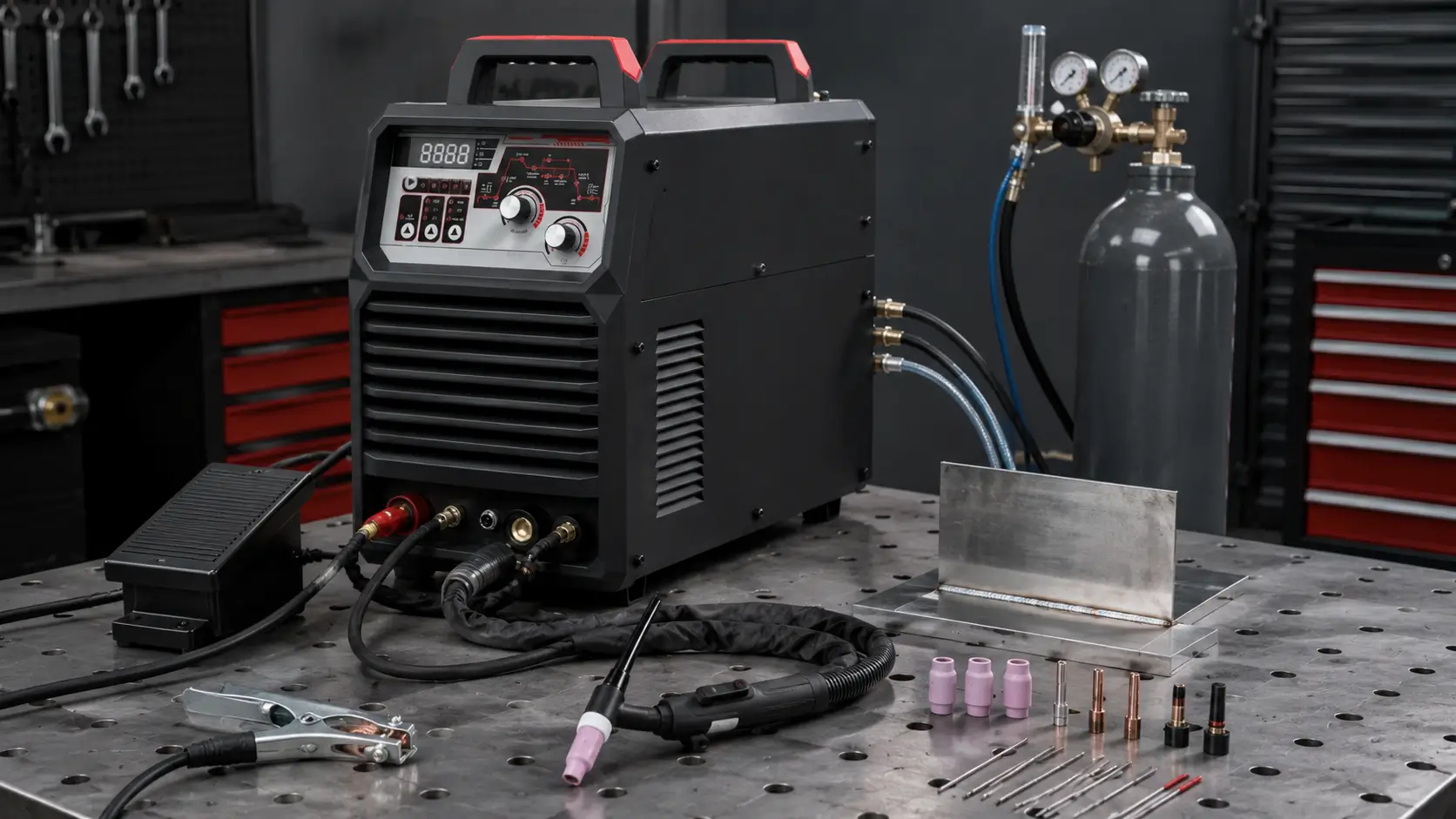
If your work touches welding equipment, cutting systems, industrial supply, or dealer channels, BEW 2026 is coming up soon in Shenzhen. The 2026 show brings welding machines, cutting systems, robotics, smart welding software, PPE, consumables, and industrial materials into the same halls, so it is worth planning before you arrive.
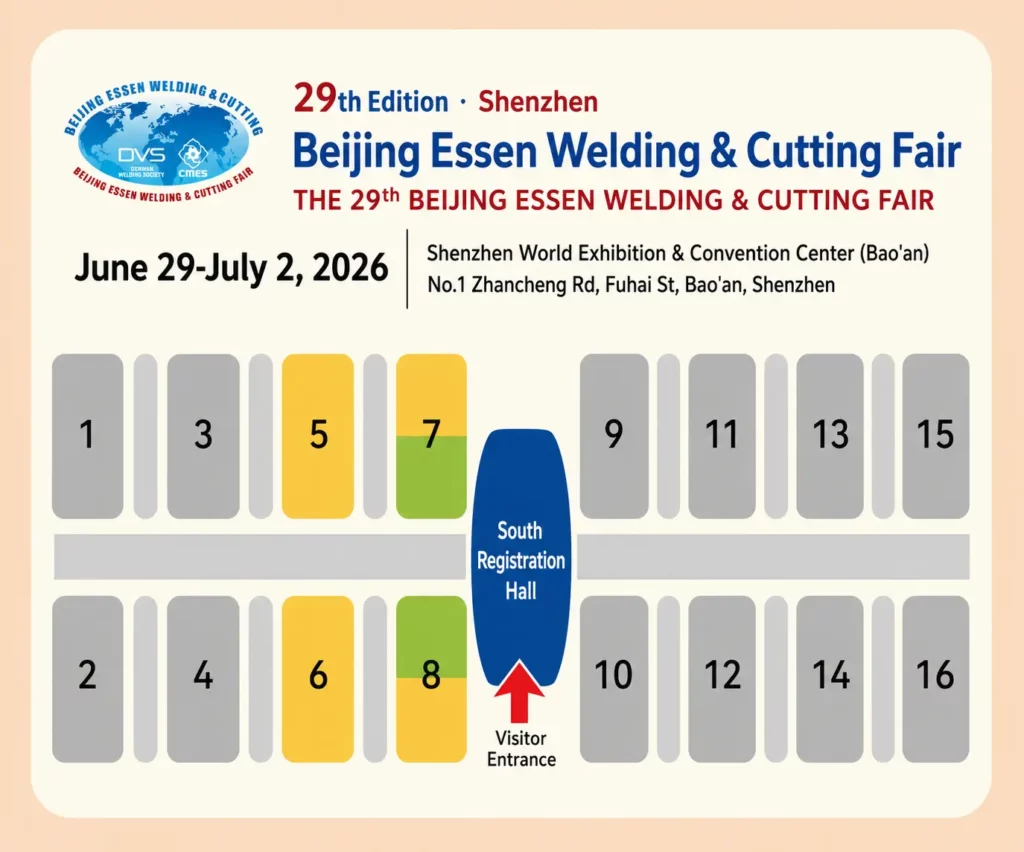
Beijing Essen Welding 2026 runs from June 29 to July 2, 2026, at Shenzhen World Exhibition & Convention Center in Bao’an, Shenzhen. If you are comparing suppliers or watching new welding technology, you need a clear route before you enter the halls: where to spend time, which product trends deserve attention, and what supplier details to check while the people, machines, and documents are all in front of you.
That is the angle for this article: a practical look at the show highlights, hall planning, booth questions, supplier follow-up, and the product categories that may shape your decisions after BEW 2026 closes.
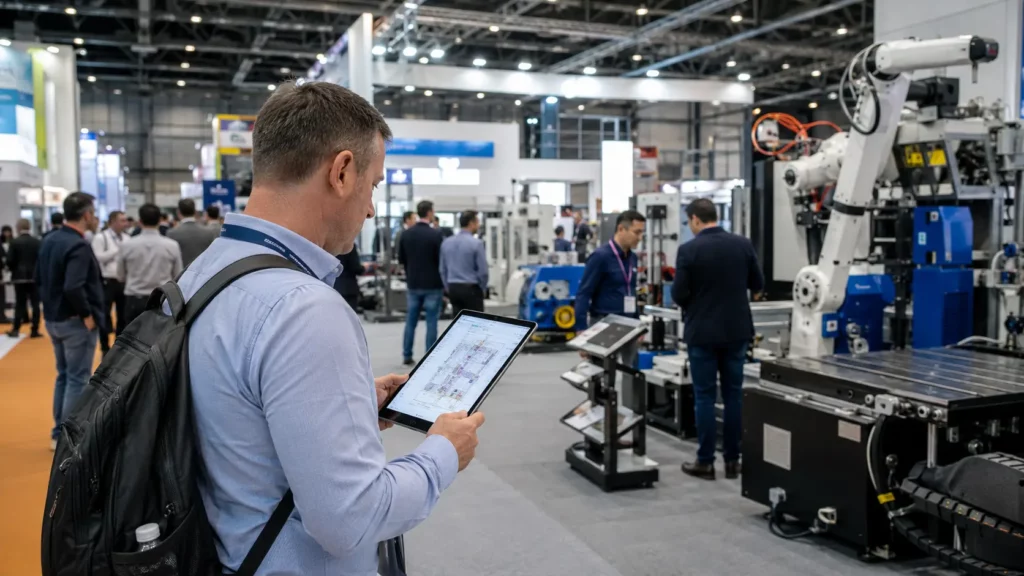
Download the BEW 2026 Welding Buyer Field Kit
BEW 2026 involves a lot of booth visits, supplier conversations, product demos, and follow-up details. Download the field kit to keep your on-site checklist, supplier scorecard, 4-day visit plan, and post-show follow-up notes organized.
Beijing Essen Welding 2026 at a Glance
BEW 2026 is the 29th Beijing Essen Welding & Cutting Fair, with the Shenzhen edition centered on halls 5 to 8 at Shenzhen World Exhibition & Convention Center. Event previews point to about 80,000 square meters of exhibition space and around 900 exhibitors, covering welding machines, cutting systems, robotics, smart welding software, PPE, consumables, intelligent equipment, and new materials.
That scale is useful, but it also means you need a route. Before you arrive, register for your visitor badge, check the latest exhibitor list, save the floor plan, and mark the booths that match your current supplier questions.
Quick Details
| Detail | Information |
| Dates | June 29 to July 2, 2026 |
| Venue | Shenzhen World Exhibition & Convention Center |
| Area | Bao’an, Shenzhen |
| Chinese venue name | 深圳国际会展中心(宝安) |
| Address | No.1 Zhancheng Road, Fuhai Street, Bao’an District, Shenzhen |
| Main halls | Halls 5 to 8 |
| Official website | http://www.beijing-essen-welding.com/ |
What Should You Confirm Before Booking the Trip?
Check the official website again before you lock in flights, hotels, or supplier meetings. Badge pickup counters, entry gates, forum schedules, booth locations, shuttle details, and visitor registration rules can still change close to the opening date.
Save the Chinese venue name and address on your phone: Shenzhen World Exhibition & Convention Center (深圳国际会展中心(宝安)), No.1 Zhancheng Road, Fuhai Street, Bao’an District, Shenzhen (深圳市宝安区福海街道展城路1号). The venue is in Bao’an, not the older convention center in Futian, and that detail can affect hotel choice, taxi routes, and morning meeting times.
If you already have priority suppliers in mind, contact them before the show. A scheduled booth meeting is usually more useful than trying to catch the right export or technical person during a busy walk-by.
What Stands Out at BEW 2026?
BEW 2026 stands out because it is not only a welding machine show. The 2026 Shenzhen edition is expected to bring together welding equipment, cutting systems, robotics, smart welding software, PPE, consumables, intelligent equipment, and new materials across halls 5 to 8.
A few areas are worth marking before you arrive:
- Automation and robotic welding: Exhibitor previews point to welding robots, robotic welding cells, smart control systems, vision-assisted welding, and software that helps reduce manual teaching time. If your customers are dealing with labor shortages, repeatability problems, or higher quality-control demands, these booths deserve time.
- Laser cutting and laser welding: Several previews focus on high-speed laser cutting, tube cutting, pressure vessel applications, multi-axis control, and intelligent welding systems. These may not be near-term purchases for every market, but they show where industrial fabrication is moving.
- Production-focused applications: The show connects welding technology with automotive, rail transit, aerospace, shipbuilding, offshore engineering, and new energy equipment. That makes it easier to see which technologies are being built for real production problems, not only for catalog pages.
Treat the show as two trips in one. Some booths may help with near-term orders: welders, plasma cutters, helmets, accessories, consumables, and spare parts. These are the categories where packaging, MOQ, spare parts, warranty terms, and repeat SKU support can quickly affect your next buying decision.
The point is not to chase every new technology. It is to leave Shenzhen knowing what is ready for your market now, what needs more watching, and which suppliers deserve a serious follow-up.
What Can You Check in Person at BEW 2026?
If you have ever compared welding suppliers from catalogs alone, you know the problem. The photos look clean, the specs look close, and every supplier says the machines are reliable. A booth visit lets you check the details that are hard to judge from a screen: build quality, packaging, export readiness, spare parts support, and whether the technical team can answer direct questions.
This is especially useful when you are comparing a full product line. Welding equipment often sells together with helmets, torches, tips, wires, rods, lenses, spare parts, and service expectations. Seeing several suppliers in the same hall makes those differences easier to compare.
Use the show to check four things:
- Machine and build quality: Does the machine feel production-ready, or does it only look good in photos? Check the housing, controls, cable connections, torch setup, cooling design, and demo performance where possible.
- Market readiness: Can the supplier support your market’s power, plug, labeling, manual, certification, and packaging needs? These details affect how quickly a product can move from sample order to real sales.
- Service and spare parts: Ask how warranty claims are handled, which parts fail most often, what your team should stock, and how quickly the supplier can support replacement parts after shipment.
- Product-line fit: Look beyond one machine. Check whether PPE, consumables, torches, lenses, accessories, and spare parts can support repeat orders instead of creating service gaps after the first sale.
Leave each serious booth with fewer unknowns than you had when you walked in. If the answers are clear, the supplier can stay on your shortlist. If the answers stay vague, that is useful information too.
Take This Checklist to the Show Floor
Use the on-site buyer checklist to record booth numbers, product categories, demo notes, documents, MOQ, lead time, warranty terms, spare parts support, and follow-up priority while the details are still fresh.
When Does This Trip Make Sense?
BEW 2026 makes the most sense when you still have supplier questions that are hard to answer by email. If you already know the exact machine, model, and supplier you want, a four-day trade show may be more than you need. But if you are comparing product categories, looking for backup suppliers, or trying to understand where welding and cutting technology is moving, the trip can save weeks of scattered calls and catalogs.
It is especially useful when you need to:
- Compare several suppliers in the same category before requesting quotes or samples
- Check whether a supplier can support your market with documents, packaging, certifications, spare parts, and service answers
- See automation, robotics, laser cutting, or smart welding systems before deciding whether they fit your customers
- Meet export, sales, and technical people in one conversation
- Build a tighter shortlist for post-show quotes, samples, video calls, or factory visits
For a dealer catalog or wholesale product plan, the useful part is not only finding one machine. It is seeing how welders, plasma cutters, PPE, consumables, torches, lenses, and spare parts fit together as a sellable setup.
What Should You Look For Across Welding, Cutting, and Automation?
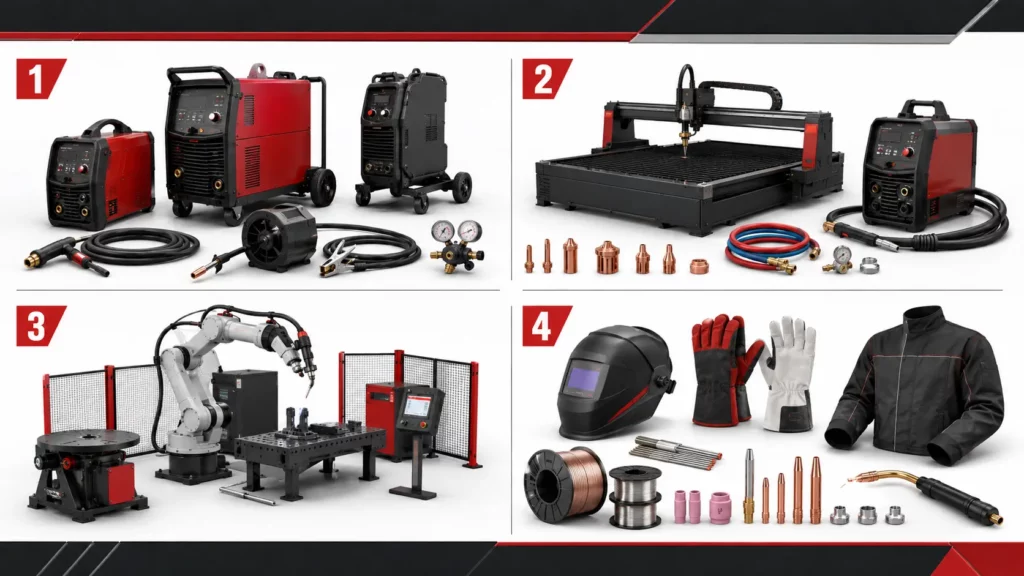
At BEW 2026, your route should start with the product categories tied to your current buying questions: welding machines, cutting systems, PPE, consumables, and accessories. Keep some room for robotics, laser systems, smart welding software, and intelligent control systems as well, because those booths can show where customer questions may move next.
The strongest booth conversations usually start from applications, not product names alone. A machine for repair work, a cutting system for pressure vessels, and a robotic welding cell for repeat production all need different questions.
Welding Machines
Start with the core machines, but do not compare them only by headline amperage. A MIG welder, TIG welder, stick welder, multi-process unit, or industrial power source should be judged by the jobs it can support and the service plan behind it.
Check especially:
- Working output: Duty cycle at realistic amperage, input power options, and process support.
- Setup compatibility: Torch, feeder, cable, plug, consumable, manual, label, and packaging options.
- After-sales support: Warranty handling, spare parts availability, common failure parts, and technical response.
A machine that looks strong on the booth still has to be sold, serviced, and supported after the first shipment.
Cutting Systems
Cutting systems deserve a separate route because plasma cutting, CNC plasma, laser cutting, tube cutting, flame cutting, waterjet, and multi-axis systems serve different users. Do not compare them only by maximum cutting thickness.
Check especially:
- Cut quality: Clean cut thickness, pierce capacity, edge quality, and repeatability.
- Operating setup: Consumable life, torch height control, gas or air requirements, and software integration.
- Installation support: Operator training, technical service, and parts availability after delivery.
For industrial customers, repeatable cut quality usually counts more than the biggest number on the brochure.
Robotics and Smart Welding
Robotics, vision systems, seam tracking, offline programming, and smart welding software are worth checking even if you are not ready to buy automation now. They show where suppliers are investing and which features may later move into standard machines.
Check especially:
- Application fit: Supported welding processes, fixture needs, robot compatibility, and part-size limits.
- Control and data: Seam recognition, collision avoidance, welding data export, and quality tracking.
- Real deployment: Training needs, spare parts, safety logic, local service, and post-installation support.
If a demo looks impressive, slow down and ask what happens after installation. Automation only works when training, fixtures, service, and spare parts are realistic.
PPE, Consumables, and Accessories
PPE and consumables may look less exciting than robots, but they often drive repeat orders. A welding helmet is not just an add-on item if your customers also need lenses, gloves, replacement parts, and repeat PPE supply.
Check especially:
- Repeat SKU stability: Batch consistency, replacement lens support, contact tips, nozzles, torches, and spare parts.
- Channel readiness: Packaging quality, SKU clarity, labels, manuals, and localized options.
- Order terms: Trial MOQ, shelf-life requirements, certification or test reports, and repeat-order availability.
A strong machine supplier with weak consumable support can still create problems for your channel. Welding products sell as a working setup, not as isolated items.
What Should You Prepare Before Arriving in Shenzhen?
With BEW 2026 opening on June 29, the most useful preparation is not complicated. Confirm your registration, mark your target booths, schedule the meetings that need real discussion, and prepare the questions you do not want to forget once the halls get busy.
Start With Registration and the Floor Plan
Confirm your visitor registration before you arrive. Save any badge pickup instructions, download the latest exhibitor list, and keep the halls 5 to 8 floor plan on your phone.
A large show can waste your time quickly if you start without booth numbers. Mark your must-see suppliers first, then group nearby booths together so you are not crossing the same halls all day.
Pick Your Shortlist Before You Walk the Halls
Do not try to meet every interesting exhibitor. Choose a shortlist based on what your product line needs now, then leave room for new finds.
Focus your shortlist around a few practical questions:
- Which categories need new or backup suppliers?
- Which current supplier problems do you want to solve?
- Which booths need scheduled meetings instead of quick walk-bys?
- Which product areas are only worth a first look?
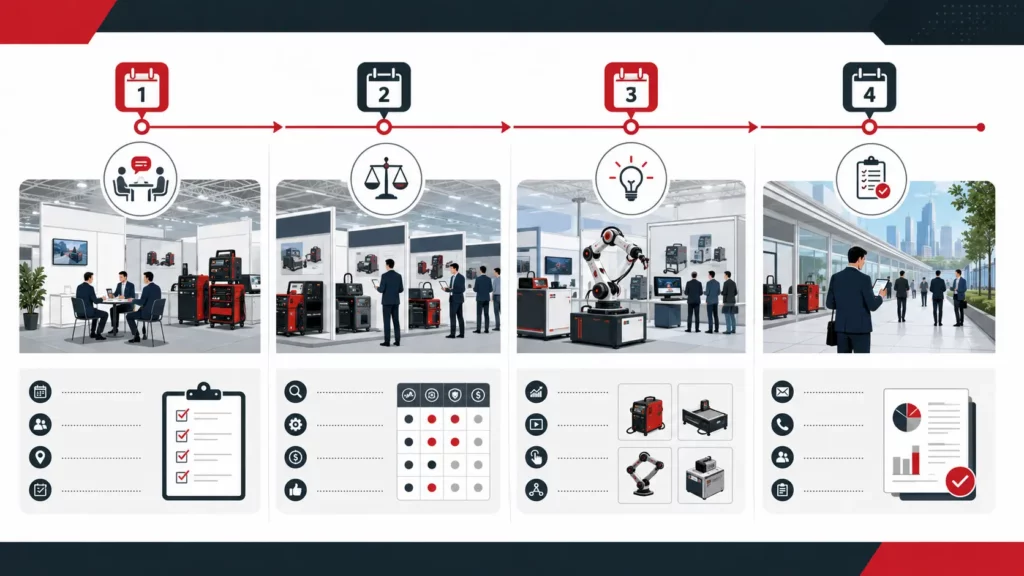
Book your most important meetings for day 1 or day 2. Keep day 3 for second visits and unexpected categories, and use day 4 for document requests, sample discussions, and final checks.
Bring a One-Page Supplier Brief
A short supplier brief keeps booth meetings from turning into vague small talk. It should explain who you are, what you sell, which market you serve, what certifications or packaging you need, and what order terms you want to discuss.
Keep it to one page. A short brief helps the right export or technical person understand your market faster and answer with fewer guesses.
How Do You Get to the Right Shenzhen Venue?
The key venue detail is simple: BEW 2026 is at Shenzhen World Exhibition & Convention Center in Bao’an, not the older convention center in Futian. Save the Chinese venue name and address before you leave your hotel so taxis, map apps, and supplier drivers all point to the same place.
Shenzhen World Exhibition & Convention Center (深圳国际会展中心(宝安))
No.1 Zhancheng Road, Fuhai Street, Bao’an District, Shenzhen (深圳市宝安区福海街道展城路1号)
Confirm Visa and Entry Details Early
China entry rules depend on your nationality, route, passport validity, and travel purpose. Check official visa channels, your airline, and the show organizer before departure. If you need an invitation letter, request it early through the official visitor registration process or your supplier contact.
If you plan factory visits before or after the show, make sure your visa and itinerary cover those extra dates. Shenzhen is close to many manufacturing cities in Guangdong, but factory visits can change your route, hotel choice, and return timing.
Choose Your Hotel Around Your Schedule
If your first meetings start early, staying near Shenzhen World or Bao’an Airport is usually easier. If you have supplier dinners, city meetings, or factory visits after the show, car access may matter more than being closest to the exhibition hall.
Do not choose only by room price. During show week, a cheaper hotel can cost you time if every morning starts with a long taxi ride.
How Can You Use the Four Show Days Well?
Four days sounds like plenty of time until you are standing inside a large trade show with halls 5 to 8 ahead of you. Do not try to walk everything evenly. Use the first two days for planned meetings, the third day for comparison and new categories, and the last day for follow-up details.
Day 1: Start With Your Must-See Booths
Use the first day for the suppliers and product categories you cannot afford to miss. These may be companies you contacted before the show, booths tied to current sourcing needs, or categories where you need a clear answer before requesting quotes.
Check whether the booth matches the pre-show claims: machine build, demo quality, packaging samples, manuals, labels, export experience, and whether the technical person can answer more than surface-level questions.
Day 2: Compare Similar Suppliers
Use the second day to compare suppliers in the same category while your notes are still fresh. If you are checking welding machines, speak with several machine suppliers before switching to PPE or accessories. If you are checking laser or automation systems, ask each team similar questions so the differences are easier to see.
This is where weak answers start to show. One supplier may explain duty cycle, spare parts, warranty handling, and market support clearly. Another may keep moving the conversation back to price. Write that down before the meetings blur together.
Day 3: Leave Room for New Categories
Use the third day for products you did not plan around at first. That may include robotics, smart welding software, fume extraction, laser cutting, new helmets, consumables, or welding data systems.
Take photos only where allowed, and record booth numbers immediately. After a few halls, brochures and product photos start to blend together. A quick note such as “Hall 5, robot demo, good seam tracking answer” can save you a lot of confusion later.
If the day runs long, give yourself a short break outside the halls. Grab a quiet meal, take a short walk around Shenzhen, or just step away from booth noise for ten minutes. The next supplier conversation will usually be better when your head is clear.
Day 4: Close the Loop
Use the final day for second visits and clear next steps. Do not leave a serious booth with only “we will contact you later.”
Before you leave, confirm the quotation deadline, sample plan, data sheet delivery, certification documents, MOQ, lead time, warranty terms, spare parts plan, and post-show video meeting. If a factory visit makes sense, confirm who will arrange it and when.
What Questions Should You Ask at Supplier Booths?
A good booth conversation should tell you more than the price. Use your questions to see whether the supplier understands your market, can support export orders, and knows what happens after the first shipment leaves the factory.
These questions are only a reference, not a script. You do not need to ask every question at every booth. Choose the ones that match your product category, supplier interest level, meeting time, and current buying needs.
For Welding Machines and Cutting Systems
Start with the questions that affect real selling and service work:
- Market fit: Which markets do you already export to? What input voltages, plug options, labels, manuals, and certifications can you support?
- Product performance: What is the duty cycle at working amperage? What cut thickness, process range, or machine setup do you recommend for the jobs we serve?
- Parts and service: Which consumables or spare parts should we stock? How are failed machines handled for overseas customers?
- Channel support: Can you support dealer branding, localized packaging, English data sheets, and post-show technical calls?
If the supplier can only talk about price, keep the conversation short. A serious machine supplier should be able to explain performance, service, documents, and repeat-order support without guessing.
For PPE, Consumables, and Small Parts
For repeat-sale categories, the conversation should move away from one sample and toward consistency. A good-looking helmet, torch, lens, or contact tip is only useful if the supplier can keep the SKU stable.
Ask about:
- Standards and testing: What standards, certifications, or test reports apply?
- Batch consistency: Can the supplier document consistency across repeat orders?
- Packaging and labeling: Can packaging be localized for your market or sales channel?
- Replacement support: How are lenses, tips, nozzles, small parts, or spare parts supplied after the first order?
- Trial order terms: What MOQ works for samples or first market testing?
If a booth conversation keeps returning to price while skipping documents, service, and repeat supply, write that down. It may not remove the supplier from your list, but it should affect how you rank them after the show.
How Can You Compare Suppliers After BEW 2026?
Do not wait a week to organize your notes. After four show days, booth conversations, photos, brochures, WeChat messages, business cards, and email contacts can blur together fast.
Use evidence, not booth energy. A friendly meeting is helpful, but the real comparison starts when you review data sheets, warranty terms, sample plans, certification documents, spare parts support, follow-up speed, and whether the product categories fit your market.
Sort suppliers into four groups:
| Group | When to Use It |
| Ready to follow up | Strong product fit, clear answers, useful documents, and realistic support terms |
| Need a technical call | Good potential, but open questions about specs, service, certification, or integration |
| Watch for later | Interesting products or technologies that do not fit your current product line yet |
| Do not continue | Weak fit, unclear answers, poor follow-up, or terms that do not work for your market |
A Simple Follow-Up Timeline
| Timing | What to Do |
| Within 24 hours | Send short thank-you emails and request promised documents |
| Within 3 days | Sort quotes, notes, booth photos, brochures, and contact details |
| Within 7 days | Schedule video calls with the strongest suppliers |
| Within 14 days | Request sample or trial order terms if the supplier still looks strong |
| Within 30 days | Decide whether to move toward a small order, factory visit, or watchlist |
Compare Supplier Notes After the Show
Use the supplier scorecard and follow-up tracker to compare product fit, technical answers, export readiness, documents, warranty terms, spare parts support, quote status, sample plans, and next steps before deciding who deserves a serious follow-up.
Download the Supplier Booth Scorecard
Where YesWelder Wholesale Can Fit
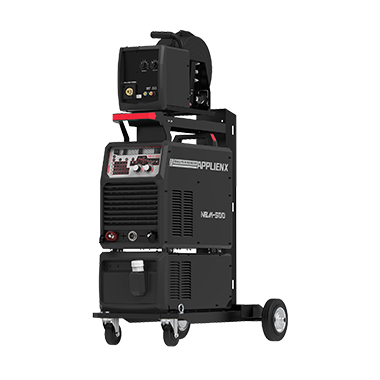
Your final shortlist does not have to include only suppliers you met at the show. If your next comparison includes welders, plasma cutters, welding helmets, accessories, consumables, or spare parts, YesWelder Wholesale can be part of that supplier review.
YesWelder Wholesale supports dealer and wholesale buyers with welding equipment and related product categories, including industrial welding machines, plasma cutters, welding helmets, welding accessories, consumables, and spare parts. Before placing an order, check current product specifications, wholesale terms, MOQ, lead time, packaging support, warranty details, spare parts policy, after-sales support, and regional program details with the wholesale team.
Conclusion
BEW 2026 is not a show to walk into cold. If you are going to Shenzhen, arrive with a clear route, a supplier shortlist, and the questions you want answered in person.
Use the show to see what catalogs cannot fully show: machine build, booth demos, export readiness, documents, packaging, spare parts support, and how clearly a supplier answers technical questions. The strongest visit should leave you with a cleaner view of which products are ready for your market, which technologies deserve more watching, and which supplier conversations are worth continuing after the show.
If welders, plasma cutters, welding helmets, accessories, consumables, or spare parts are part of your next comparison, you are welcome to include YesWelder Wholesale in your review. Contact our wholesale team to check current product options, wholesale terms, MOQ, lead time, packaging support, warranty details, spare parts policy, and dealer program availability.
Frequently Asked Questions
Yes. A trade show can introduce new contacts, but your final comparison should also include suppliers you already know or can review after the event. If your list includes welders, plasma cutters, welding helmets, accessories, consumables, or spare parts, YesWelder Wholesale can be part of that comparison.
Use the booth to understand product fit, support terms, and whether the supplier can serve your market. You can ask for a price range, but detailed quotations are usually better after the show, when specifications, packaging, quantity, shipping terms, and private-label needs are clearer.
Ask for English data sheets, manuals, certification documents, warranty terms, spare parts lists, packaging files, and sample or trial order terms. For machines and cutting systems, also request duty cycle details, input power options, plug options, and consumable compatibility.
Yes. Robotics, vision systems, smart welding software, and laser automation may not fit your next order, but they show where industrial welding is moving. If your customers are asking for repeatability, lower labor dependence, or better quality tracking, these booths are worth a closer look.
Do not look at welding machines alone. A practical catalog often connects welders, plasma cutters, welding helmets, torches, lenses, wires, rods, contact tips, nozzles, and spare parts. The stronger supplier is often the one that can support the full setup, not just the main machine.
Send a short follow-up within 24 hours and request the documents promised at the booth. Within 3 to 7 days, compare quotes, product data, documents, and response speed.
If you are building a supplier comparison list after BEW 2026, you are also welcome to include YesWelder Wholesale in that review. Contact our wholesale team to check current welding equipment options, MOQ, lead time, packaging support, warranty details, spare parts policy, and dealer program availability.