
3 Phase Welder vs. Single Phase: What Industrial Buyers Need to Know
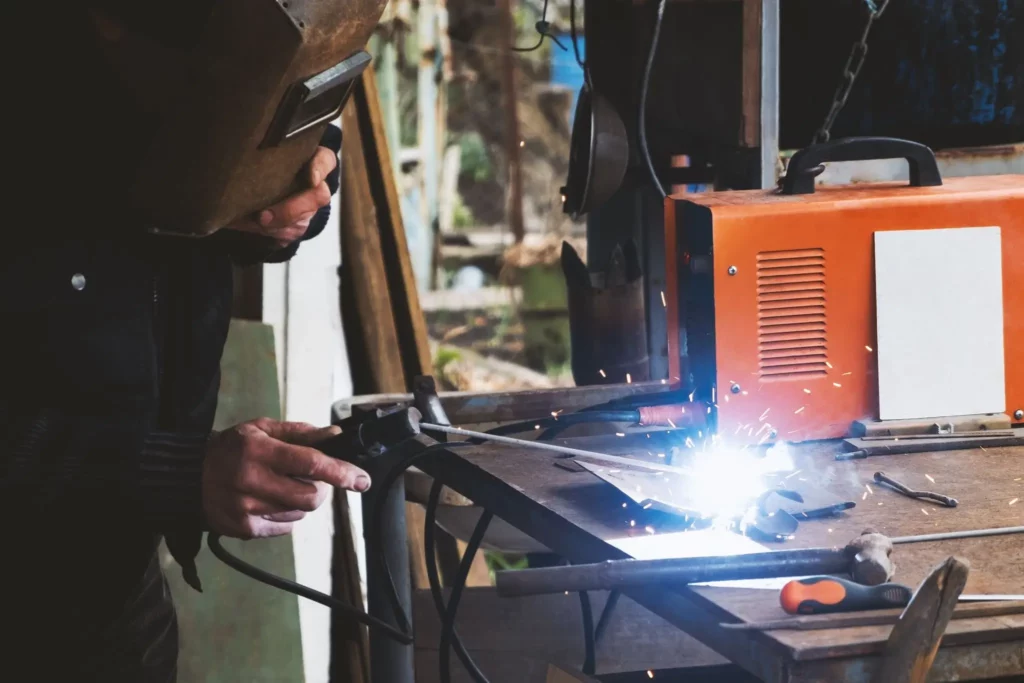
A 3 phase welder is usually the better choice for high-amperage MIG welding, heavy fabrication, structural steel, and long duty-cycle production. A single phase welder is usually the better fit for repair shops, training booths, mobile crews, and facilities without three-phase electrical service. The choice comes down to workload, available power, installation cost, shop layout, […]
Industrial Plasma Cutter vs. Oxy-Fuel: Which Works for Heavy Fabrication?
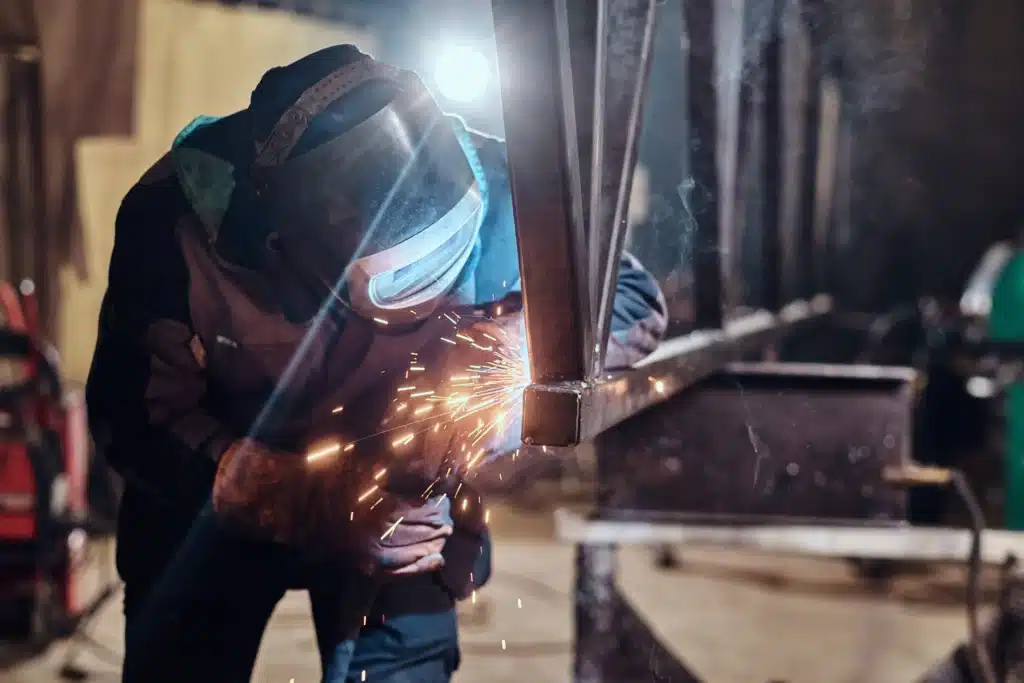
An industrial plasma cutter is usually the better choice when your shop cuts mixed metals, repeatable parts, CNC profiles, stainless steel, or aluminum. Oxy-fuel still makes sense for very thick carbon steel, rough field cuts, heating work, and jobs where power or compressed air is limited. This guide helps you decide which cutting setup fits […]
Automotive Welding for Repair Shops: Equipment Choices That Support Daily Service Work
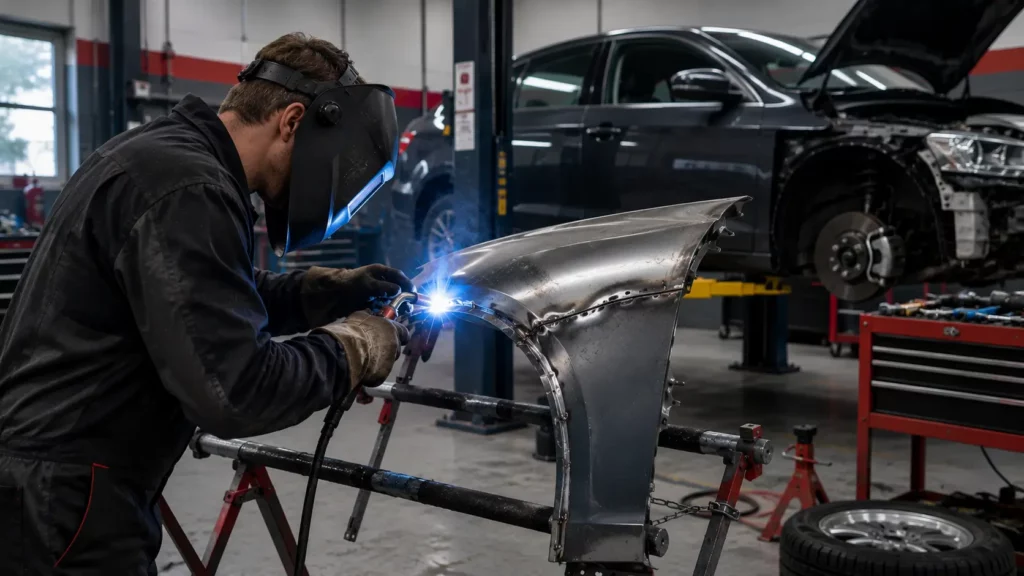
Automotive welding in a repair shop is the controlled joining of vehicle metals during collision repair, rust repair, exhaust service, restoration, and custom fabrication. The right equipment mix usually includes a reliable MIG welder, selected TIG capability, spot weld access when OEM procedures require it, proper surface preparation tools, clamps, PPE, ventilation, and repeatable shop […]
Industrial TIG Welding Machine Buying Guide for Fabrication Shops
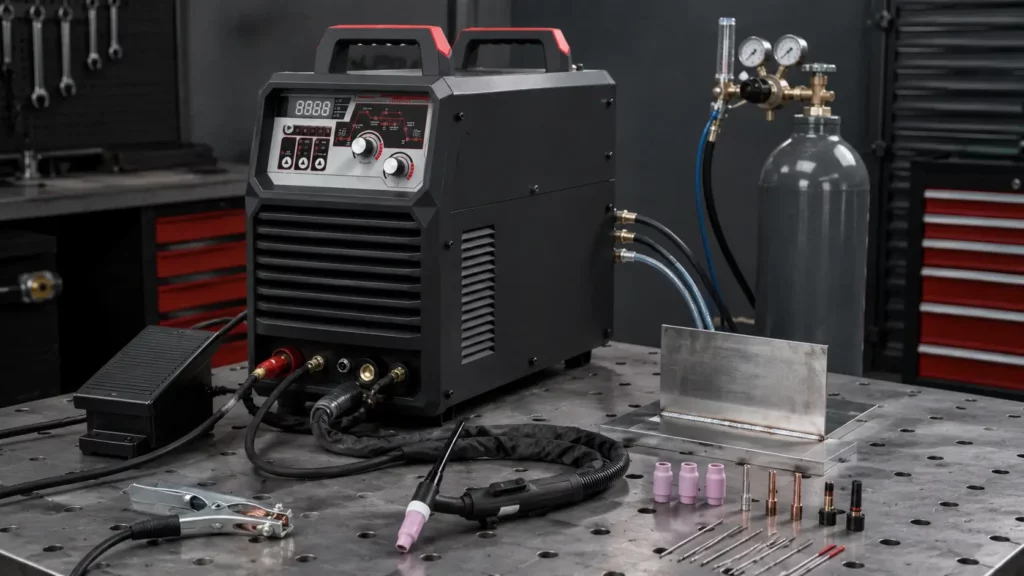
If your shop uses TIG for aluminum frames, stainless assemblies, titanium parts, sanitary piping, repair work, or visible welds, a light-duty TIG unit may not be enough. An industrial TIG welding machine needs to hold a stable arc, manage heat over repeated welds, support the right AC/DC output, and fit the power available in your […]
Beijing Essen Welding 2026 Visitor Guide for International Visitors
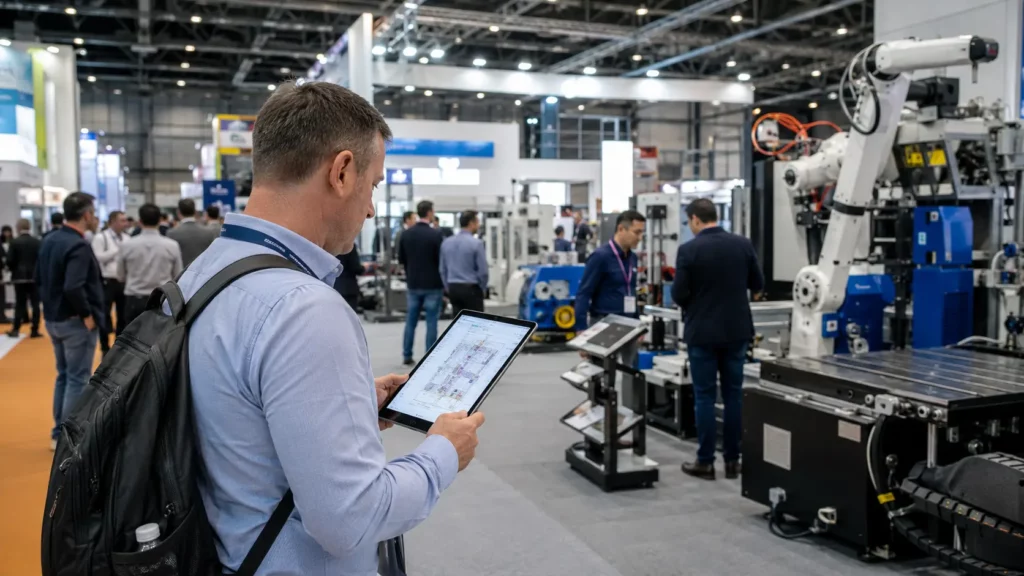
If your work touches welding equipment, cutting systems, industrial supply, or dealer channels, BEW 2026 is coming up soon in Shenzhen. The 2026 show brings welding machines, cutting systems, robotics, smart welding software, PPE, consumables, and industrial materials into the same halls, so it is worth planning before you arrive. Beijing Essen Welding 2026 runs […]
What Is an Industrial Welding Machine? Key Specs You Should Know
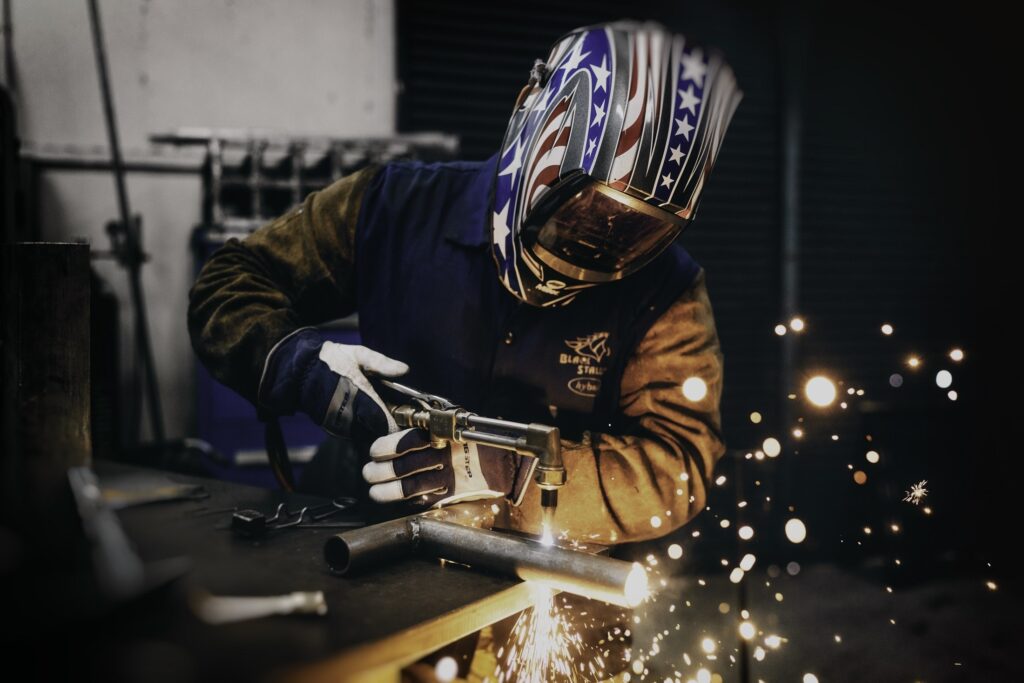
An industrial welding machine is a high-output welding power source built for production welding, heavy fabrication, structural work, and repair environments where uptime matters. Compared with light shop welders, an industrial welding machine usually has higher amperage, stronger duty cycle ratings, heavier cable support, better cooling, and input power options suited to factory or field […]
Gas Metal Arc Welder Part Identification: A Complete Visual and Functional Guide
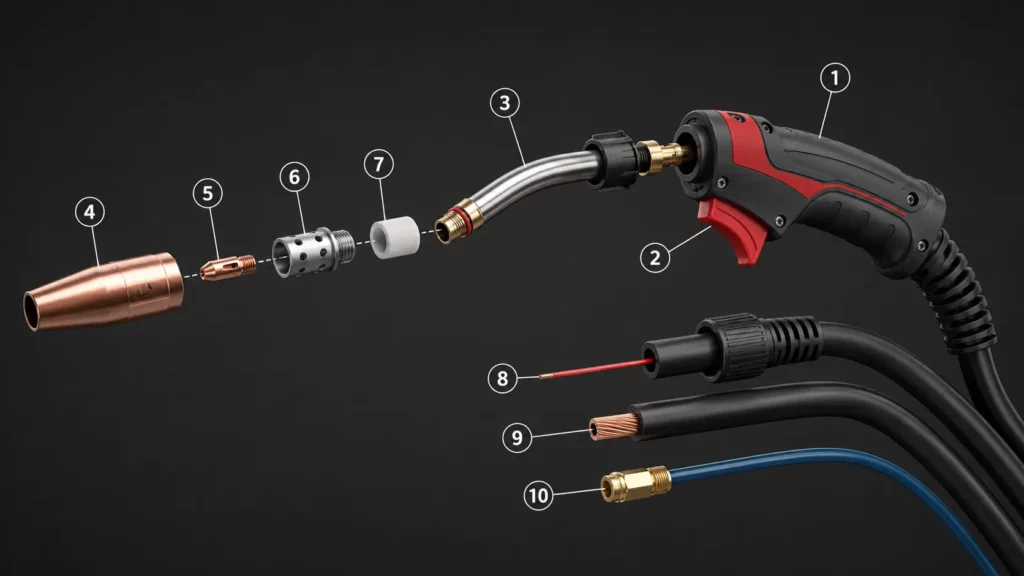
If you have ever stared at a MIG welder, you are not alone. The box of wires, gas lines, and dials looks intimidating until you break it into pieces. Each part has one clear job, and most weld problems come from just a handful of wear items that are easy to spot once you know […]
.035 Flux Core Wire: Specifications, Machine Matching, and Application Engineering
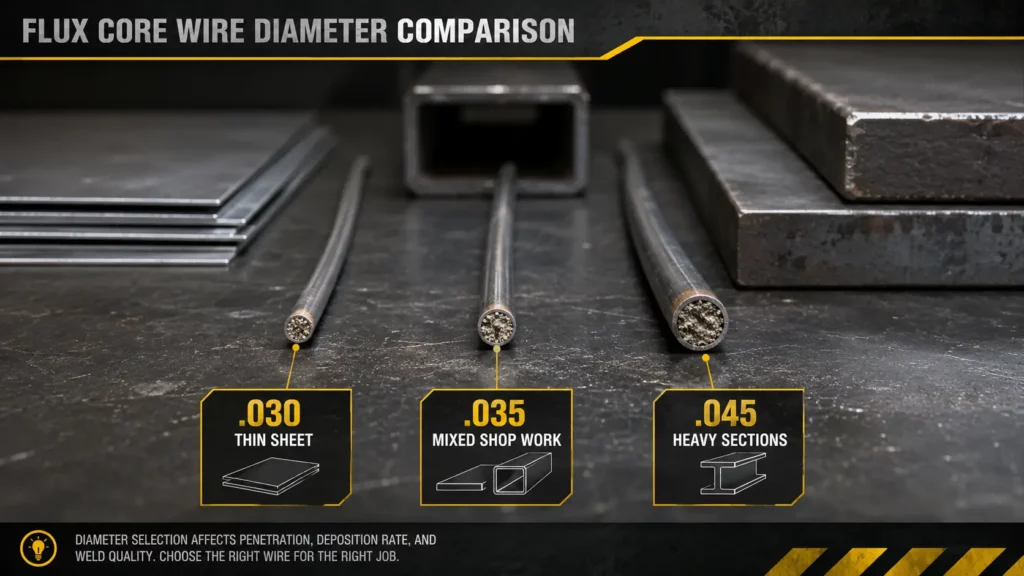
If you work with mild steel from 18 gauge to 1/2 inch, .035 flux core wire is probably the spool you reach for first. It deposits fast enough for production work without the burn-through risk of thicker wire on thin material, and it feeds smoothly through standard MIG guns. But running .035 wire well takes […]
TIG Welding Tungsten Electrodes: Types, Uses, and How to Choose the Right One
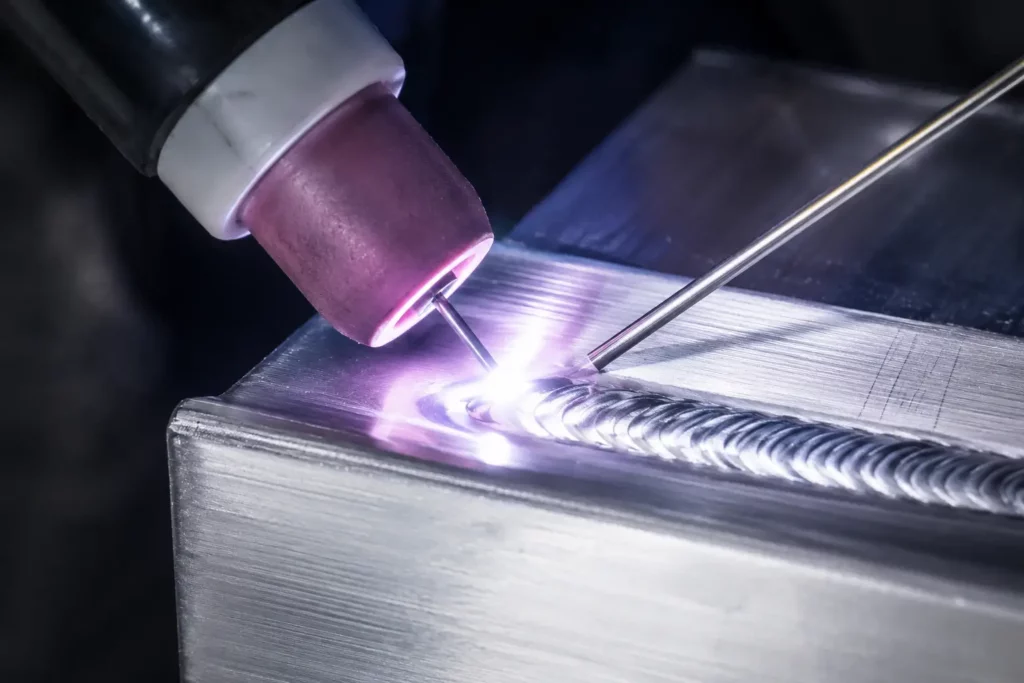
Your TIG tungsten electrode does not melt into the weld pool. Unlike MIG welder wire or stick welder rod, it stays solid, carries the current, and creates the arc. That gives you precise heat control, but pick the wrong type and your arc will wander before you even finish the first pass. Picking the right […]
Stick Welding Electrodes: Types, Uses, and How to Choose the Right Rod
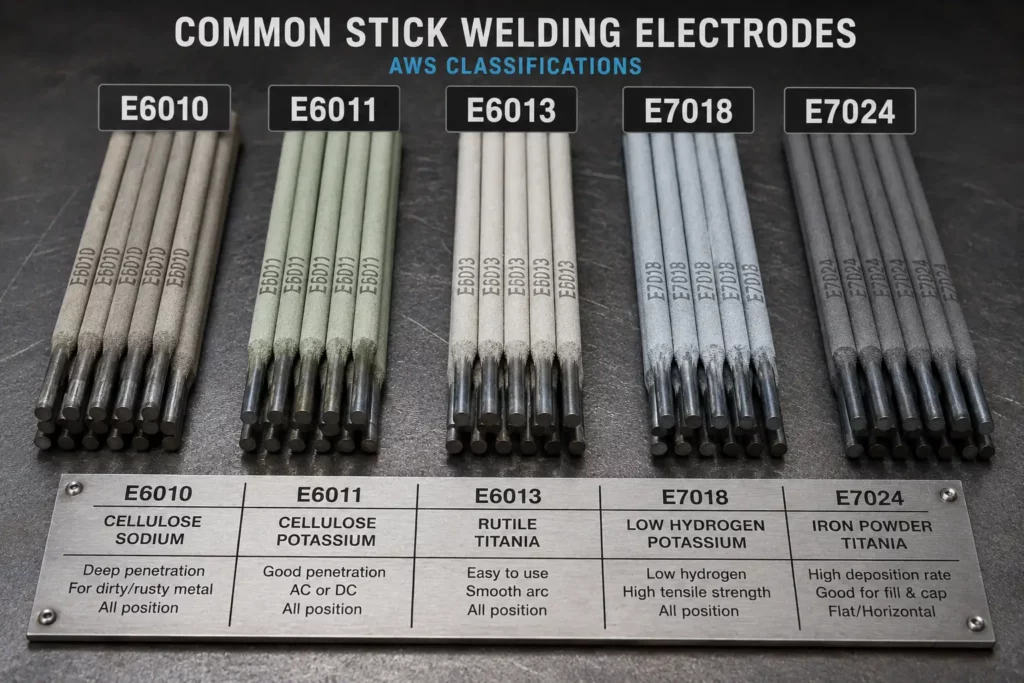
Imagine a maintenance crew repairing steel on a windy jobsite, a farmer fixing broken equipment in an open field, or a pipe welder making root passes far from the shop. Stick welding electrodes work well in these jobs because they create their own shielding and run on portable equipment. If you are comparing stick welding […]